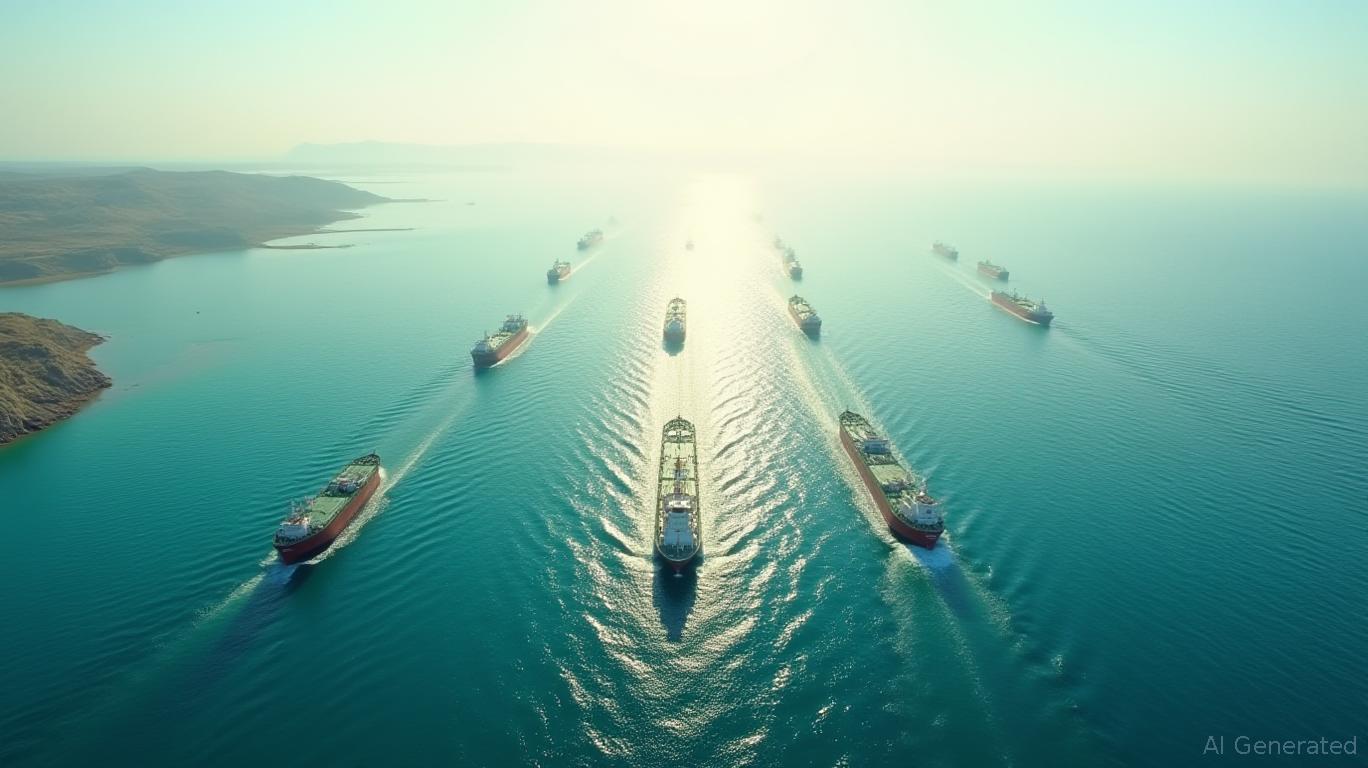
The decision by Tehran to expand transit capacity through the Strait of Hormuz by an additional 20 vessels represents a calibrated adjustment of maritime friction rather than a total shift in strategic posture. By utilizing Pakistan as the diplomatic conduit for this announcement, Iran is signaling a transition from "maximum pressure" tactics to a "managed volatility" framework. This move targets three distinct operational objectives: the restoration of regional trade liquidity, the easing of kinetic risks for insurance underwriters, and the signaling of diplomatic flexibility to non-Western powers.
The Strait of Hormuz remains the world’s most significant oil chokepoint. According to U.S. Energy Information Administration (EIA) data, roughly 20% of global petroleum liquids consumption passes through this 21-mile-wide waterway. When transit is throttled or subjected to heightened seizure risks, the global "fear premium" on Brent crude can fluctuate by $5 to $10 per barrel, independent of physical supply constraints. The release of 20 ships serves as a pressure valve, designed to lower this premium while maintaining enough residual tension to keep Tehran’s leverage intact. For a more detailed analysis into similar topics, we recommend: this related article.
The Triad of Maritime Leverage
To understand why 20 ships constitute a "meaningful step," one must categorize the Iranian naval strategy into three distinct pillars of influence.
- The Kinetic Buffer: Iran uses the physical presence of the Islamic Revolutionary Guard Corps Navy (IRGCN) to dictate the pace of traffic. By "allowing" more ships, they are effectively declaring a temporary suspension of non-routine inspections and harassment.
- The Legalistic Gray Zone: Tehran often cites environmental violations or maritime collisions as the basis for ship detentions. Increasing the quota suggests a directive to maritime regulators to overlook technicalities that have previously been weaponized to seize tankers.
- The Third-Party Validator: Utilizing Pakistan as the messenger is a tactical choice. It bypasses direct engagement with the West, which would imply a concession, and instead frames the move as a gesture of "Islamic solidarity" or "regional cooperation." This maintains the domestic narrative of strength while achieving the economic goal of stabilization.
The Cost Function of Maritime Risk and Insurance
The true impact of this transit increase is felt in London and Singapore, specifically within the Lloyd’s Market Association’s Joint War Committee. When the Strait is designated as a high-risk area, "Additional Premium" (AP) charges for hull and machinery insurance skyrocket. These costs are ultimately passed to the consumer, but in the immediate term, they dictate which shipowners are willing to risk their assets in the Persian Gulf. For additional background on this development, in-depth reporting can be read on Financial Times.
The "Meaningful Step" cited by Pakistan operates on the following cost-benefit logic:
- Reduction in Hull Interest Rates: A consistent, predictable flow of 20 additional ships per cycle signals to underwriters that the probability of seizure is declining. This should, in theory, lead to a softening of AP rates.
- Demurrage Mitigation: Tankers waiting outside the Gulf of Oman incur massive daily demurrage costs, sometimes exceeding $50,000 to $100,000 per day. Clearing the backlog of 20 vessels directly impacts the bottom line of state-owned oil companies and independent traders alike.
- Supply Chain Velocity: The global oil market relies on "just-in-time" delivery. A disruption in Hormuz creates a bullwhip effect in Asian refineries, particularly in China and India, which are the primary destinations for these cargoes.
Structural Bottlenecks and the Reality of 20 Ships
While the announcement is framed as a breakthrough, the physical and regulatory constraints of the Strait of Hormuz suggest that this is a marginal improvement rather than a systemic fix. The Traffic Separation Scheme (TSS) in the Strait consists of two-mile-wide inbound and outbound lanes, separated by a two-mile-wide buffer zone.
The capacity to add 20 ships is not a matter of physical space—the waterway can handle hundreds—but a matter of administrative throughput. The bottleneck is created by:
- Pilotage Requirements: Many vessels require local pilots for safe navigation in congested waters.
- Electronic Warfare (EW) Environments: Frequent GPS interference in the region makes navigation hazardous, requiring higher manning levels and slower transit speeds.
- Vessel Sanction Screening: The paradox of the region is that while Iran "allows" transit, many of these vessels are carrying Iranian crude under various flags of convenience, or they are international tankers avoiding sanctioned entities.
The increase in traffic volume must be measured against the Net Transit Velocity. If the 20 ships are allowed through but subjected to slow-steaming requirements or aggressive radio interrogation, the "peace" signaled by Pakistan remains purely rhetorical.
The Role of Pakistan as a Strategic Intermediary
Pakistan’s involvement is not incidental. Following recent cross-border tensions between Islamabad and Tehran, both nations have a vested interest in demonstrating bilateral stability. For Pakistan, acting as the harbinger of maritime peace enhances its standing as a regional power capable of mediating between the Persian Gulf and the broader international community.
This creates a Diplomatic Feedback Loop:
- Iran grants a concession that costs nothing in terms of sovereign territory or military hardware.
- Pakistan broadcasts this concession to the world, positioning itself as a stabilizing force.
- The international market reacts with a slight downward pressure on energy prices.
- Iran observes the Western reaction to calibrate its next move in nuclear or regional proxy negotiations.
Quantifying the "Peace" Signal
Peace in the context of the Persian Gulf is not the absence of conflict but the presence of predictable commerce. The "20 ships" metric is a quantifiable KPI for de-escalation. However, rigorous analysis requires looking at the Composition of Transit.
If the 20 ships are primarily LNG carriers or VLCCs (Very Large Crude Carriers) heading to non-aligned nations (China, India), the move is an economic necessity for Iran to maintain its "shadow fleet" revenues. If the 20 ships include vessels flagged to G7 nations or those previously harassed, the signal of "peace" carries significantly more weight.
There is a distinct difference between Commercial De-escalation and Strategic Pivot. This move falls firmly into the former. Iran is not dismantling its capability to close the Strait; it is simply choosing not to exercise it today. The IRGCN remains equipped with thousands of fast-attack craft, anti-ship cruise missiles (ASCMs), and naval mines. The "meaningful step" is a tactical reset of the status quo, likely designed to buy time for domestic economic stabilization or to navigate the complexities of shifting US-China relations.
Limitations of the Current Framework
The primary risk to this "meaningful step" is the lack of a formal, multilateral maritime agreement. The current de-escalation is based on verbal assurances and unilateral actions. This creates a Fragile Equilibrium.
The variables that could collapse this progress include:
- Miscalculation at Sea: A low-level commander on an IRGCN patrol boat acting outside of Tehran’s direct orders.
- External Kinetic Triggers: Strikes on Iranian proxies in Lebanon or Yemen often lead to "tit-for-tat" responses in the maritime domain.
- The Sanctions Enforcement Gap: If the U.S. Treasury ramps up seizures of Iranian "ghost tankers" in international waters, Tehran will likely retract its 20-ship allowance as a direct reprisal.
Strategic Forecast: The Shift to Managed Friction
The coming quarters will likely see a move toward a "Managed Friction" model. Iran has realized that total closure of the Strait is a "suicide pill" that would invite a global military response and alienate its primary customer, China. Instead, they will use these incremental adjustments—adding or subtracting 10-20 ships from the "safe transit list"—as a dial to control the temperature of regional politics.
For global energy markets, the recommendation is clear: do not price out the "Hormuz Risk" entirely based on this announcement. The structural tensions remain. The 20 ships are a temporary liquidity injection into a dry market.
The strategic play for maritime operators is to utilize this window of relative calm to clear backlogs and rotate crews, while maintaining the high-alert protocols established during the 2023-2024 period of peak tension. The underlying mechanism of Iranian leverage has not been dismantled; it has merely been put into a lower gear to facilitate a specific diplomatic outcome. Analysts should watch the Time-in-Transit metrics for the next 30 days. If the average time to clear the Strait for non-sanctioned vessels drops by more than 15%, the "meaningful step" can be verified as a functional reality. If not, it remains a sophisticated exercise in public relations.
Monitor the Baltic Dirty Tanker Index (BDTI) for the TD3C route (Middle East Gulf to China). If the rate decoupling between Hormuz-transiting routes and global averages persists despite this announcement, it indicates that the market does not yet trust the "peace" signal. Physical movement of ships is the only data point that matters; the diplomatic rhetoric is merely the noise surrounding the signal.