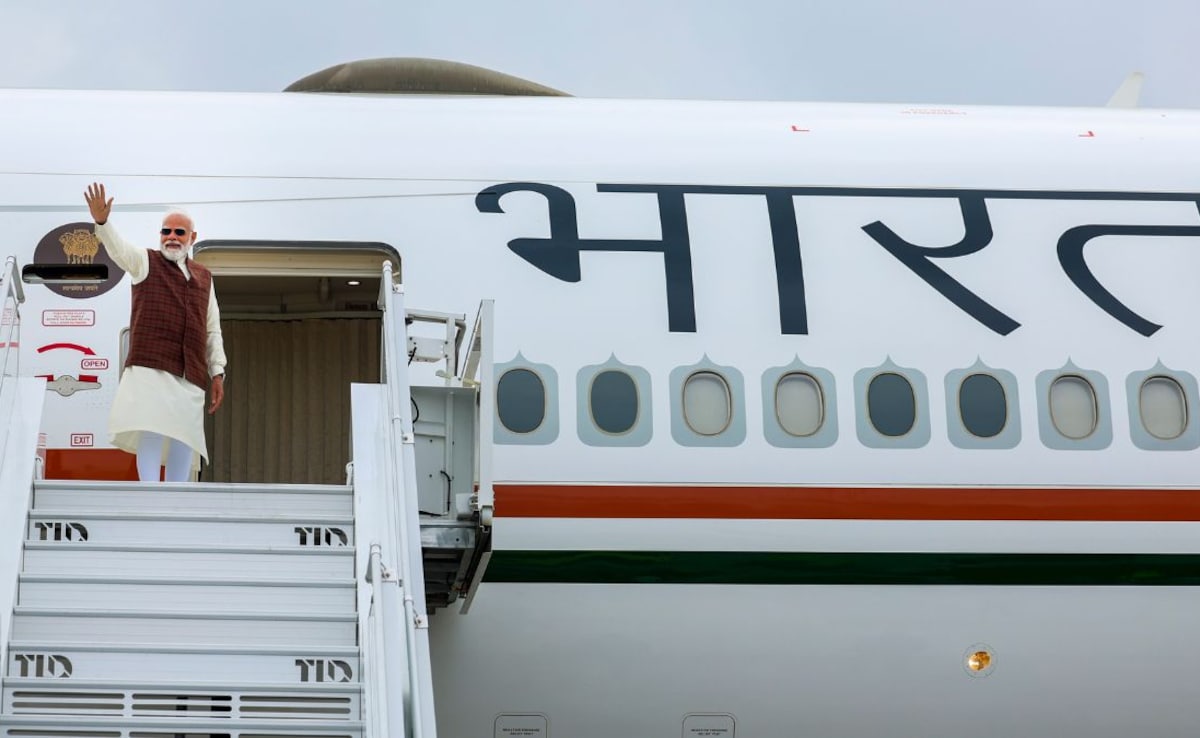
The elevation of the bilateral relationship between India and Sweden to a formal strategic partnership marks a fundamental shift in how New Delhi and Stockholm view economic security. By endorsing the Joint Action Plan (2026–2030) in Gothenburg, Prime Minister Narendra Modi and Swedish Prime Minister Ulf Kristersson committed to an ambitious goal: doubling their $7.75 billion bilateral trade within five years. Far from being a routine diplomatic victory lap, this development addresses deep-seated vulnerabilities on both sides. India urgently requires high-end Western industrial technology to offset its dependency on Russian military hardware and Chinese manufacturing components, while Sweden requires massive market scale to keep its specialized industrial base viable amidst a fracturing European economy.
Beyond the Buyer and Seller Friction
Bilateral agreements between major economies often suffer from a structural flaw where one nation treats the other merely as a consumer market. The historical relationship between India and Sweden was similarly constrained. For decades, Swedish engagement with India focused heavily on selling finished industrial goods—telecom hardware, heavy machinery, and specialized steel—while avoiding deep technology transfers. If you liked this post, you might want to check out: this related article.
The defense sector exemplifies this friction. The long-running effort by Swedish aerospace giant Saab to pitch its Gripen E fighter aircraft to the Indian Air Force has repeatedly stalled over India's strict domestic production requirements. New Delhi demands not just assembly lines, but the intellectual property to manufacture and modify weapon systems independently.
Under the new 2026 strategic framework, both capitals are forcing an industrial evolution. Swedish defense entities are pivoting toward deep co-development. By establishing local manufacturing facilities within India’s designated defense corridors, Stockholm is adjusting to India’s regulatory reality. The incentive for Sweden is survival. As an independent defense producer outside the massive military-industrial apparatus of the United States, Sweden cannot afford to build advanced platforms without securing massive export anchors like India. For another perspective on this event, see the latest coverage from Al Jazeera.
The Missing Link in Continental Supply Chains
The presence of European Commission President Ursula von der Leyen at the Gothenburg summit underscores that the India-Sweden agreement is part of a larger continental strategy. The European Union finalized a comprehensive free trade agreement with India in January, but trade pacts without capital guarantees remain ineffective.
+-------------------------------------------------------------------+
|               THE NORTHERN CORRIDOR SUPPLY STRATEGY               |
+-------------------------------------------------------------------+
|  [Sweden: Specialized Tech]  --->  [Investment Frameworks]        |
|                                            |                      |
|                                            v                      |
|  [India: High-Talent Pool]   --->  [Industrial Scale & Export]    |
+-------------------------------------------------------------------+
The European Union currently faces severe vulnerabilities in its supply chains, particularly regarding raw materials and critical tech infrastructure. Von der Leyen pointed out that while trade agreements establish the rules of engagement, an explicit investment agreement is the missing link needed to mitigate risk.
For India, the urgency is driven by maritime realities. Geopolitical disruptions in Western Asia have exposed the vulnerability of traditional maritime trade routes. To maintain its domestic growth, New Delhi requires direct, insulated foreign direct investment into its manufacturing sectors, shielding it from external supply shocks. Sweden, with its concentrated corporate wealth and sovereign investment funds, serves as an entry point for northern European capital.
The Reality of the Green Steel and Tech Alliance
The strategic partnership emphasizes the green transition and emerging technologies, yet these initiatives face significant practical challenges. Sweden is a pioneer in fossil-free manufacturing, notably through projects like HYBRIT, which utilizes green hydrogen instead of coking coal to produce steel. India is the world's second-largest crude steel producer and relies heavily on coal-fired blast furnaces.
Importing Swedish technology to decarbonize Indian heavy industry sounds promising, but the economic realities are complex. Green steel production requires vast amounts of affordable renewable energy and expensive hydrogen infrastructure.
Scale Versus Premium Pricing
- The Cost Penalty: Hydrogen-reduced iron currently commands a significant price premium that price-sensitive developing markets cannot easily absorb.
- The Scale Mismatch: Sweden operates on a model of high-margin, low-volume specialty production. India requires low-cost, high-volume output to support its infrastructure development.
- The Infrastructure Gap: Transitioning a single major Indian steel plant to hydrogen requires specialized storage and transport networks that are currently decades away from nationwide deployment.
The partnership aims to bridge this gap by combining Swedish technical expertise with Indian industrial scale. If Swedish engineering can be adapted to match India's cost-efficient manufacturing capabilities, the resulting processes could find applications across the Global South. If it fails to scale, the agreement risks remaining limited to pilot projects that look good in diplomatic readouts but do little to alter global emission trajectories.
Space, AI, and the Venus Frontier
The strategic update extends beyond heavy industry into outer space and computing. The memorandum of understanding signed between the Indian Space Research Organisation (ISRO) and the Swedish National Space Agency to develop instruments for India's upcoming Venus Orbiter mission reflects a practical alignment of capabilities.
ISRO has mastered the art of highly cost-effective, reliable deep-space launch operations. Sweden excels at building precise, miniaturized scientific sensors. By relying on Indian launch vehicles, Stockholm gains access to planetary missions that would be financially prohibitive under European space programs alone.
Concurrently, the Joint Action Plan targets joint research in artificial intelligence and secure digital infrastructure. As nations grow increasingly wary of data sovereignty and foreign software backdoors, building trusted technology pathways between democracies becomes a matter of national security. The goal is to build an alternative ecosystem that relies on transparent code and secure hardware supply chains, distinct from Chinese state-subsidized tech architectures.
Navigating the Diplomatic Gray Areas
This partnership does not erase fundamental differences in geopolitical priorities. Sweden’s security focus remains anchored in Northern Europe and the Baltic region. India maintains a policy of multi-alignment, preserving historical ties with Russia and prioritizing security challenges in the Indo-Pacific.
Stockholm must also navigate India's domestic security realities. During the summit, the Swedish delegation expressed explicit solidarity with India following recent regional security incidents, signaling a growing willingness to support New Delhi on counter-terrorism platforms. This alignment shows that European nations are increasingly recognizing that securing economic access to the Indian market requires a greater acknowledgment of India’s regional security concerns.
The challenge over the next five years will be translating this strategic intent into measurable industrial output. Doubling bilateral trade to $15 billion will require more than just corporate signatures; it will demand a sustained relaxation of export controls by Stockholm and a genuine reduction in bureaucratic friction by New Delhi.
For further analysis on how these international trade dynamics are impacting global manufacturing ecosystems, you can watch this breakdown of the EU-India Trade Deal Joint Press Conference, which provides direct footage and context on the statements made by the leaders in Gothenburg.