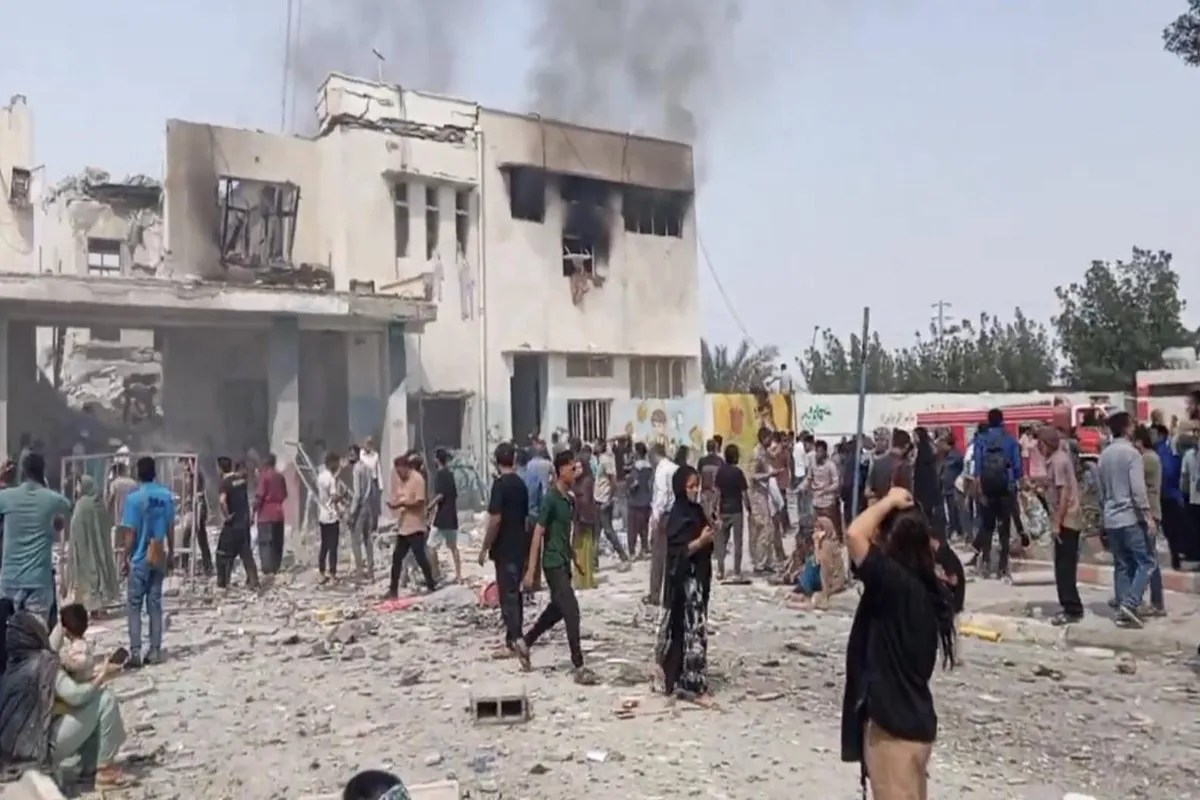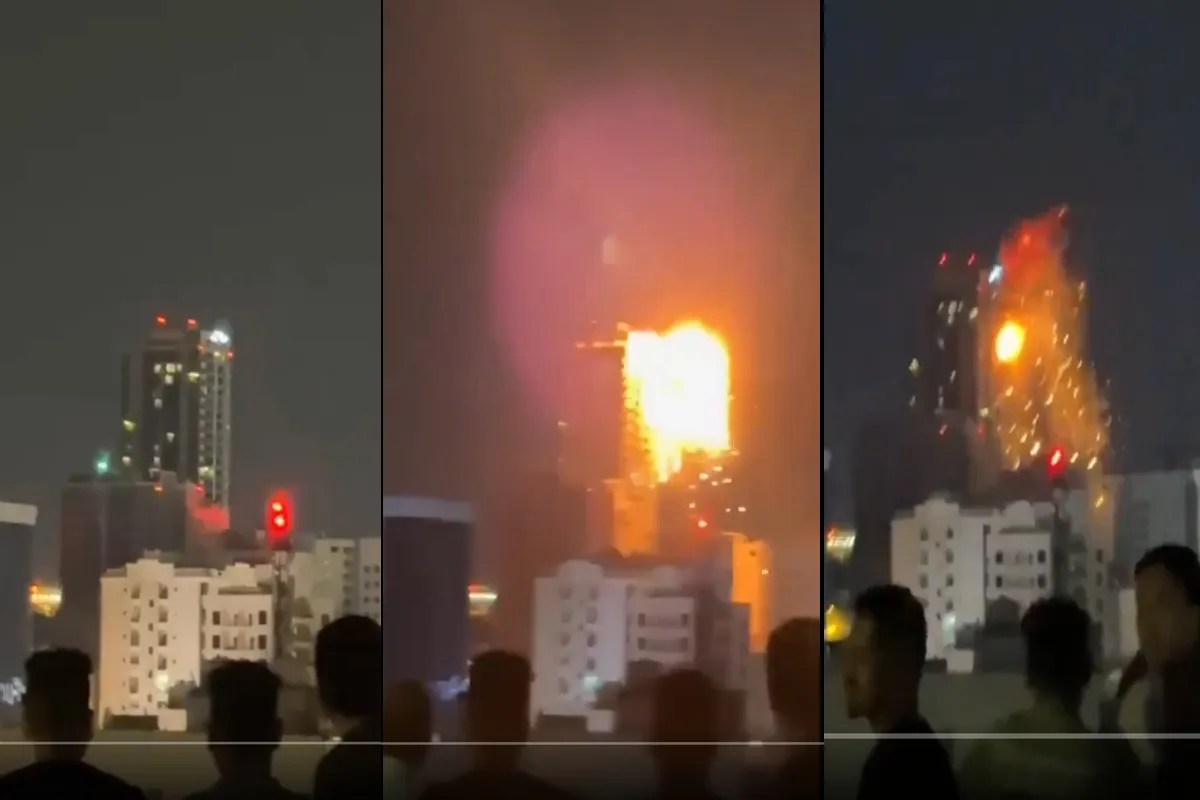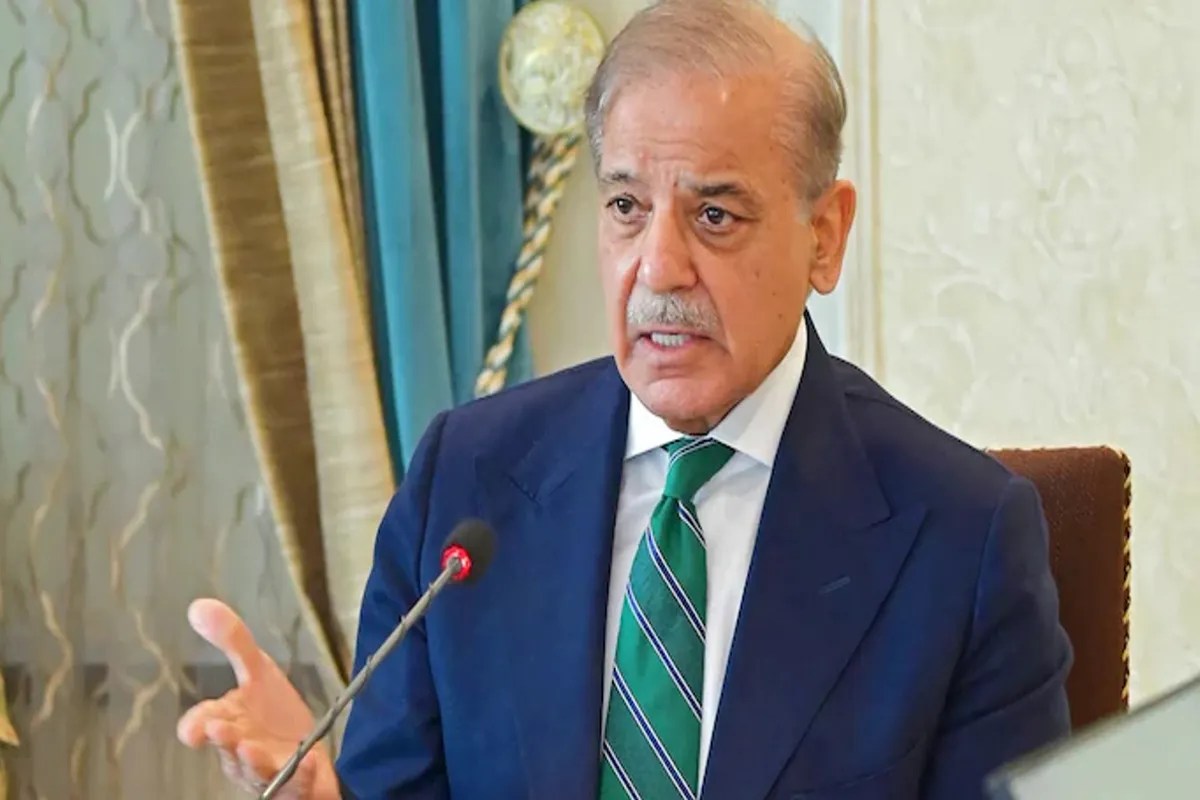
Pakistan's recent rhetorical escalation regarding the Iran-Israel conflict shifts the regional security architecture from a contained Middle Eastern skirmish to a broader Islamic nuclear-state dynamic. While media narratives often frame Shehbaz Sharif's statements as mere diplomatic posturing, a structural analysis reveals a complex intersection of internal legitimacy requirements, external debt obligations, and the maintenance of the "Strategic Depth" doctrine. Pakistan is not merely "joining" a fight; it is recalibrating its position within a volatile tri-polar system involving Washington, Riyadh, and Tehran.
The Tri-Border Constraint Model
To understand Pakistan's entry into this discourse, one must apply the Tri-Border Constraint Model. This framework analyzes how a state manages three simultaneous pressures:
- The Sectarian Balance (Internal): Pakistan houses the world's second-largest Shia population. Any overt move against Iran or perceived indifference to "Zionist aggression" risks domestic instability.
- The Creditor-Ally Pivot (External): Pakistan remains tethered to Saudi Arabian financial lifelines and U.S. military hardware. Both entities have distinct, often conflicting, expectations regarding Israel and Iran.
- The Nuclear Deterrence Parity (Strategic): As the only declared nuclear power in the Islamic world, Pakistan’s rhetoric carries a weight that conventional regional players lack. Sharif’s "open warning" serves as a signal that the nuclear umbrella is a psychological factor in Middle Eastern escalation.
Mechanics of the Sharif Doctrine
The rhetoric issued by the Sharif administration operates on a logic of "Calculated Ambiguity." By issuing a warning without defining the specific triggers for military intervention, Pakistan achieves three specific strategic objectives.
First, it signals to Tehran that despite past border skirmishes (such as the January 2024 missile exchanges), Pakistan views the preservation of the Iranian state as a buffer against total Western hegemony in the region. This is a functional necessity; a collapsed or war-torn Iran would create a massive refugee crisis and a vacuum on Pakistan’s western flank that the Pakistani military cannot afford to police.
Second, the "warning" functions as a bargaining chip with Western creditors. By positioning itself as a potential stabilizer—or a potential disruptor—Pakistan reminds the International Monetary Fund (IMF) and bilateral lenders of its "too big to fail" status. The underlying logic is that a stable Pakistani economy is a prerequisite for a predictable South Asian security environment.
The Military-Industrial Variable
Unlike the competitor's focus on political soundbites, the actual risk of Pakistani involvement is best measured through its military-industrial exports and technical cooperation. Pakistan’s defense industry, specifically the production of the Shaheen and Ghauri missile series, shares technical DNA with Iranian systems due to historical proliferation networks.
A "warning" from Islamabad could manifest in three distinct grades of material support:
- Grade I (Intelligence): Sharing signals intelligence (SIGINT) regarding Israeli or U.S. movements in the Arabian Sea.
- Grade II (Technical): Providing maintenance or parts for Iranian systems that share common platforms with Pakistani hardware.
- Grade III (Kinetic): The deployment of "volunteers" or specialized units, though this remains the least likely due to the risk of triggering Indian opportunism on the Eastern front.
The "Cost Function" of a kinetic intervention is prohibitively high for Islamabad. Engaging in a direct conflict with Israel would invite immediate sanctions, potentially decoupling Pakistan from the SWIFT banking system and terminating the F-16 sustainment programs provided by the United States.
The Nuclear Signaling Threshold
The most critical oversight in standard reportage is the "Nuclear Signaling Threshold." In the context of the Iran-Israel conflict, Pakistan’s presence acts as a silent modifier to Israel’s "Begin Doctrine," which dictates that Israel will use preemptive strikes to prevent any regional enemy from acquiring nuclear weapons.
Pakistan’s nuclear status creates a ceiling for how far Israel can escalate against Iran without risking a broader "Islamic Bloc" response. While it is highly improbable that Pakistan would offer a nuclear guarantee to Iran, the mere existence of a nuclear-armed Pakistan expressing "open warnings" forces Israeli and U.S. war planners to include a South Asian contingency in their simulations. This increases the "Friction Coefficient" of any planned strike on Iranian nuclear facilities.
Economic Vulnerability as a Strategic Brake
The primary limitation to Pakistan’s rhetorical bravado is its balance-of-payments crisis. Structural dependencies on the Eurobond market and the necessity of rolling over Chinese and Saudi debt mean that the Prime Minister’s "warning" is inherently capped by the need for global financial integration.
- Debt-to-GDP Ratio: Currently hovering near 75%, leaving zero fiscal room for a prolonged military mobilization.
- Energy Imports: Pakistan is heavily reliant on Gulf oil. Any disruption in the Strait of Hormuz, caused by an escalation Pakistan might encourage, would lead to an immediate collapse of the Pakistani power grid.
The "warning" is therefore a tool of domestic consumption and diplomatic signaling rather than a precursor to a declaration of war. It is an attempt to gain "Moral Leadership" in the OIC (Organization of Islamic Cooperation) at a time when traditional leaders like Saudi Arabia are pursuing more pragmatic, behind-the-scenes negotiations.
The India-Centric Feedback Loop
Every Pakistani move in the Middle East is monitored and countered by New Delhi. If Pakistan leans too heavily into the Iran-Israel conflict, India has the opportunity to deepen its "I2U2" (India, Israel, UAE, USA) partnership. This creates a secondary bottleneck for Pakistan: an aggressive stance against Israel could inadvertently accelerate the technological and military integration between Israel and India, further tilting the South Asian balance of power against Islamabad.
Strategic planners in Rawalpindi (the seat of the Pakistani military) are aware that a "Hot War" in the Middle East would likely see India providing logistics or intelligence to the anti-Iran coalition to gain favor with Washington. Consequently, Pakistan’s "open warning" is a defensive maneuver intended to freeze the status quo rather than initiate a new phase of the conflict.
Strategic Forecast and Kinetic Probabilities
The most probable path forward does not involve Pakistani fighter jets over the Levant. Instead, look for a "Shadow Integration" strategy. Pakistan will likely increase its naval presence in the North Arabian Sea, ostensibly for "maritime security," while providing a "Passive Shield" for Iranian merchant vessels.
The immediate tactical move for regional analysts is to monitor the movement of the Pakistan Navy's Agosta-90B submarines and the frequency of high-level military delegations between Islamabad and Doha. Doha often acts as the primary intermediary for Pakistani interests when direct communication with Iran or the West becomes too politically sensitive.
The "Masterstroke" is not the warning itself, but the timing. By speaking now, Sharif occupies the rhetorical high ground before the next round of IMF negotiations, signaling that Pakistan’s "cooperation" in the Middle East has a price tag that the West must be willing to pay.
Monitor the "Spread" on Pakistani Credit Default Swaps (CDS). If the markets do not react to Sharif's "open warning," it confirms the global consensus that this is a localized political maneuver rather than a shift in regional military parity.
Would you like me to analyze the specific impact of Pakistani-Saudi defense protocols on this emerging Iran-Israel conflict dynamic?