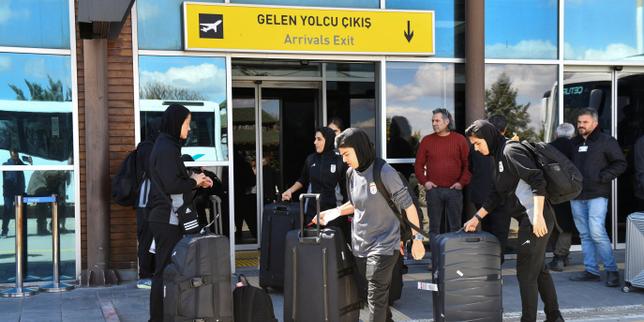
The decision of five members of the Iranian women’s national football team to rescind their asylum applications in Australia and return to Tehran represents a collapse of the traditional "defection-integration" pipeline. While media narratives often frame such movements through the lens of individual bravery or sudden regret, a structural analysis reveals a complex intersection of diplomatic pressure, familial leverage, and the diminishing utility of sports-based asylum in a shifting geopolitical landscape. This event serves as a case study in how state actors exert extraterritorial control over high-value human capital.
The Mechanics of Controlled Return
The return of these athletes is not an isolated choice but the result of a specific pressure-response mechanism. State-managed sports programs in high-tension jurisdictions function as extensions of soft power. When an athlete deviates from the state-mandated trajectory by seeking asylum, they transition from a soft power asset to a strategic liability. The reversal of an asylum claim generally occurs through three primary levers of influence. If you found value in this article, you should check out: this related article.
The Familial Leverage Variable
Non-democratic states often utilize "proxy coercion" to influence citizens abroad. When an athlete applies for asylum, the state's internal security apparatus assesses the remaining domestic assets—specifically immediate and extended family members. The calculation for the athlete shifts from a pursuit of personal safety to a risk-mitigation strategy for those left behind. In the Iranian context, this often involves the freezing of assets, the revocation of travel documents for relatives, or direct summons for questioning. The athlete's return is the only currency accepted to de-escalate these domestic pressures.
Diplomatic Backchannel Signaling
Asylum processes in countries like Australia are ostensibly independent of executive whim, governed by legal frameworks and international treaties. However, the diplomatic friction created by high-profile athletic defections often leads to quiet negotiations. If a host country views the maintenance of a specific bilateral relationship as superior to the moral capital of granting asylum to five footballers, the administrative "friction" in the asylum process may increase. Lengthy processing times, restricted work rights, and isolation from professional training environments create a "deterrence by attrition" effect. For another angle on this development, refer to the latest coverage from The Athletic.
The Professional Obsolescence Trap
A professional athlete’s career is defined by a narrow window of peak physical performance. For these Iranian footballers, the transition to Australian life involved an immediate cessation of elite-level competition.
- Loss of Match Fitness: Asylum seekers often spend months or years in administrative limbo without access to high-performance coaching or facilities.
- Identity Erasure: The shift from national hero to an anonymous refugee applicant creates a psychological "prestige gap" that many find unsustainable.
- Contractual Void: Without a FIFA-recognized transfer or release from the Iranian Football Federation, these players remain legally tethered to their home clubs, preventing them from signing professional contracts elsewhere.
Categorizing the Risks of High-Profile Defection
To understand why these five players returned while others remained, one must categorize the risks involved in the defection lifecycle. The "Cost of Exit" is rarely a flat fee; it is a compounding interest rate on the athlete’s future.
The Security-Visibility Paradox
The more famous an athlete is, the higher their value as a defector, but the lower their actual security. High-visibility defectors are monitored more closely by their home state’s intelligence services. For the Iranian women's team, their visibility in the Asian Cup and subsequent international qualifiers made them prime targets for a "reclamation" campaign. The state cannot afford the precedent of an entire squad successfully exiting, as it signals a loss of internal cohesion to both domestic and international audiences.
The Legal Framework of Rescission
Withdrawing an asylum application is a formal legal act with permanent consequences. By returning, the athletes provide the home state with a propaganda victory—the "voluntary" return of citizens who supposedly realized the errors of their ways.
- The Waiver of Protection: Rescinding an application signals to the UN and host nations that the "well-founded fear of persecution" has been resolved, making future applications nearly impossible.
- The Re-entry Protocol: Returnees are often subjected to "re-education" or public displays of loyalty to ensure they do not become catalysts for further dissent within the sporting community.
- The Monitoring Phase: Post-return life is characterized by restricted movement and a permanent ban from international travel, effectively ending their professional careers outside of domestic borders.
Structural Failures in Host Country Integration
The Australian asylum system, while robust in its legal adherence, often fails to account for the specific needs of professional athletes. When an athlete seeks asylum, they are usually treated as a general applicant. This creates a bottleneck in professional utility.
The lack of an "Elite Athlete Bridge Program" means that during the 12 to 24 months of processing, the player’s market value drops to zero. If the athletes were unable to secure immediate trials with A-League Women clubs due to visa restrictions or federation politics, the incentive to stay evaporated. The "pull factors" of Western democracy (freedom of speech, personal liberty) are often outweighed by the "push factors" of professional death and financial instability.
The Economic Reality of the Iranian Women’s League
Within Iran, despite the restrictions on clothing and international movement, the top-tier women’s footballers occupy a relatively high socioeconomic bracket compared to the general population. They receive salaries, sponsorships, and social status. In Australia, as asylum seekers, they likely faced:
- Financial Precarity: Dependence on government stipends or low-wage labor.
- Social Isolation: Language barriers and the absence of a dedicated support network for Persian-speaking athletes.
- Cultural Friction: The sudden shift from a highly structured, conservative athletic environment to a liberal, secular one can cause significant cognitive dissonance.
The decision to return suggests that the "Domestic Status Quo" in Iran, despite its systemic flaws, was perceived as more navigable than the "Uncertain Exile" in Australia.
Strategic Forecast for International Sports Governance
The return of these five players signals a shift in how non-democratic states manage their athletic delegations. We should expect an increase in "Compulsory Loyalty Measures," including:
- Escalated Financial Bonds: Requiring families to post significant collateral before an athlete travels abroad.
- Security Saturation: Increasing the ratio of "support staff" (security minders) to athletes during international tournaments.
- Digital Surveillance: Mandatory monitoring of athletes' social media and private communications while on foreign soil.
For international bodies like FIFA and the AFC, this event creates a crisis of authority. If national federations are using the "return" of athletes as a tool of political theater, the principle of neutrality in sport is effectively dead.
The strategic move for host nations is the creation of specialized visa categories that allow high-performance athletes to maintain their training and earning potential during the asylum adjudication period. Without such mechanisms, the "defection" will continue to be a high-risk, low-reward gamble that ultimately benefits the state from which the athlete is fleeing.
The five players who returned have likely traded their long-term liberty for the immediate safety of their families and a return to a known, albeit restricted, social hierarchy. This is not a failure of their resolve, but a testament to the sophisticated efficiency of state-sponsored coercion in the modern era.