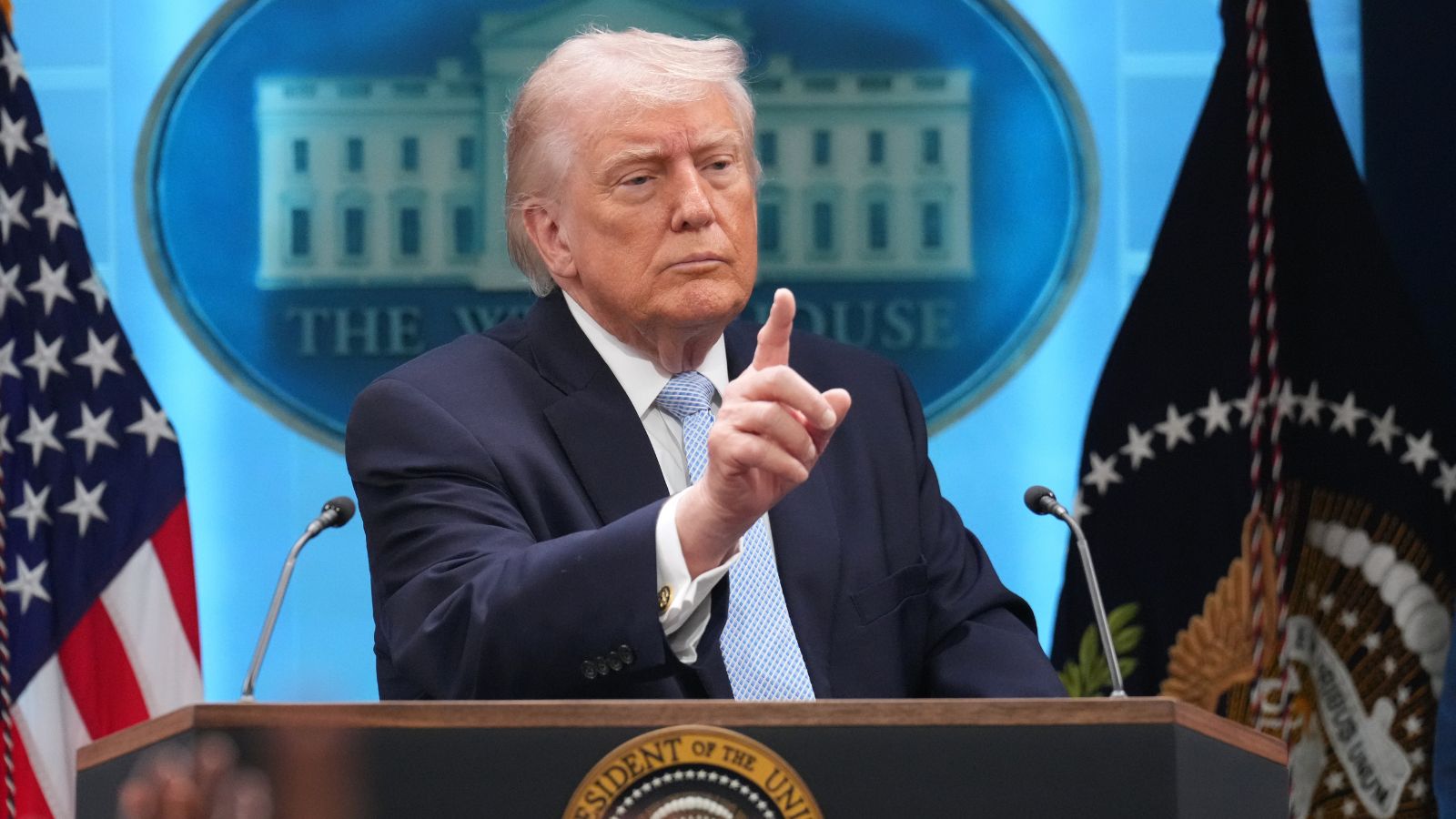
The announcement of a ten-day ceasefire between Israel and Lebanon, facilitated by the Trump administration, represents a tactical pause rather than a strategic resolution. This interval functions as a high-stakes stress test for a broader security architecture, designed to evaluate the operational compliance of Hezbollah and the enforcement capabilities of the Lebanese Armed Forces (LAF). The success of this window depends on three distinct pillars: verifiable withdrawal, jurisdictional sovereignty, and the credible threat of resumed kinetic action.
The Tripartite Framework of Cessation
The architecture of this 10-day window is not a vague appeal for peace; it is a sequenced operational plan. To understand why this specific duration was chosen, one must analyze the logistics of military repositioning.
- The Zone of Separation: The primary objective is the enforcement of a buffer zone south of the Litani River. A ten-day period is the minimum viable timeline for the identification and withdrawal of non-state heavy weaponry without triggering an immediate vacuum that could be exploited by opportunistic skirmishers.
- Verification Latency: International monitoring bodies require a discrete window to deploy sensors and personnel. The 10-day mark serves as the first "hard" data point where the absence of rocket fire can be distinguished from a mere reload cycle.
- Political Posturing: For the Trump administration, this timeframe provides a rapid feedback loop. It forces all parties to commit to a binary outcome—compliance or escalation—within a single news cycle, minimizing the "gray zone" tactics often used to stall diplomatic progress.
Operational Constraints of the Lebanese Armed Forces
A recurring bottleneck in Levantine security is the capacity of the Lebanese Armed Forces (LAF) to act as a sole sovereign entity in Southern Lebanon. Historically, the LAF has faced a "competency-legitimacy trap." While recognized by the international community, its operational freedom is often curtailed by the internal political influence of Hezbollah.
For this ceasefire to transition into a durable state, the LAF must execute a shift from passive observation to active enforcement. This requires:
- Hardware Parity: The ability to monitor subterranean infrastructure and detect mobile launch platforms.
- Mandate Clarity: Explicit domestic legal authority to seize unauthorized weapons without prior coordination with local sectarian leaders.
- Financial Solvency: Sustained funding for personnel who are currently grappling with Lebanon's hyperinflationary environment.
Failure in any of these areas creates a power vacuum. If the LAF cannot project power, the "10-day" window becomes a period of silent re-armament for non-state actors, rendering the diplomatic effort counterproductive.
The Israeli Security Calculus: Qualitative Military Edge vs. Strategic Fatigue
Israel’s participation in a short-term ceasefire is driven by a cost-benefit analysis of its northern border objectives. The IDF (Israel Defense Forces) has likely achieved its immediate kinetic goals regarding the degradation of Hezbollah’s first-tier command structure. However, holding territory incurs a high "friction cost" in terms of personnel and global diplomatic capital.
The ceasefire allows Israel to:
- Rotate Units: Relieve high-tempo combat units and conduct maintenance on armored assets.
- Intelligence Re-alignment: Use the quiet period to process signals intelligence (SIGINT) gathered during active operations, identifying new targets that may have shifted during the conflict.
- Test International Guarantees: By stepping back, Israel puts the onus of enforcement on the UN and the United States. If the ceasefire is breached, Israel gains the moral and legal high ground to escalate with increased intensity, citing the failure of the 10-day experiment.
The Trump Doctrine: Transactional Diplomacy and Accelerated Timelines
The involvement of Donald Trump introduces a "maximum pressure" variable into the diplomatic equation. Unlike traditional State Department approaches that favor incrementalism, this strategy utilizes short, high-pressure deadlines to force a crisis of decision.
The "Trump Ceasefire" logic operates on a transactional basis. The 10-day limit functions as a trial subscription to peace. If the parties "use" the peace effectively, the subscription is renewed with the carrot of economic investment and normalized relations. If they "misuse" it, the stick—usually in the form of crippling sanctions or green-lighting unrestricted military response—is applied immediately. This removes the incentive for "endless negotiations" that characterize previous UN-led efforts.
Risk Vectors and Potential Failure Points
Even with high-level backing, several structural vulnerabilities could collapse the arrangement before the 10-day mark.
The Problem of Rogue Elements
In a decentralized paramilitary structure, a single local commander can trigger a total collapse of the ceasefire. If a rocket is launched from a "rogue" cell, the IDF’s response will likely be disproportionate, as they cannot afford to let small breaches set a precedent. This creates a hair-trigger environment where the actions of a few can dictate the fate of millions.
The Transparency Gap
There is currently no real-time, shared data link between the parties involved. Trust is non-existent. Without a neutral third party capable of providing "instant replay" evidence of violations, the ceasefire remains vulnerable to misinformation and false-flag operations designed to force a resumption of hostilities.
The Litani River Threshold
The physical geography of the region dictates the security reality. If Hezbollah units merely hide their equipment within the 10-day zone rather than moving it north of the Litani, the security threat remains unchanged. Israel’s specialized tunnel-detection units will likely continue operations under the guise of "defensive monitoring," which Lebanon may interpret as a violation of the ceasefire.
Economic Implications for Lebanon
Lebanon’s economy is currently in a state of terminal decline. A 10-day ceasefire provides a momentary "liquidity of hope." For the Lebanese government, this is a chance to prove to international creditors and the IMF that the state is still capable of maintaining its borders. If the ceasefire holds, it could pave the way for the lifting of certain maritime restrictions, allowing for offshore energy exploration to resume—a critical component of Lebanon’s long-term solvency.
Strategic Forecast: Beyond the Tenth Day
The 10-day window is a diagnostic tool. If the frequency of cross-border incursions drops to zero and the LAF successfully deploys southward, the United States will likely pivot toward a permanent demarcation of the land border, similar to the 2022 maritime deal.
The strategic play here is to use the 10-day success as a foundation for a "Regional Security Compact." This would involve:
- Linking Lebanese border security to a broader Gulf-led reconstruction fund.
- Integrating Israeli-Lebanese security coordination through a "hotline" mediated by CENTCOM.
- Enforcing a "Zero-Tolerance" policy on non-state heavy weaponry in the south, backed by US-led maritime interdiction to prevent re-supply.
The 10-day ceasefire is not the end of the conflict; it is the beginning of a process to professionalize the border. The transition from a state of permanent war to a state of managed friction requires that the Lebanese government reassert its monopoly on the use of force. If the 10 days pass without a major breach, the geopolitical gravity shifts from military commanders to energy ministers and trade envoys. If it fails, the subsequent escalation will likely ignore previous "red lines," as the failure of a US-brokered deal usually triggers a shift toward total kinetic resolution.