The shift from regional skirmishing to a generation-defining conflict with Iran is not a matter of political rhetoric but a structural inevitability dictated by the convergence of three specific variables: projectile economics, the erosion of Western deterrence through proxy saturation, and the rapid democratization of high-precision strike capabilities. When a Prime Minister claims this conflict will define a generation, the underlying reality is a transition from a manageable security risk to a systemic pressure test on the global supply chain and democratic fiscal endurance.
The current escalation represents a fundamental break from the 20th-century warfare model. We are now operating within a Kinetic Attrition Loop where the cost of defense consistently outweighs the cost of offense by orders of magnitude.
The Economic Asymmetry of the Interception Ratio
The primary bottleneck in modern Middle Eastern conflict is the mathematical disparity between Iranian-produced loitering munitions and the Western interceptors required to neutralize them. This is the Cost-Exchange Ratio (CER).
- Production Scalability: Iran has optimized the production of the Shahed series of drones, which rely on off-the-shelf civilian components and simplified internal combustion engines. Estimates place the production cost per unit between $20,000 and $50,000.
- Interception Overhead: Countermeasures, such as the RIM-161 Standard Missile 3 or the Aster 30, carry unit costs ranging from $2 million to $15 million.
- The Saturation Threshold: Success for the Iranian strategy does not require a high hit rate. It requires a high "drain rate." By forcing an adversary to expend a $2 million interceptor on a $20,000 drone, the Iranian military apparatus is winning a war of fiscal exhaustion without ever achieving a decisive battlefield victory.
This fiscal imbalance creates a finite window of defensive viability. Western powers cannot sustain a multi-decade defense posture if the cost to protect an asset is 100x the cost of the weapon targeting it. This necessitates a shift from Active Defense (intercepting incoming fire) to Preemptive Suppression (destroying launch sites and manufacturing hubs).
The Three Pillars of the Iranian Force Projection Model
To understand why this conflict is generational, one must categorize the mechanisms Iran uses to exert influence. These are not isolated tactics; they are integrated components of a singular strategic architecture.
1. The Proxy Decentralization Framework
Iran utilizes a "Hub and Spoke" model of conflict where the central authority (The IRGC) provides the technological blueprints and funding, while decentralized actors (Hezbollah, the Houthis, PMF) execute the kinetic operations. This creates a Deterrence Gap. If a Houthi-launched missile disrupts 12% of global maritime trade in the Red Sea, a direct retaliatory strike on Tehran is diplomatically expensive and risks total regional war. Iran uses this ambiguity to exert pressure without incurring the direct costs of state-on-state combat.
2. High-Precision Democratization
The proliferation of GPS-guided munitions has eliminated the "accuracy advantage" previously held by NATO-aligned forces. In previous decades, only superpowers could hit a specific building from 500 miles away. Today, Iranian guidance packages have turned "dumb" rockets into precision tools. The technical barrier to entry has collapsed. This creates a state of Permanent Vulnerability for fixed infrastructure, including desalination plants, oil refineries, and shipping hubs.
3. The Nuclear Latency Strategy
Iran operates in a state of "Nuclear Latency"—the ability to achieve a breakout capacity within a timeframe shorter than the international community’s ability to respond via diplomatic or conventional military means. This latency acts as a strategic shield. Any attempt to dismantle the proxy networks is tempered by the risk of triggering a final dash toward a nuclear deterrent.
The Maritime Chokepoint Bottleneck
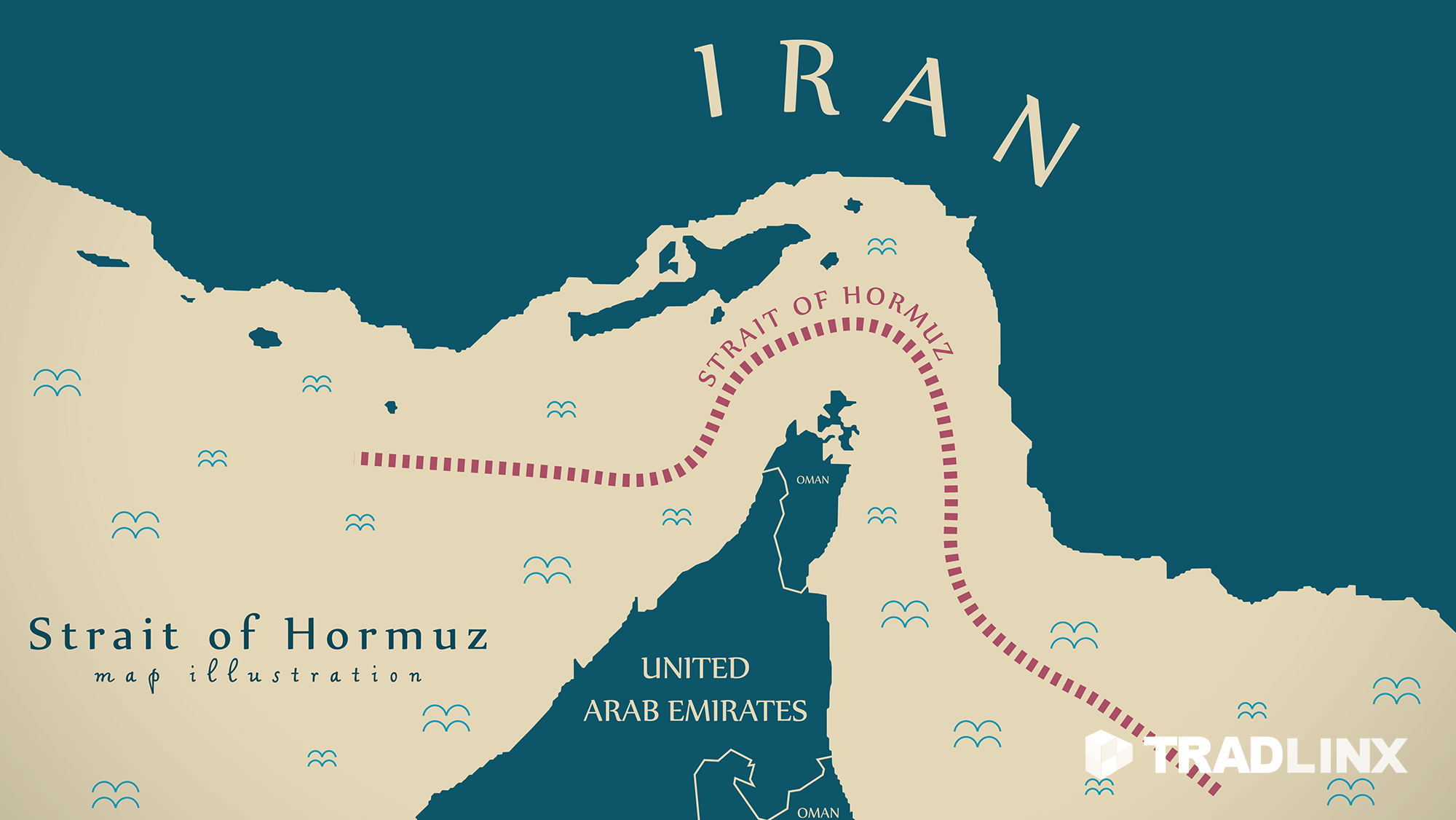
The Red Sea and the Strait of Hormuz represent the physical manifestation of the Iran conflict’s global reach. Security in these waters is no longer a localized issue; it is a fundamental requirement for global price stability.
The logistical impact of Iranian-aligned interference is measured through the Risk Premium of Transit. When insurance premiums for shipping vessels increase by 300% due to drone threats, the cost is passed directly to the global consumer. This is "Inflationary Warfare." By maintaining the ability to close or disrupt these waterways, Iran maintains a "veto power" over global economic growth.
The failure of "Operation Prosperity Guardian" to completely secure the Bab el-Mandeb strait demonstrates that traditional naval superiority is ill-equipped to handle swarming tactics. A billion-dollar destroyer is a formidable asset, but it is a "singular point of failure" in a high-density drone environment.
The Technological Arms Race: Directed Energy and AI
If the current defense model is unsustainable, the next decade will be defined by the transition to Directed Energy Systems (DES). This is the only logical path to solving the Cost-Exchange Ratio.
- Laser Interception: Systems like the Iron Beam represent a shift from chemical propulsion (missiles) to electrical propulsion (lasers). The cost per shot drops from millions of dollars to roughly $2.00.
- The Energy Limitation: The current constraint on DES is power density. Generating enough energy to neutralize a drone in milliseconds requires massive mobile power sources that do not yet exist at scale.
- Automated Target Acquisition: Human-in-the-loop systems are too slow for swarm attacks. The generational shift will see the deployment of AI-managed defense grids capable of tracking and neutralizing hundreds of simultaneous targets. This removes human hesitation but introduces the risk of algorithmic escalation.
The Geopolitical Realignment: The Russia-Iran-China Triad
We must move past the idea of Iran as an isolated regional actor. The conflict has evolved into a key node of a broader anti-hegemonic alliance.
Iran provides Russia with the loitering munitions used in Ukraine; in return, Russia provides advanced cyber capabilities and potentially Su-35 fighter jets. China, as the primary purchaser of Iranian oil, provides the financial floor that prevents the total collapse of the Iranian economy under Western sanctions. This Triangular Dependency means that a conflict with Iran is effectively a proxy conflict with the entire revisionist bloc.
Strategic isolation is no longer a viable tool of statecraft when the target has functional economic and military integration with two of the world's largest powers.
The Fragility of the Internal Iranian Social Contract
While the external force projection of Iran is formidable, the domestic foundation is increasingly brittle. There is a widening Legitimacy Deficit between the ruling clerical elite and a young, tech-literate population.
- Demographic Friction: 60% of the Iranian population is under the age of 30. Their economic interests are diametrically opposed to the IRGC’s focus on regional expansionism.
- Resource Mismanagement: Heavy investment in foreign proxies has come at the expense of domestic infrastructure, particularly in water management and power grid stability.
- The Succession Trigger: The eventual transition of power following the current Supreme Leader’s tenure represents the highest period of internal risk. If the IRGC moves to consolidate power further, it may trigger a civil fracture that forces the regime to choose between domestic survival and foreign adventurism.
Structural Constraints on Western Policy
The West faces a "Trilemma" in its Iran strategy. It can pursue two of the following three objectives, but never all three simultaneously:
- Regime Change or Containment: Actively working to degrade the regime's power.
- Regional Stability: Preventing a massive surge in oil prices and refugee flows.
- Nuclear Non-Proliferation: Keeping Iran from achieving a functional weapon.
If the West pushes for regime change, it sacrifices regional stability. If it prioritizes stability, it must tolerate a level of nuclear latency. This paradox is why policy has appeared inconsistent for three decades.
The Strategic Path Forward: Kinetic Decoupling
To navigate a generation of conflict, Western strategy must move away from "Managing the Crisis" and toward "Kinetic Decoupling." This involves three specific actions:
- Redundant Maritime Architecture: Expanding the use of land-based transit and alternative pipelines to reduce the leverage of the Strait of Hormuz. If the chokepoint is no longer critical, the threat of closing it loses its potency.
- Hardening of Regional Partners: Rather than providing a defensive umbrella, the West must transition to "In-Situ Production" capabilities for its partners. Saudi Arabia and the UAE must have the domestic capacity to produce low-cost interceptors to counter the Iranian CER advantage.
- Cyber-Industrial Sabotage: Traditional sanctions are losing their edge. The next phase of containment will rely on the "Stuxnet-style" degradation of Iranian manufacturing. By targeting the industrial controllers and supply chains of the drone factories themselves, the West can lower the "Volume of Fire" at the source.
The generation ahead will not be defined by a single "Great War," but by a continuous, high-tech siege. The victor will be whichever side first solves the energy-density problem of directed energy defense or the internal political problem of population disenfranchisement. The era of the "low-cost proxy" is over; the era of "automated attrition" has begun.
The final strategic move is the realization that Iran's regional influence is a direct function of the West's reliance on fixed energy corridors. By accelerating the diversification of energy sources and maritime routes, the West removes the primary theater where Iran holds a competitive advantage. The conflict is won not by defeating the proxy, but by making the proxy irrelevant to global survival.