The Architecture of State Sponsored Bounties
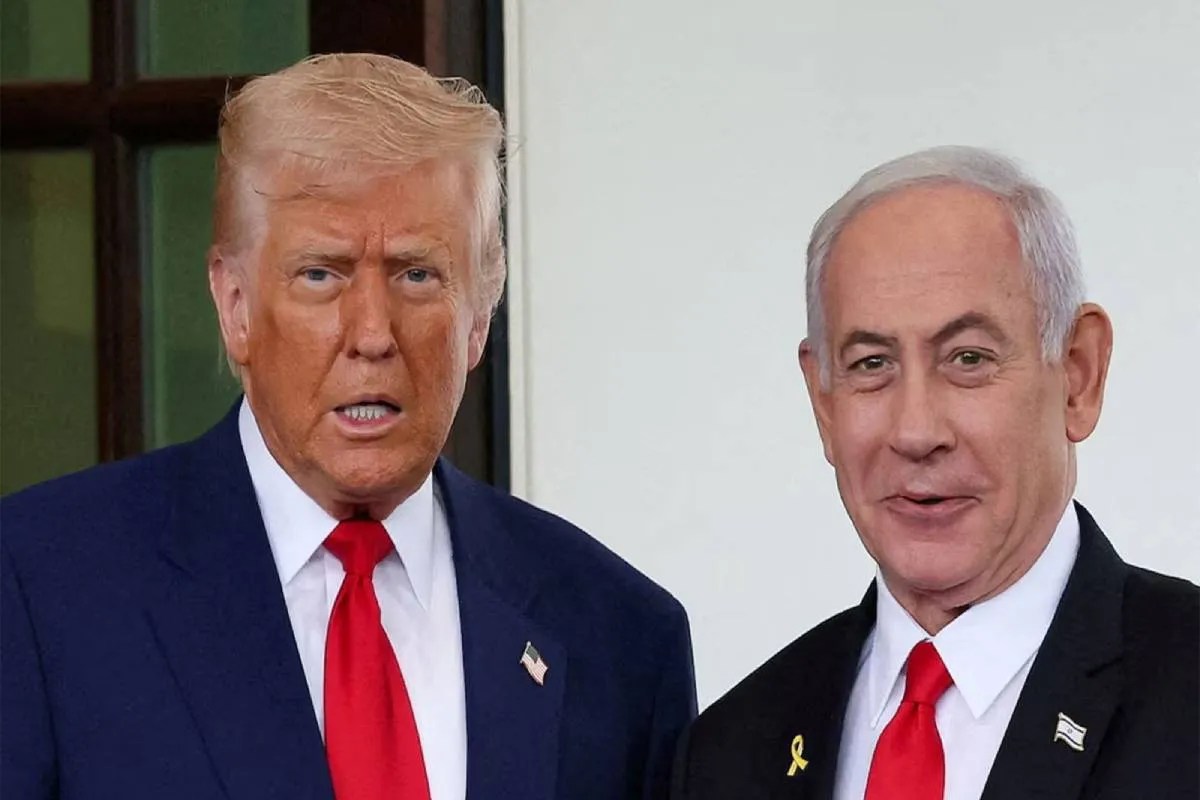
Sensational headlines frequently scream about multi-million dollar bounties placed on world leaders, treating these declarations as isolated acts of desperation. The reality is far more calculated. When reports emerged regarding Iranian legislative efforts to target Donald Trump and Benjamin Netanyahu with a 50 million euro bounty, it signaled a calculated deployment of asymmetric warfare rather than a mere emotional outburst.
State-sanctioned financial rewards for the elimination of foreign adversaries serve a specific purpose in modern geopolitics. They are not designed with the expectation that a rogue mercenary will simply walk into Mar-a-Lago or the Israeli Prime Minister’s residence to collect a paycheck. Instead, these public declarations operate as psychological operations, legal frameworks for proxy groups, and domestic propaganda designed to project strength to a home audience demanding retribution.
To understand why Iran utilizes these financial decrees, one must look at the specific legal and military mechanisms of the Islamic Revolutionary Guard Corps (IRGC). Iran operates on a doctrine of plausible deniability. By embedding financial rewards into legislative proposals or state-backed fatwas, the regime creates an open-source recruitment drive for global proxies. This shifts the operational burden away from official state actors to decentralized networks, making retaliation and deterrence incredibly difficult for Western intelligence agencies to manage.
The Strategy of Asymmetric Deterrence
Standard military conflict between major powers relies on conventional deterrence, such as missile defense systems, standing armies, and nuclear capabilities. Iran understands it cannot match the conventional military budget of the United States or the technological superiority of the Israel Defense Forces. Therefore, it pivots to asymmetric methods.
Placing a massive financial price tag on specific political figures serves to decentralize the threat. It forces target nations to expend massive amounts of resources on continuous, high-level security infrastructure. The United States Secret Service and Shin Bet must treat every low-level threat with absolute seriousness, draining operational capacity and creating a state of perpetual vigilance.
Furthermore, these bounties serve as an ideological dog whistle. For militant factions across Iraq, Syria, Lebanon, and Yemen, a state-sanctioned financial reward legitimizes their operational goals. It transforms a geopolitical assassination into a state-funded contract, providing the financial capital necessary to fund cells, purchase black-market weaponry, and execute complex surveillance operations against Western targets.
The Mechanics of Shadow Banking and Payouts
A critical question ignored by mainstream commentary is how a sanctioned state actually transfers 50 million euros to an operative. The global banking system, monitored closely by the US Department of the Treasury’s Office of Foreign Assets Control (OFAC), makes traditional wire transfers impossible for terrorist operations.
Iran bypasses these restrictions through a sophisticated, multi-layered financial network:
- The Hawala System: An informal method of transferring money based on a huge network of money brokers, located primarily in the Middle East and South Asia. It operates outside of traditional banking channels and leaves no digital footprint.
- Cryptocurrency Networks: State-backed mining operations utilize decentralized ledgers to move vast sums across borders before converting them into local fiat currencies via illicit over-the-counter exchanges.
- Commodity Smuggling: Gold, illicit oil shipments, and narcotics are frequently used as direct currency to pay off proxy leadership and individual operatives, completely avoiding the need for Western currency.
The Legalized Retaliation Framework
The Iranian parliament, or Majlis, often introduces symbolic legislation to codify these bounties into state policy. This is a deliberate tactic to create a domestic legal justification for international lawbreaking. By passing a bill that designates specific foreign leaders as terrorists, the state creates a legal mechanism within its own borders to allocate state funds toward extrajudicial killings.
This legal maneuvering gained significant momentum following the January 2020 assassination of Qasem Soleimani, the commander of the IRGC’s Quds Force. The strike, ordered by Donald Trump, fundamentally altered the rules of engagement between Washington and Tehran. The response from Iran was not a temporary diplomatic protest, but a institutionalized commitment to long-term retaliation.
The Bureaucracy of Revenge
The Iranian state structure is divided between the elected government and the clerical establishment led by the Supreme Leader. Bounties announced through parliamentary channels or religious edicts carry different weights. A legislative bill signals a commitment of state resources and intelligence sharing, while a fatwa provides the moral and religious justification required by hardline ideological factions.
Western intelligence agencies have noted a sharp increase in tracking operations targeting former Trump administration officials. This proves that the rhetoric surrounding these bounties is backed by active operational planning. Safe houses, intercepted communications, and digital espionage campaigns point toward an ongoing, institutionalized effort to exploit gaps in Western domestic security.
The Intelligence Nightmare of Open Source Threats
When a nation-state puts a bounty on a leader, the threat profile changes from a centralized plot to an open-source threat. Centralized plots are relatively easy for organizations like the CIA or Mossad to intercept. They involve known state actors, predictable communication channels, and identifiable supply chains.
Open-source threats are entirely different. Anyone with a radical ideology and access to basic weaponry becomes a potential operative. The barrier to entry drops significantly. Security agencies are forced to shift their focus from monitoring specific state intelligence officers to scanning a vast, unpredictable sea of lone actors and independent criminal syndicates looking for a massive payout.
This operational shift creates massive blind spots. A local criminal gang or a radicalized individual with no direct ties to Tehran could attempt an attack simply to claim the financial reward through secondary channels. This makes predictive intelligence nearly impossible, as there are no direct communications between the ultimate sponsor and the executioner until after the deed is done.
The Failure of Traditional Sanctions as a Deterrent
For decades, the primary tool used by Western nations to curb Iranian aggression has been economic sanctions. The theory is simple: starve the regime of capital, and they will lack the resources to fund global terror operations or offer multi-million dollar bounties.
The reality on the ground shows the limitations of this strategy. Sanctions have successfully crippled the formal Iranian economy, causing rampant inflation and hardship for ordinary citizens. However, the elite structures of the regime, specifically the IRGC, control the vast black-market economy. They control ports, smuggling routes, and major domestic industries that operate entirely outside the reach of Western sanctions.
Because the regime can always generate dark capital through parallel economies, the announcement of a 50 million euro bounty remains financially viable. The funds do not come from the official state budget line items for healthcare or education; they are drawn from the deep pools of unregulated revenue generated by the regime's illicit global enterprises.
The Geopolitical Fallout of Targeting Leadership
Attempting to eliminate a sitting or former United States President or an active Israeli Prime Minister carries immense risk for any state actor. The political fallout would be immediate and catastrophic for the originating nation. A successful attack would likely trigger a full-scale conventional military response, potentially leading to regime collapse.
Tehran is fully aware of this calculation. Therefore, the true value of the bounty is found in the perpetual threat state it creates. By keeping the threat alive indefinitely, Iran forces its adversaries to live under constant pressure, shapes their domestic political travel, and signals to its own population that the state has not forgotten past grievances.
The continuous cycle of threats, bounties, and heightened security creates a dangerous feedback loop. It narrows the path for diplomatic engagement, ensures that future administrations remain locked in a posture of maximum confrontation, and guarantees that the shadow war between Washington, Jerusalem, and Tehran will continue to escalate through unconventional means.