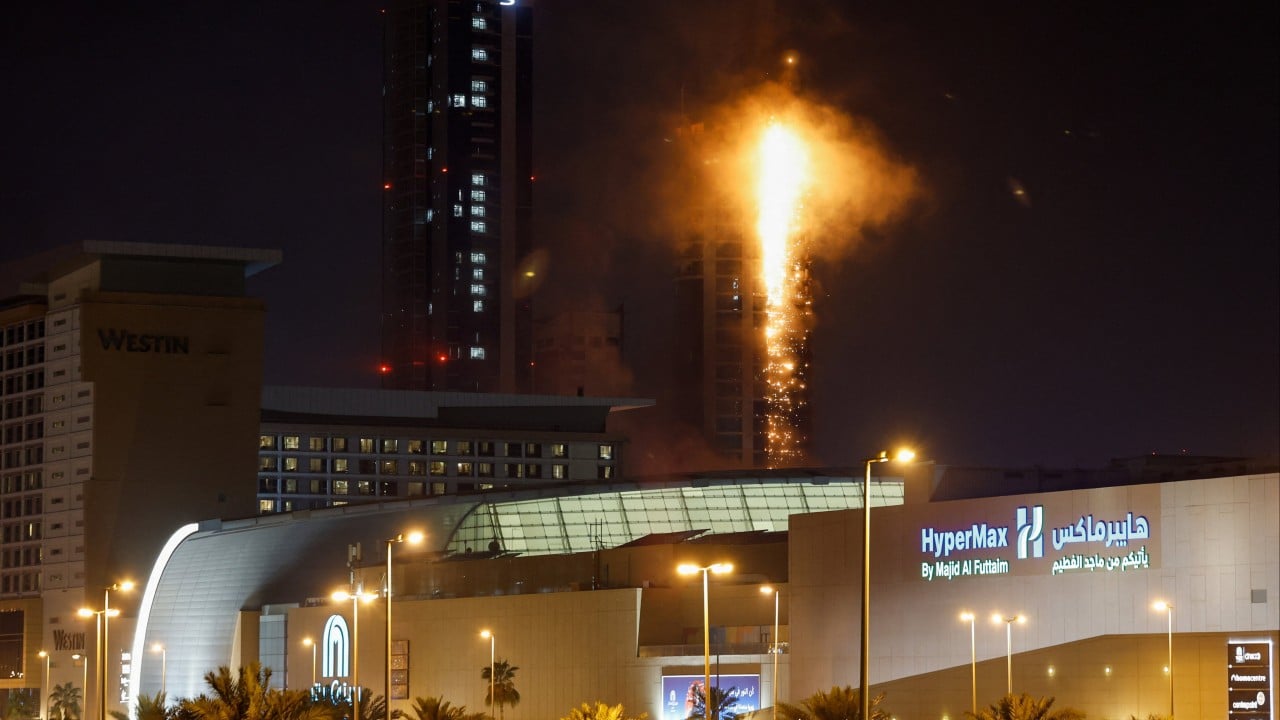
The global defense supply chain is a zero-sum environment where the allocation of precision munitions, diplomatic bandwidth, and financial liquidity is governed by the immediate intensity of active fronts. President Zelensky’s assertion that a protracted conflict involving Iran—and by extension its proxies and regional adversaries—would degrade Ukraine’s operational capacity is not a political lament; it is a calculation of industrial throughput and political attention spans. When a secondary theater of high-intensity conflict emerges, the "Ukraine First" priority in Western procurement cycles faces a systemic stress test that the current manufacturing base is ill-equipped to pass.
The Triad of Resource Attrition
To understand how a Middle Eastern escalation directly devalues Ukraine’s defensive posture, we must analyze the three specific vectors of resource diversion.
1. The Kinetic Intersect: Munitions and Air Defense
The most immediate bottleneck is the shared dependency on specific weapon systems. Ukraine’s survival depends on a steady "burn rate" of Interceptor Missiles (Patriot, NASAMS) and 155mm artillery shells. An expanded conflict in the Middle East involving Israel and Iranian-backed groups creates a direct internal competition for these exact inventories.
- Intercept Scarcity: Both Israel and Ukraine utilize the Patriot system. While their threats differ—Ukraine faces ballistic missiles and cruise missiles, while Israel often manages high-volume rocket fire—the production of interceptors is governed by a finite annual capacity. A surge in Middle Eastern demand forces the United States into a triage situation, prioritizing the immediate survival of a treaty-aligned partner over a strategic partner.
- Artillery Diversion: During the initial stages of the Gaza conflict, reports surfaced of 155mm shells originally earmarked for Ukraine being redirected to Israel. While Israel’s domestic production is significant, a full-scale war with a state actor like Iran would require a volume of suppressive fire that would exhaust global stockpiles, leaving Ukraine to face Russian "meat wave" tactics with a widening "shell gap."
2. Diplomatic Bandwidth and The Fatigue Coefficient
Geopolitics operates on a finite cognitive load. Western legislatures, specifically the U.S. Congress, possess a limited capacity to process multi-billion dollar aid packages.
- Priority Dilution: When the Middle East is in flames, the "urgency premium" of the Donbas front evaporates in the 24-hour news cycle. This leads to a degradation of political will.
- Legislative Gridlock: We have already observed how aid to Ukraine becomes a bargaining chip in broader spending debates. The introduction of a "Middle East Emergency" allows isolationist factions to argue for a pivot, suggesting that the U.S. cannot be the "arsenal of democracy" on two major fronts simultaneously.
3. Financial Liquidity and Energy Volatility
A long war involving Iran introduces systemic shocks to the global energy market. Since Russia’s primary economic engine is hydrocarbon export, any spike in global oil prices serves as a direct subsidy to the Kremlin’s war chest.
- The Price Floor Paradox: If Iranian exports are throttled or the Strait of Hormuz is contested, Brent Crude prices increase. Russia, despite sanctions, finds ways to sell at these higher margins through "shadow fleets" and third-party laundering.
- Inflationary Pressure: Increased energy costs in the EU and U.S. lead to domestic inflation. High inflation correlates strongly with decreased public support for foreign military financing. Voters prioritize "heating vs. eating" over "tanks for Kyiv," creating a democratic deficit for Zelensky’s administration.
The Iranian-Russian Defense Integration
The threat is not merely a diversion of Western resources but a consolidation of Eastern ones. The burgeoning defense partnership between Moscow and Tehran creates a symbiotic feedback loop.
The Drone-to-Jet Exchange
Iran provides the Shahed-series loitering munitions that allow Russia to conduct low-cost attrition warfare against Ukrainian infrastructure. In return, Russia provides advanced electronic warfare suites and Su-35 fighter jets to Iran.
- Technological Maturation: As Iranian drones are used in Ukraine, they undergo a rapid evolution based on real-world data against Western-grade air defenses. This "battle-testing" makes the Iranian threat in the Middle East more lethal, which in turn necessitates more Western defensive resources to be moved to the Middle East, completing the cycle of diversion.
- Intelligence Sharing: A long war allows Russia and Iran to synchronize their disruption of Western satellite and signals intelligence (SIGINT). If Western assets are busy tracking Iranian missile silos, they have fewer "eyes on" Russian troop movements in the Kharkiv or Zaporizhzhia sectors.
The Logistics of Attrition: Why "Just in Time" Fails in War
Modern Western defense procurement is built on a "Just in Time" (JIT) efficiency model, optimized for low-intensity counter-insurgency, not a high-intensity industrial war.
- Lead Times: The lead time for a new Patriot battery can exceed two years.
- Raw Material Bottlenecks: High-explosives, specialized semiconductors, and hardened steel are already in short supply.
When Zelensky warns of the impact of a Middle East war, he is referencing the Cumulative Lead Time Deficit. If a batch of microchips is sent to a factory building missiles for the Mediterranean theater, that is a batch of chips that will not be in a HIMARS rocket in the Donbas six months from now. The delay is not linear; it is exponential because it disrupts the entire assembly queue.
Strategic Divergence: The Pivot to Domestic Production
Ukraine’s response to this looming resource vacuum has been a forced pivot toward localized defense industrialization. This is a move from a "Donor-Dependent" model to a "Joint-Venture" model.
- Direct Tech Transfer: Instead of asking for finished tanks, Ukraine is courting Rheinmetall and BAE Systems to build maintenance and assembly hubs on Ukrainian soil.
- Unmanned Dominance: To compensate for the lack of 155mm shells, Ukraine has scaled FPV drone production to the hundreds of thousands. This is a tactical adaptation to a strategic shortage.
- The "FrankenSAM" Program: Integrating Western missiles onto Soviet-era launchers is an engineering workaround to the shortage of full Western platforms.
The Threshold of Sustainability
There is a measurable threshold where the Russian Federation gains a decisive advantage through Western distraction. If the "Allocation Ratio"—the percentage of Western aid going to Ukraine vs. other conflicts—falls below a specific critical mass, Ukraine loses the ability to conduct offensive operations. At that point, the conflict shifts from a "War of Maneuver" to a "Static Attrition War," which inherently favors the side with the larger population and a mobilized command economy: Russia.
Russia does not need to "win" in the Middle East. It only needs the Middle East to remain chaotic enough to serve as a persistent "resource sink" for the Pentagon. Every Tomahawk missile fired at a Houthi launch site is a financial and industrial unit that is not being leveraged against Russian logistics hubs in Crimea.
Tactical Reality: The End of the Blank Check
The strategy for Ukraine moving forward must assume a permanent state of Middle Eastern instability. The "Golden Age" of uncontested Western attention (February 2022 - October 2023) is over. The blueprint for Ukrainian victory must now integrate the following parameters:
- Decoupling from US Electoral Cycles: Ukraine must secure long-term, legally binding security bilateral agreements with European powers (UK, France, Germany) that are less susceptible to the immediate "theater-switching" of US foreign policy.
- Asymmetric Economic Warfare: Since a Middle East war inflates oil prices, Ukraine must increase its targeting of Russian refinery infrastructure. If Russia cannot process its oil into usable fuel or high-value exports, it cannot capitalize on the global price surge. This turns a global disadvantage into a localized tactical strike.
- Hardened Domestic Infrastructure: Moving assembly lines underground or into neighboring NATO territory (Poland/Romania) to ensure that even if the US supply chain is diverted, the "last mile" of assembly remains consistent.
The conflict in Ukraine is no longer a localized border dispute; it is the primary theater of a fragmented global struggle. Any strategy that treats it as an isolated variable, unaffected by the volatility of the Levant or the Persian Gulf, is fundamentally flawed. The victory condition for Kyiv is now inextricably linked to its ability to out-produce and out-innovate a global supply chain that is being pulled in two directions at once.
The strategic play is clear: Ukraine must transform from a consumer of Western security into a co-producer of it. By leveraging its unique position as a real-world testing ground for autonomous systems and electronic warfare, Ukraine can offer a "Return on Investment" to the West that transcends mere altruism. In a world of competing crises, the most valuable ally is the one that requires the least amount of "finished product" and instead offers the most "battlefield intelligence." Kyiv’s survival depends on becoming indispensable to the very industrial base that is currently being lured away by the fires in the Middle East.