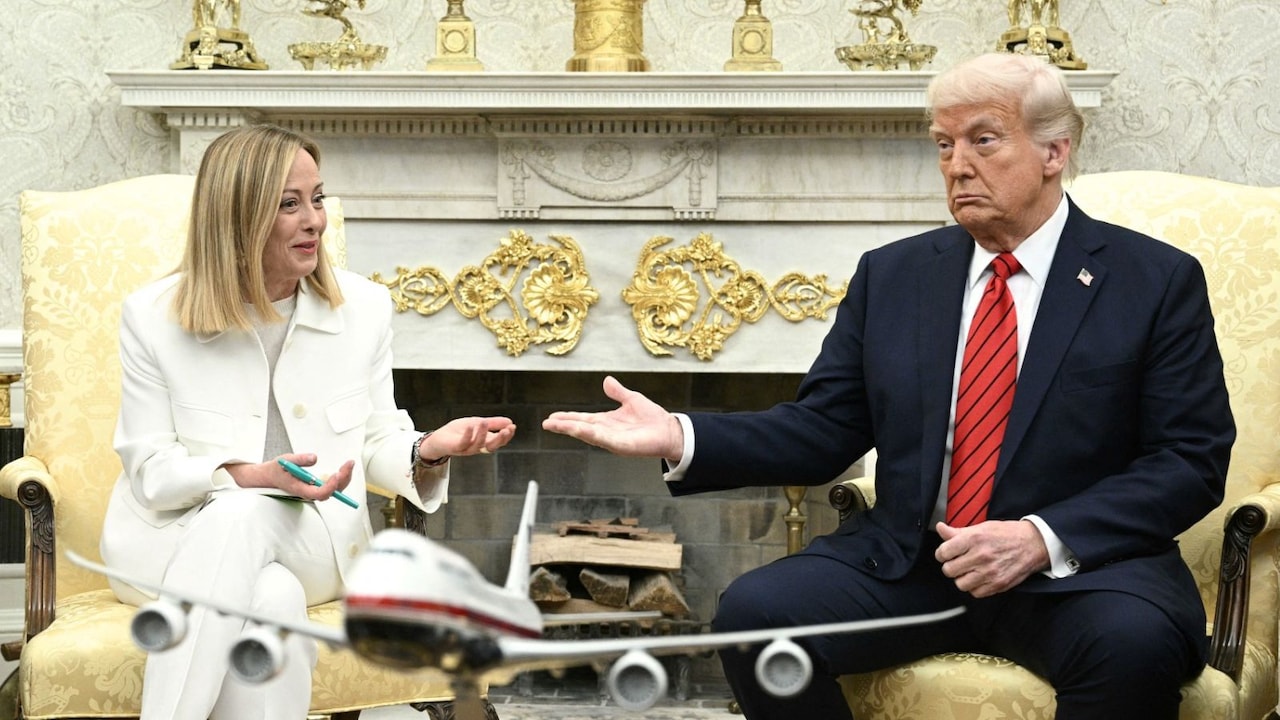
The Soft-Handed Media Mirage
The mainstream political press is chasing its own tail again. They see a clip of Donald Trump tossing out an "I like her" line about Italian Prime Minister Giorgia Meloni, followed by a standard-issue grievance about European defense spending, and they immediately spin a narrative of a chaotic, fracturing relationship. They treat geopolitical diplomacy like a high school cafeteria drama.
They are missing the entire point.
International statecraft at this level is not governed by personal mood swings or temporary "spats." What the commentators label as erratic behavior is actually a highly synchronized, mutually beneficial exercise in strategic posturing. Trump and Meloni are not fighting; they are putting on a clinic in domestic base mobilization.
The Illusion of the Transatlantic Rift
The lazy consensus insists that right-wing populists across the globe must form a monolithic, harmonious bloc, and that any friction between them signals a breakdown in the movement. This view is fundamentally naive. It ignores the core tenet of modern nationalism: domestic interests always come first.
When Trump complains about a lack of help or uneven defense burdens, he is not trying to permanently alienate Rome. He is speaking directly to his base in Ohio, Pennsylvania, and Michigan. He is reinforcing his core brand as the ultimate transactional dealmaker who refuses to let America get "ripped off" by foreign allies.
Meloni understands this game perfectly because she plays it herself.
The Geopolitical Reality: True statecraft is not about getting along. It is about using international friction to manufacture domestic leverage.
For Meloni, being occasionally targeted by American populist rhetoric is not a liability—it is an asset. It allows her to project strength at home and within the European Union. She can position herself as a pragmatic, independent leader who stands up for Italian interests, rather than a mere vassal of Washington or a radical outlier in Brussels.
The Mechanics of Calculated Friction
Let’s look at how this friction actually functions on a mechanical level. In my years analyzing foreign policy shifts and elite political maneuvering, I have watched administrations blow billions in capital trying to maintain a facade of absolute consensus. It never works. The smartest leaders employ Calculated Friction.
| The Media's Interpretation | The Counter-Intuitive Reality |
|---|---|
| Trump’s "I like her" comment is a fleeting whim. | It is a deliberate signal to keep the door open for future bilateral deals. |
| The "No Help" complaint is a diplomatic breakdown. | It is a standard opening gambit in defense budget negotiations. |
| Italy is being isolated by Washington. | Italy is leveraging its unique position as a bridge between the US and the EU. |
By throwing out a mix of personal praise and policy critiques, Trump achieves two things simultaneously:
- He keeps his counterpart off-balance.
- He satisfies his voters' demand for an "America First" foreign policy without committing to any destructive, permanent policy changes.
Dismantling the "People Also Ask" Delusions
The public queries surrounding this dynamic show exactly how skewed the public perception is. Let’s answer them with some brutal honesty.
Is Italy moving away from its Western alliances?
Absolutely not. The premise of the question is flawed. Italy’s commitment to NATO and its integration into European defense frameworks are dictated by geographic and economic realities, not by rhetorical skirmishes. Meloni has consistently maintained a pro-Western, pro-Atlanticist stance where it actually matters—in voting records, troop deployments, and intelligence sharing. The public rhetoric is just noise for the voters.
Does Trump’s rhetoric damage long-term bilateral trade?
No. Trade volume between the US and Italy is driven by corporate supply chains, luxury manufacturing demands, and energy markets. It is not dictated by a press conference aside. If anything, a transactional US administration opens the door for targeted, bilateral trade agreements that bypass the bureaucratic quagmire of Brussels.
The Real Risk Everyone Is Ignoring
If there is a downside to this contrarian view, it is not that the alliance will collapse. The real risk is rhetorical inflation.
When leaders constantly use aggressive, transactional language to satisfy their domestic bases, they raise the baseline expectations of their voters. Eventually, just talking tough isn't enough. Voters start demanding tangible, disruptive actions—like actual tariff hikes or troop withdrawals—that could genuinely damage the underlying geopolitical architecture.
I have seen political strategists play this game until it blows up in their faces. They think they can control the fire they light for the cameras, but public sentiment can be an unstable propellant.
Stop Looking for Friendship in Politics
The media wants you to believe that international relations are driven by whether two leaders shared a warm handshake or exchanged a cold stare at a summit. It is a comforting, simplistic narrative that reduces complex systemic pressures down to human emotion.
The truth is colder. Trump’s strategic ambiguity and Meloni’s calculated resilience are perfectly aligned. They are both giving their respective audiences exactly what they want to see, while leaving the deep-level military, intelligence, and economic ties between Washington and Rome completely untouched.
Stop reading the diplomatic tea leaves based on a few off-hand remarks. The friction is the point, the drama is manufactured, and the status quo is safer than it looks.