A Fragile Truce on the Andaman Sea
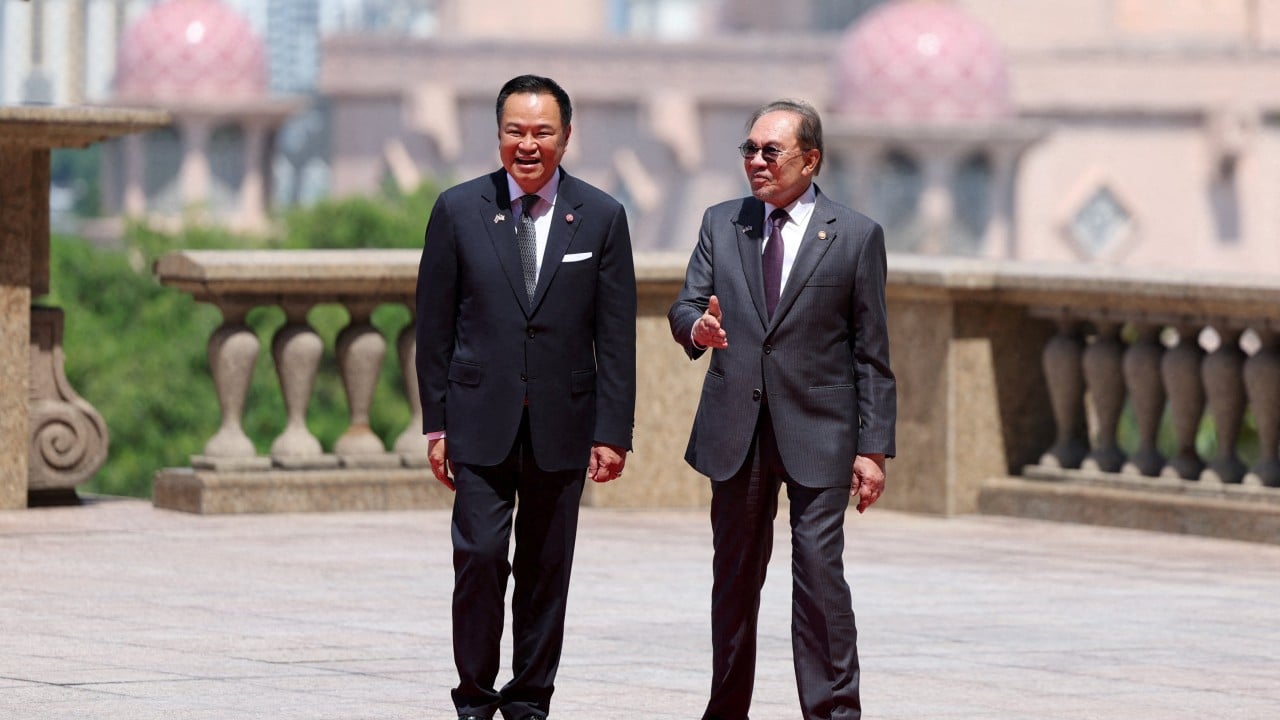
The recent diplomatic handshake between Malaysian Prime Minister Anwar Ibrahim and Thai Deputy Prime Minister Anutin Charnvirakul appears to have settled a boiling maritime dispute over fishing rights and seafood supply chains. On paper, the agreement stabilizes cross-border trade and calms the waters for thousands of independent trawlers. In reality, this sudden peace is a tactical pause rather than a permanent solution. The deal papers over deep-seated systemic issues regarding territory, dwindling marine stocks, and enforcement double standards that have plagued the Malacca Strait and the Andaman Sea for decades.
For months, tensions mounted as marine enforcement agencies on both sides of the border stepped up detentions of foreign vessels. Malaysia accused Thai commercial fleets of encroaching deep into its Exclusive Economic Zone (EEZ) using aggressive, industrial-scale methods. Thailand countered by pointing out the frequent, arbitrary impoundment of its vessels and the harsh treatment of its crews. The escalation threatened to disrupt a multi-million-dollar seafood trade pipeline that feeds processing plants from Penang to Bangkok. For a deeper dive into similar topics, we recommend: this related article.
While the political leadership celebrates a breakthrough, veterans of the regional fishing sector remain deeply skeptical. De-escalating a diplomatic standoff at a high-level summit is relatively simple. Modifying the economic desperation that drives overfishing in contested waters is an entirely different challenge.
The Economics of Encroachment
To understand why this dispute erupted, one must look at the stark economic realities driving both nations' fishing fleets. Thailand possesses one of the most sophisticated commercial fishing infrastructures in Southeast Asia. However, its domestic waters have suffered from severe overfishing for generation after generation. Thai commercial trawlers must venture further from home to remain profitable, making the rich, less depleted waters of northern Malaysia an incredibly lucrative target. For broader details on this development, extensive reporting is available at The Guardian.
Malaysia operates on a different model. Its fisheries sector relies heavily on smaller, artisanal fishermen alongside a growing but less aggressive commercial fleet. Local Malaysian fishermen have watched their daily catches plummet. They blame the massive, night-time incursions by Thai industrial vessels. When Malaysian enforcement agencies responded by seizing Thai boats and arresting crews, they were reacting to intense domestic political pressure to protect local livelihoods.
+-------------------------------------------------------------+
|               REGIONAL FISHERIES COMPARISON                 |
+----------------------------+--------------------------------+
| THAILAND                   | MALAYSIA                       |
+----------------------------+--------------------------------+
| Industrialized, high-cap   | Artisanal & mid-scale fleets   |
| Exhausted domestic waters  | Richer, protected EEZ zones    |
| Driven by export demand    | Focused on domestic security   |
+----------------------------+--------------------------------+
The Anwar-Anutin agreement attempts to solve this structural imbalance through a joint management framework and relaxed cross-border processing rules. This approach ignores the fundamental law of supply and demand. As long as Thai processing plants require raw volume and Malaysian waters hold that volume, illegal, unreported, and unregulated (IUU) fishing will continue. The financial incentives to cross an invisible maritime boundary simply outweigh the risk of capture.
Chronically Broken Enforcement Systems
The core failure of previous maritime treaties between Kuala Lumpur and Bangkok lies in enforcement. The maritime border in the Gulf of Thailand and the Andaman Sea is a complex maze of overlapping claims. Marine police and coast guards operate with different sets of rules, varying levels of corruption, and divergent political priorities.
The Problem with Discretionary Fines
Under the new pact, both nations agree to a more transparent system of handling detained vessels, favoring fines and immediate deportation over prolonged crew detentions. This sounds humane, but it creates a predictable cost-of-doing-business model for large fishing syndicates.
A fine is not a deterrent if the value of the illegal catch exceeds the penalty.
When syndicates view legal penalties merely as operational expenses, enforcement loses its teeth. Industrial trawlers can absorb occasional seizures if nine out of ten trips successfully harvest high-value species from Malaysian waters undetected.
Selective Blindness on the High Seas
Naval and coast guard personnel on both sides face immense logistical hurdles. Patrolling thousands of square kilometers of open ocean requires massive resources. It also requires impeccable intelligence sharing, which rarely happens in practice due to deeply ingrained institutional distrust.
Local fishermen frequently report that enforcement actions are highly selective. Smaller captains without political connections bear the brunt of crackdowns, while large, corporate-owned fleets navigate restricted zones with apparent impunity. Until the joint patrol mechanisms established by Anwar and Anutin address this internal corruption, the treaty remains little more than words on a page.
The Hidden Environmental Cost
Political announcements consistently sideline the ecological collapse of the regional marine ecosystem. The political class views the dispute through the lens of trade volume, inflation metrics, and bilateral harmony. The oceans, however, are operating on a finite timeline.
The methods employed by industrial fleets in these contested waters are devastatingly destructive. Bottom trawling scrapes the seabed, destroying coral reefs and disrupting critical breeding grounds for shrimp and pelagic fish. The targeting of juvenile fish to supply the booming aquaculture feed industry further cripples the capacity of these fish stocks to recover.
Ecological Chain Reaction:
[Bottom Trawling] -> [Seabed Destruction] -> [Loss of Nurseries] -> [Stock Collapse]
If the current rate of extraction continues, the very resource Malaysia and Thailand are fighting over will cease to exist in commercially viable quantities within the decade. The new agreement focuses heavily on normalizing trade flows and streamlining logistics for processing plants. It offers zero concrete measures for radical conservation, seasonal fishing bans, or a reduction in total fleet capacity. It coordinates exploitation rather than managing conservation.
Geopolitical Posturing and ASEAN Diplomacy
The timing of this sudden peace treaty is not accidental. Both Malaysia and Thailand are navigating complex geopolitical waters within the broader ASEAN framework. With shifting trade alliances and growing economic pressures from larger regional powers, neither nation can afford a prolonged, public dispute with an immediate neighbor.
For Prime Minister Anwar Ibrahim, securing stability on the northern border allows his administration to focus on domestic economic reforms and larger regional diplomatic initiatives. It projects an image of Malaysia as a stabilizing force in Southeast Asia. For Thailand, resolving the dispute ensures that its vital seafood export sector faces fewer supply chain bottlenecks at a time when the domestic economy is searching for momentum.
This geopolitical pragmatism means the treaty was designed for quick diplomatic optics rather than long-term operational viability. It allows both leaders to claim a win on the international stage while leaving the difficult, ground-level work of maritime demarcation and resource allocation to underfunded bureaucratic committees.
The Unsustainable Reality for Local Fleets
The individuals most affected by this diplomatic maneuvering are the independent fishermen who live along the coastal fringes of Kedah, Perlis, and southern Thailand. For these communities, the border is not an abstract line on a diplomatic map; it dictates whether they can feed their families.
Small-scale Malaysian fishermen feel betrayed by agreements that ease restrictions on foreign fleets. They argue that allowing joint operations or relaxing processing rules gives a green light to large-scale Thai operators to continue draining local waters. Conversely, small-scale Thai fishermen face increasing marginalization as corporate fleets monopolize the legal quotas and cross-border permits negotiated under the new framework.
The agreement lacks a mechanism to protect these traditional fishing communities from the corporate consolidation of the seafood industry. By favoring large-scale commercial processors and industrial fleets to maintain high trade statistics, both governments risk hollowed-out coastal economies and rising local resentment.
Moving Beyond Paper Pacts
A real solution to the Malaysia-Thailand seafood conflict requires moving beyond high-level handshakes and address the root causes of maritime friction.
First, both nations must establish a genuinely independent, joint maritime scientific committee tasked with setting hard, legally binding catch limits based on data, not political convenience. These quotas must apply equally to both fleets, with zero exceptions for politically connected corporate syndicates.
Second, enforcement must be modernized through technology rather than relying entirely on manual vessel patrols. Implementing mandatory, tamper-proof satellite tracking systems for all vessels over a certain tonnage would eliminate the ambiguity surrounding border incursions. If a vessel enters a restricted zone, its own telemetry data should be admissible in an international maritime court, bypassing local enforcement corruption.
Finally, the focus of bilateral cooperation must shift from processing volume to habitat restoration. Establishing significant, jointly enforced marine sanctuaries where all fishing is banned would allow depleted stocks to recover and naturally replenish the surrounding fishing grounds.
Without these structural changes, the current peace will evaporate the moment marine stocks dip further and economic desperation pushes vessels across the border once again. The Anwar-Anutin pact did not solve the seafood crisis; it simply reset the clock for the next inevitable clash on the water.