We live wrapped in an invisible mesh of glass and wire, where every turn of a wheel leaves a digital footprint. We tell ourselves this architecture exists for safety. We tell ourselves that cameras perched on utility poles are neutral observers, minding their own electronic business, quietly logging the rhythm of traffic.
Consider what happens when the observer belongs to someone you used to love.
In New Bedford, Massachusetts, an ordinary municipal street turned into a private corridor of anxiety. A two-year relationship ended in April, and with it came the quiet unravelling that follows most modern heartbreaks. Except this breakup came equipped with administrative credentials. Emily Pacheco, a local police officer, had access to a tool designed to solve serious crimes: a network of automated license plate reader cameras known as Flock Safety.
The system is fast. With data updates arriving in under two minutes, it offers a near-real-time tracker of human movement. It does not care about your intentions; it only cares about your metal plates.
In April, the system logs showed 18 searches tied to a specific vehicle. By May, that number surged to 259. By June, another 220. Most queries were filed under the administrative heading of a traffic infraction, a convenient clerical mask for something entirely personal. The car belonged to her ex-girlfriend.
Data does not bleed. But it reveals.
Imagine driving down a familiar avenue, buying groceries, parking outside a friend's house, or seeking refuge in a quiet neighborhood, trusting that the privacy of an ordinary citizen still exists. Now imagine that every single coordinate is being quietly indexed, tabulated, and funneled straight to the phone of a former partner who wears a badge.
This is the hidden vulnerability of modern municipal surveillance. We build high-tech safety nets, assuming only saints will hold the keys to the kingdom. We assume protocols will hold. We assume the system knows the difference between a fleeing felon and a frightened woman trying to outrun a ghost from her past.
The illusion shattered when internal affairs investigators noticed a deeply abnormal volume of searches linked to a single plate. The police department confronted a grim reality that countless privacy advocates have warned about for years. Technology built to protect communities can easily be weaponized to isolate individuals.
Faced with mounting scrutiny, the New Bedford Police Department took a drastic step, temporarily suspending its entire automated plate-reading network. A civil court judge extended a protective order, compelling the officer to surrender her firearms and suspending her license to carry. An internal investigation continues, but the broader question remains hanging in the salt air of the coastal city.
How do you legislate against human obsession when the state hands out god-tier surveillance tools as standard office equipment?
Civil liberties experts point out that databases tracking every motorist create an irresistible temptation for misuse. When the barrier to spying on a citizen drops from physical stalking to a few keystrokes on a squad car terminal, the nature of harassment changes entirely. It becomes frictionless. It becomes automated.
The company behind the technology announced rushed updates, tightening data retention limits from a month down to a single week, and introducing new algorithmic tripwires to flag abnormal search patterns. But shorter retention windows do not cure the underlying ache of being watched. They merely shrink the archive of violation.
Trust is heavy to build and weightless when it drops. Every camera mounted on a steel pole is a monument to our collective fear, promising security in exchange for privacy. Yet when the system turns inward, it reminds us of a chilling truth.
The most dangerous thing about a panopticon is not that it watches everyone. It is that someone always figures out how to use it for themselves.
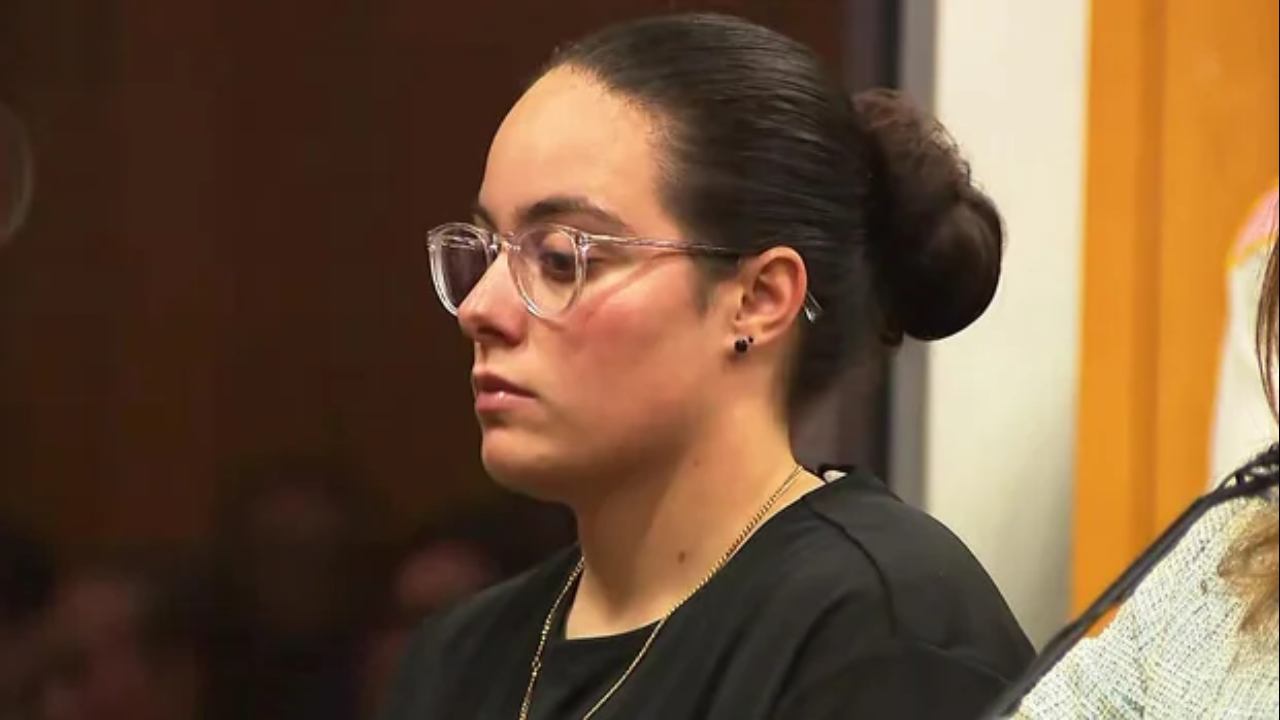
New Bedford police officer accused of using Flock cameras to track ex-girlfriend
This news report provides additional local coverage and visual context regarding the suspension of the New Bedford camera network and the court proceedings.