The weight of a rucksack isn’t just measured in pounds of ceramic plating and extra ammunition. It is measured in years. For two decades, the American psyche has carried a specific kind of exhaustion—the dull, throbbing ache of a conflict that seemed to have no "off" switch. We became a nation of people waiting for a finale that never arrived, watching as the definition of victory blurred into a static gray haze.
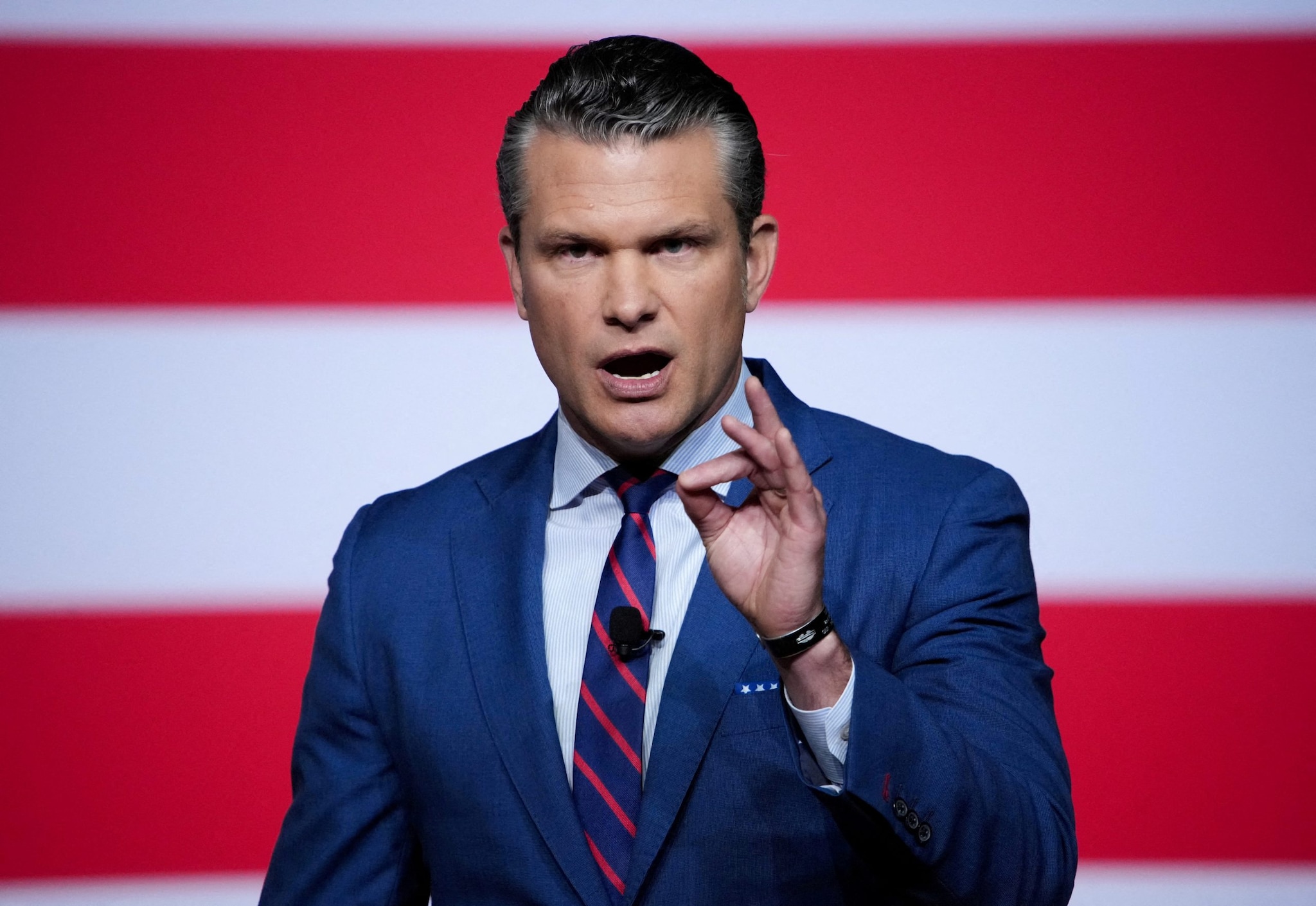
When Pete Hegseth stood before the microphones to discuss the current posture of American involvement in Ukraine, he wasn't just talking about logistics or troop deployments. He was attempting to perform a long-overdue exorcism. He was speaking to the ghost of Iraq.
"This is not Iraq," he said. "This is not endless."
To understand why those five words matter, you have to look at the faces of the people who lived the alternative. Consider a hypothetical soldier named Elias. In 2004, Elias was told the mission was to find weapons. In 2006, the mission was to build a democracy. By 2010, the mission was simply to keep the lights on in a province that didn't want him there. Elias didn't lose a war; he lost a decade to a goalpost that kept growing legs and running toward the horizon.
Hegseth’s message is a deliberate pivot away from that soul-crushing ambiguity. He is signaling a shift toward a "finish on our terms" philosophy, a concept that sounds simple but represents a radical departure from the nation-building quagmires of the early 21st century.
The Mechanics of the Exit
War has always been a messy business, but modern conflict has become an algorithmic nightmare. In the past, you captured a capital, signed a treaty on the deck of a battleship, and went home to plant corn. Today, conflict is more like a software subscription—it’s easy to sign up for, but the "cancel" button is hidden behind layers of bureaucratic fine print and shifting geopolitical interests.
The current administration’s stance, as articulated by Hegseth, relies on a different set of mechanics. It isn't about "staying as long as it takes." That phrase is a trap. It’s an invitation for an adversary to simply wait. If the duration is infinite, the cost becomes unsustainable.
Instead, the focus has shifted to leverage. In this new framework, the United States isn't acting as the world’s permanent landlord. It is acting as the ultimate disruptor. By providing the high-end technological "teeth"—the HIMARS, the intelligence feeds, the advanced drone capabilities—the U.S. creates a scenario where the conflict can be pushed toward a conclusion through overwhelming local efficacy rather than American endurance.
The stakes are invisible but massive. If the U.S. proves it can enter a theater, facilitate a specific outcome, and leave without being swallowed by the terrain, it restores a deterrent that has been decaying since the fall of Kabul. It proves that American power is a scalpel, not a lead weight.
The Human Cost of the "Maybe"
We often talk about war in terms of "theaters" and "assets," as if the world were a giant chessboard. But for the families of those involved, war is a series of "maybes." Maybe he’ll be home for Christmas. Maybe the mission will change again. Maybe this is the last rotation.
That "maybe" is a poison. It erodes trust between the citizenry and the state. Hegseth is betting that the American public will support a decisive, time-bound involvement far more than a vague, open-ended commitment. He is tapping into a deep-seated desire for clarity. People can handle sacrifice; what they cannot handle is futility.
History provides the map for this tension. Think back to the Gulf War of 1991. It was fast. It was brutal. It had a defined objective: get Iraq out of Kuwait. When that was done, the troops came home to ticker-tape parades. Contrast that with the 2003 invasion, which lacked a clear "done" state. The difference wasn't the quality of the soldiers or the power of the weapons. It was the definition of the finish line.
Hegseth’s rhetoric suggests a return to the 1991 mindset, albeit in a much more complex, proxy-driven environment. He is trying to convince a skeptical public—and a wary Congress—that the U.S. has learned how to say "no" to the mission creep that turned the Middle East into a multi-generational project.
The Technological Tightrope
The "not Iraq" promise is built on the back of 21st-century tech. In the sands of Mesopotamia, "winning" required boots on every corner and a humvee in every alley. It was a labor-intensive, human-heavy endeavor that left a massive footprint and a high body count.
In the current landscape, the footprint is digital and orbital. We are seeing a war where a single satellite uplink can do the work of a thousand scouts. This allows for a "light footprint" strategy that minimizes American exposure while maximizing the impact on the ground.
But there is a catch.
Technology can be a deceptive mistress. It creates the illusion of a "clean" war, a conflict fought behind screens and through joysticks. Hegseth knows that while the tools have changed, the fundamental nature of the struggle remains human. If the U.S. provides the tools but the local will to win isn't there, we risk falling back into the same pattern of propping up a failing state.
The "finish on our terms" mantra is as much a warning to our allies as it is to our enemies. It says: The window is open, but it is not a door you can stand in forever.
The Ghost in the Room
During Hegseth’s briefings, you can almost feel the presence of the veteran community. These are the men and women who have spent the last twenty years in a cycle of deployment and heartbreak. They are the ones who know that "victory" is a word used by politicians, while "survival" is the word used by everyone else.
To them, the promise that this is "not Iraq" is a sacred one. It’s a vow that their younger brothers and sisters won't find themselves patrolling the same dusty roads for no clear reason in 2040.
There is an inherent vulnerability in making this claim. If the war in Ukraine drags on for another five years with no end in sight, Hegseth’s words will be thrown back at him. He is pinning his reputation—and the credibility of the Department of Defense—on the idea that modern American power is agile enough to avoid the gravity of a stalemate.
Is it confusing? Yes. Geopolitics is a fractal of competing interests where today’s friend is tomorrow’s complication. Is it scary? Absolutely. We are flirting with the boundaries of major-power conflict in a way we haven't since the Cuban Missile Crisis.
But there is a certain grim honesty in Hegseth's approach. He isn't promising a utopia or a global democratic revolution. He is promising an end. He is promising that the U.S. will not be a captive of its own momentum.
The Finality of the Terms
When we talk about "finishing on our terms," we have to ask whose terms those actually are. Usually, they are the terms of the person with the most to lose. In this case, the U.S. is redefining its terms as the protection of its own strategic interests and the preservation of its resources, rather than the total transformation of a foreign society.
This is a cold, hard realism. It lacks the soaring idealism of the "Freedom Agenda" of the early 2000s, but it possesses a structural integrity that those previous efforts lacked. It is a recognition that American power is finite. It is a realization that to be strong everywhere is to be strong nowhere.
Imagine a father sitting in a kitchen in Ohio, reading the news. He has a son in the 82nd Airborne. For twenty years, that father lived with a low-grade fever of anxiety, watching the news from Baghdad and Kabul, wondering if the "endless" part of the war applied to his family too.
Hegseth is speaking directly to that kitchen table.
He is asserting that the era of the open-ended check is over. The "terms" are no longer dictated by the chaos of the battlefield, but by a calculated assessment of what is necessary, what is achievable, and—most importantly—what is final.
The rucksack is still heavy. The road is still dangerous. But for the first time in a generation, there is a map that actually shows a destination instead of just more road.
Victory isn't always a flag over a palace. Sometimes, victory is simply the courage to finish. To walk away when the work is done, rather than staying until the work is forgotten. The ghost of Iraq still haunts the halls of the Pentagon, but if Hegseth is right, we are finally learning how to stop feeding it.
The silence that follows a finished war is the most beautiful sound a soldier ever hears. It is a silence we have been denied for far too long. If this is truly not Iraq, then that silence might finally be within reach, not as a dream, but as a deliberate, hard-fought reality.