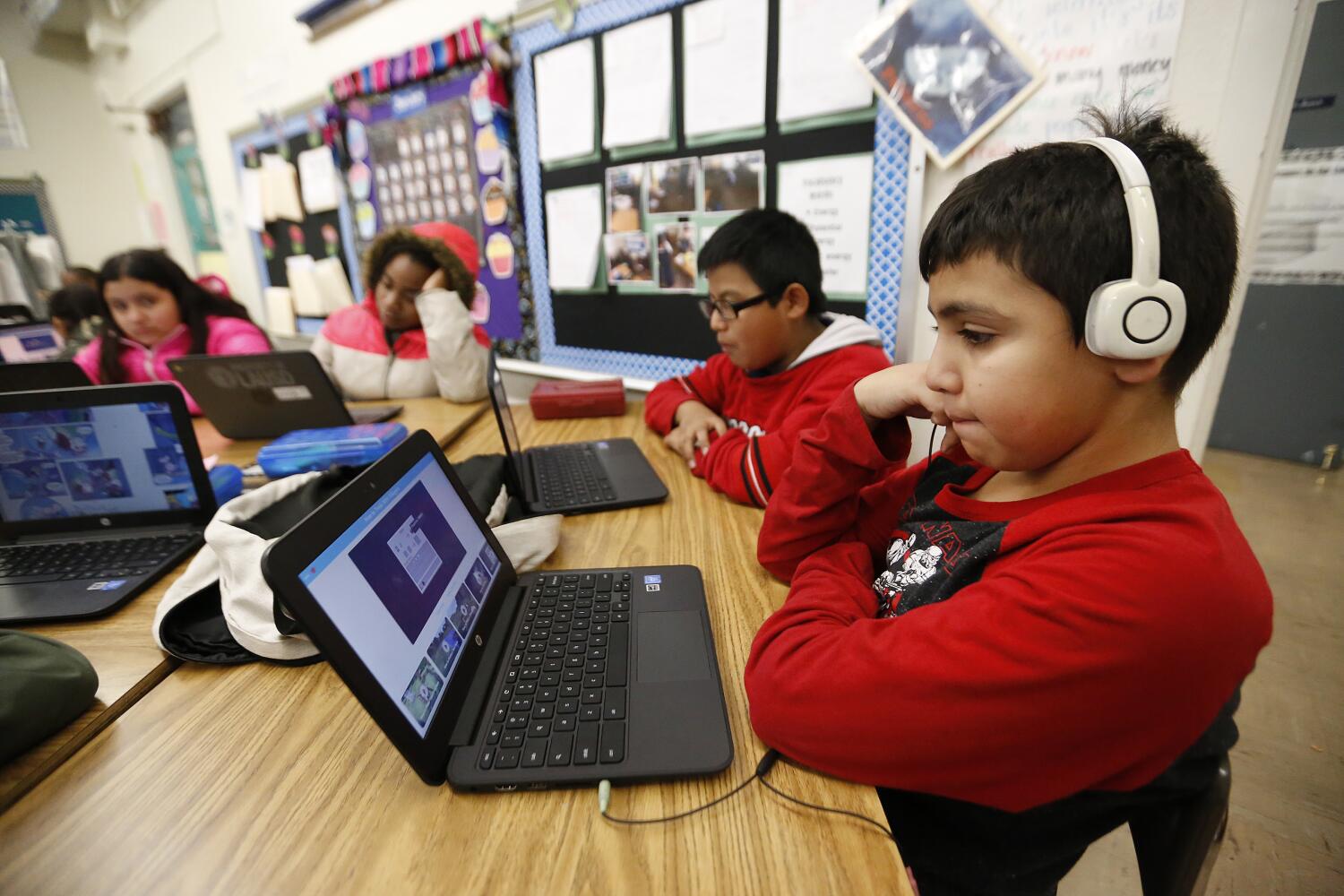
The silence inside the house at 4:15 PM isn't peaceful. It is heavy, thick, and absolute.
A decade ago, the end of the school day meant the slam of a front door, the clatter of a dropped backpack, and the immediate, chaotic negotiation of after-school snacks and neighborhood games. Today, the front door still slams. The backpack still hits the floor. But then comes the transition.
Fourteen-year-old Leo drops onto the sofa. His posture collapses into a sharp, C-shaped curve. His thumb begins its rhythmic, hyper-optimized upward flick. Across the room, his mother, Sarah, watches the blue glow reflect in his pupils. He is physically present. His body occupies the cushions. Yet, for all practical purposes, Leo has vanished from the room. He has left the physical world entirely, pulled into a slipstream of algorithmic loops designed by some of the most brilliant minds in Silicon Valley to ensure he does not look away.
For the past six months, Sarah’s school district engaged in a fierce, highly publicized battle over phone bans. Parents packed school board meetings. Administrators debated logistics. Teachers championed the policy as a return to sanity. When the ban finally passed, requiring all students to lock their devices in magnetic pouches at the morning bell, there was a collective sigh of relief across the suburb. The enemy had been defeated. The classrooms were saved.
But when Leo walks through the front door of his own home, the victory evaporates. The school ban didn't solve the crisis. It merely kicked the bucket downstream, right onto the family rug.
The Great Relocation of the Digital Burden
We have tricked ourselves into believing that the battle for our children’s minds is waged exclusively between the hours of 8:00 AM and 3:00 PM. It is a comforting lie. If the school takes the phones away, the logic goes, the children will learn, socialize, and heal.
This view completely misunderstands the nature of modern digital dependence.
Consider a hypothetical scenario that plays out in millions of households every single evening. A teenager spends seven hours under a strict, device-free mandate at school. Their brain, accustomed to a baseline of constant, high-speed dopamine drops, spends those seven hours experiencing a muted, underlying state of neurological withdrawal. They cope, they focus, they get through the day. But the moment they step off the bus, the rubber band snaps back.
The home becomes a digital decompression chamber. The starvation diet of the school day triggers an evening binge that stretches from the afternoon snack straight through until midnight.
Data from independent behavioral studies consistently reveals the flaw in our current celebration. While school phone bans dramatically improve classroom engagement and reduce daytime bullying—clear victories that no one should dismiss—they do not fundamentally alter the total daily screen time of the average teenager. The minutes simply migrate. The consumption shifts from the back row of algebra class to the privacy of the bedroom.
The hard truth is that schools were never meant to be the sole custodians of a child’s relationship with reality. They are institutions of learning, not monasteries. When we demand that teachers act as the thin blue line between our kids and the infinite internet, we are abdicated our own roles as the primary architects of their lives.
The Neurological Bait and Switch
To understand why a school ban alone fails, we have to look closely at what happens inside Leo’s brain when he stares at that glass screen.
Let's use an analogy. Imagine giving a child a device that dispenses a single, perfectly formulated sugar crystal every time they pull a tiny lever. At first, they pull it occasionally. Then, the machine learns their habits. It begins dispensing the sugar at unpredictable intervals—sometimes three crystals at once, sometimes none for ten pulls. This is what behavioral psychologists call a variable reward schedule. It is the exact mechanism that makes slot machines the most addictive devices in a casino.
A smartphone is that sugar machine, shrunk down to fit into a pocket, operating on a psychological level. Every notification, every short-form video swipe, every like on a photo is an unpredictable reward.
When a school enforces a ban, they are effectively unplugging the machine for a few hours. The child’s brain doesn't magically reset its dopamine baseline during that brief window. It waits. It craves. It builds up a deficit.
When we look at the raw statistics surrounding adolescent mental health, the correlation remains staggering. According to longitudinal data tracking youth tech habits over the last decade, teenagers who spend more than three hours a day on social media face double the risk of experiencing symptoms of depression and anxiety. Yet, the national average for leisure screen time among adolescents hovers somewhere around seven to eight hours a day.
If a school ban cuts out two hours of surreptitious daytime usage, but the child still consumes six hours at home, they remain squarely in the danger zone. The damage isn't being done in the hallway between periods. It is happening under our noses, while the dinner we cooked grows cold on the table.
The Myth of the Autonomous Teenager
"But they need to learn self-regulation," goes the common refrain from well-meaning parents. "We can't monitor them forever. They have to live in the real world."
This argument sounds reasonable on its face. It appeals to our desire to raise independent, self-reliant adults. It is also deeply, dangerously naive.
We are asking a developing prefrontal cortex—the part of the brain responsible for impulse control, long-term planning, and risk assessment, which isn't fully formed until a person reaches their mid-twenties—to go toe-to-toe with an army of data scientists, behavioral economists, and artificial intelligence models. These systems are specifically engineered to bypass conscious willpower. The algorithm knows exactly what type of content will make Leo look for three seconds longer. It knows the precise moment he is vulnerable to a rabbit hole of negative comparison.
To expect a fourteen-year-old to exercise "moderation" in the face of this hyper-engineered temptation is like dropping a non-swimmer into the middle of the Atlantic Ocean and telling them to cultivate better buoyancy habits. They don't need a lecture on self-regulation. They need a life jacket. And they need someone to pull them back onto the boat.
This is where the home environment must change. If the home mirrors the digital free-for-all of the wider world, the child never gets a chance to breathe. Their nervous system remains in a permanent state of low-grade arousal, hyper-vigilant for the next ping, the next update, the next piece of social validation that might arrive at 2:00 AM.
Reclaiming the Domestic Sanctuary
The solution is not to become a neo-Luddite household that bans electricity and burns routers. That approach breeds resentment, isolation, and a specialized skill set for deceit. The goal is to build a home where the default state of existence is human, present, and grounded.
Consider what happens when a family decides to establish hard, physical boundaries around technology. Not vague guidelines. Not emotional arguments. Structural changes.
First, the physical relocation of the devices. The single most effective change a parent can implement has nothing to do with monitoring software or screen-time apps. It is a simple, analog rule: all devices sleep in the kitchen.
When a phone enters a teenager's bedroom at night, the battle is already lost. Even if the phone is turned off, its mere presence in the room alters sleep architecture. Studies have shown that the cognitive capacity of an individual decreases simply by having their smartphone sitting on the desk next to them, even if it is face down. The brain must actively expend energy to ignore its existence. By moving the charging stations to a common area, we remove the cognitive tax. We give their minds permission to rest.
Second, the reintroduction of friction. Technology thrives because it is frictionless. It takes zero effort to swipe up for another video. To counter this, parents must deliberately introduce friction into the digital diet. This means setting automatic router shut-offs at a specific hour. It means establishing device-free zones, most notably the dinner table.
These rules cannot be asymmetrical. If Sarah sits at the table scrolling through her work emails while telling Leo to put his phone away, the hypocrisy destroys the message. The boundary must apply to the entire household. The adults must show that they, too, are capable of surviving thirty minutes without a digital pacifier.
The Empty Spaces Where Life Happens
When you first implement these changes at home, the immediate reaction is rarely gratitude. It is rage. It is boredom. It is a profound, uncomfortable restlessness.
Parents often back down during this initial phase because the discomfort feels wrong. We live in a culture that treats boredom as a malfunction, a symptom of an under-stimulated life. We rush to cure it with a tablet, a TV show, a game.
But boredom is not a malfunction. It is a crucible.
When Leo is denied his phone after dinner, he initially wanders around the house like a ghost searching for its haunting grounds. He opens the fridge. He closes it. He sighs loudly. He sits on the stairs. This discomfort is the feeling of a brain rewiring itself, searching for alternative sources of engagement.
Left alone in that emptiness for long enough, something remarkable happens. The brain adapts. Leo notices the guitar sitting in the corner of the room, dust gathering on its neck. He picks up a book. He initiates a conversation with his sister that starts with an argument and ends with both of them laughing over an inside joke. He goes outside and looks at the sky.
These moments do not happen because they are planned. They happen because they are allowed to happen. They are the spontaneous products of empty space. If every spare second of a child's life is filled with a stream of digital noise, the quiet, creative, introspective parts of their identity never have the room to grow.
The school ban provides a brief, necessary intermission during the day. It clears the smoke from the room for a few hours so the students can see the blackboard. But the real work—the heavy lifting of raising a generation that knows how to look a human being in the eye, how to sit with their own thoughts, and how to navigate the complex, messy realities of the physical world—begins the moment the school day ends.
We cannot outsource our parenting to school boards or legislative bodies. They can give us the tools, but they cannot build the culture inside our own walls. The door is closed. The backpack is on the floor. The choice of what happens next belongs entirely to us.