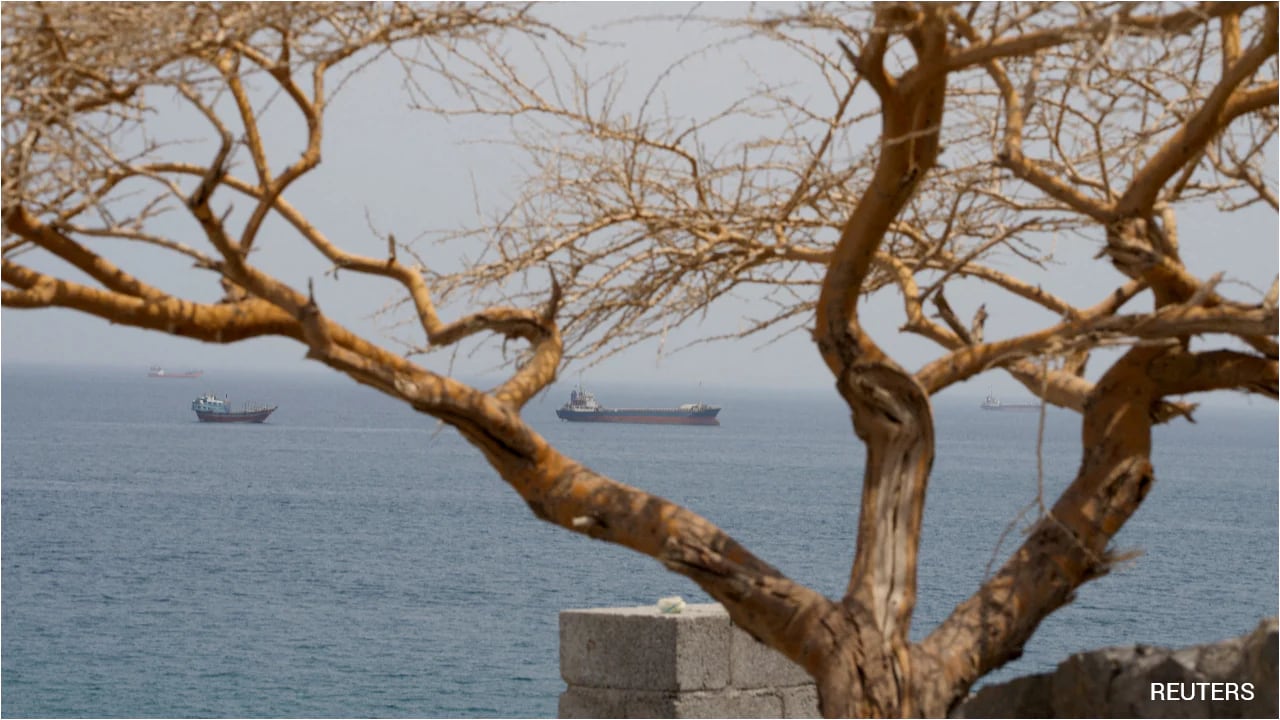
The salt air of the Persian Gulf usually tastes like diesel, sweat, and money. Or it used to.
Stand today on the concrete cliffs overlooking the Strait of Hormuz, and you will hear something terrifying. Silence. Not the absolute silence of a desert night, but the hollow, echoing void where commerce used to roar.
(Note: All maritime traffic statistics cited here reflect the staggering decline from a daily baseline of approximately one hundred forty commercial vessels traversing the strait in pre-war periods down to a sparse, ghostly six.)
Six ships.
Let that number settle into your bones. Six steel behemoths where a hundred and forty once formed a floating highway of grain, oil, manufactured steel, and the quiet, ordinary goods that keep cities breathing halfway across the earth.
Captain Marcus Vance knows that silence intimately. For thirty years, his calloused palms have gripped the mahogany steering wheels of container ships, navigating the narrow throat where the Gulf meets the open ocean. He remembers when you could walk across the water from deck to deck if you possessed a giant's stride, stepping from a Panamanian tanker to a Liberian bulk carrier amid a thicket of masts and funnels.
"You didn't look at the radar for navigation," Vance says, nursing a stale mug of coffee in a dimly lit galley as his vessel idles a thousand miles away, too terrified to approach the entrance. "You looked at the radar to avoid hitting someone. Now? You look at it like a graveyard watchman looking for ghosts."
The geopolitical deadlock between Washington and Tehran is not an abstract debate played out in oak-paneled chambers or through carefully worded press releases. It is a physical chokehold. It is a rusted iron gate slammed shut on the throat of global supply chains.
Consider what happens next when that gate stays locked.
The Anatomy of a Chokepoint
Geographers call it a bottleneck. Sailors call it a knife edge.
The Strait of Hormuz is barely twenty-one miles wide at its narrowest point, with inbound and outbound shipping lanes only two miles wide each. It is a maritime funnel through which a massive percentage of the planet's petroleum and liquefied natural gas must squeeze. But oil is only the headline act of a much more fragile play.
Every cargo container sitting on the docks of Mumbai, Shanghai, or Rotterdam holds a life. A crate of microchips destined for an automotive plant in Detroit. A pallet of antibiotics bound for clinics in East Africa. Bags of basmati rice, bolts of cotton, spare parts for municipal water pumps.
When the ships stop moving, the world does not immediately explode. It undergoes a slower, more insidious rot.
Imagine a massive factory floor in Hamburg, Germany. The assembly lines halt not because the workers went on strike, but because a single valve manufactured in a small shop near the Gulf waters never arrived. The machines fall silent. The workers go home early with half-pay. The price of bread in a Cairo market creeps upward by five piasters, then ten, then fifty, until a mother of three has to choose between medicine and dinner.
That is the true distance between a political deadlock and an empty kitchen table. It is measured in inches of water and days of delay.
Before the diplomatic cables frayed past the breaking point, the passage was a ballet of organized chaos. Tugboats nudged grain carriers. Radio chatter buzzed with navigational warnings, maritime jokes, and the steady, reassuring hum of international trade. Ships moved in disciplined streams, a continuous heartbeat pumping lifeblood through the veins of globalization.
Then came the escalation.
When Insurance Becomes an Impossibility
Wars are rarely fought solely with missiles and drones. They are fought with ink, signatures, and calculated risk.
To understand why the traffic dropped from one hundred forty ships to a pathetic half-dozen, you do not need to look at a naval destroyer. You need to look at an actuary's desk in London.
Maritime insurance is the invisible gravity holding international trade together. No captain pushes off a pier without underwriters backing the hull, the cargo, and the crew. When hostilities flare and naval mines become a whisper in the dark, insurance premiums spike into the stratosphere. Soon, underwriters look at the Persian Gulf and simply shake their heads.
No coverage. Not at any price.
And just like that, the multi-million-dollar machine grinds to a halt. It is not regulation that stops the trade; it is fear wrapped in financial calculus.
(Hypothetically speaking, imagine owning a vessel worth eighty million dollars loaded with refined petrochemicals. Would you steer it through a twenty-mile corridor where electronic jamming blinds your instruments and coastal batteries track your silhouette against the rising sun? Even a captain with a hero complex will check his bank account and turn the rudder south.)
The standoff between the United States and Iran created a zone of absolute ambiguity. Neither side wants an all-out apocalyptic war, yet both engage in a high-stakes game of chicken where every shadow is treated as a torpedo. Commercial vessels caught in the middle are treated like civilians wandering across a sniper's alley.
So they wait. They anchor off the coast of Fujairah. They drop anchor in the open ocean far from the danger zone, burning expensive bunker fuel just to keep the lights on, watching their operational costs balloon while their cargo spoils in the hold.
The Cost of the Invisible Crisis
We live in an era addicted to instant delivery. We click a button and expect a package on our doorstep twenty-four hours later. We treat the global economy like an infinite magic trick, assuming that goods simply appear out of thin air.
The ghost ships of Hormuz expose the dangerous illusion of that mindset.
When six ships crawl through a passage meant for hundreds, the ripple effects tear through local economies with brutal efficiency. Port operators in the United Arab Emirates lay off dockworkers who have spent decades lifting containers. Freight forwarders in Singapore watch their profit margins evaporate as shipping rates surge by three hundred percent for alternative routes that bypass the Gulf entirely—routes that add weeks of travel time and thousands of tons of carbon emissions to every single voyage.
We talk endlessly about inflation as if it were a weather pattern, a mysterious storm that rolls in from the sea. It is not. Inflation is often the direct price of human failure. It is the cost of diplomats failing to find a compromise, translated directly into the price of a barrel of crude, a bushel of wheat, and a plastic toy on a store shelf.
Captain Vance looks out over the dark water from the bridge of his stranded ship, thousands of miles from the narrow strait he once called home. His crew is young, twenty-somethings from the Philippines and Eastern Europe who joined the merchant marine to send money home to aging parents and growing children.
They do not talk about geopolitics. They talk about contract extensions. They talk about whether the company will keep paying their daily rates while they sit idle in international waters, waiting for a green light that never seems to illuminate.
"We used to be the backbone of the world," Vance murmurs, his hand resting on the cold steel railing. "Now we're just anchors dragging on the bottom of an ocean of stubbornness."
The sea remains vast, indifferent, and deep. It cares nothing for treaties, sanctions, or presidential decrees. It only demands passage, and right now, that passage is blocked by the invisible walls of human pride.
Somewhere in the dark near the Strait, a lone tanker slips past the shadows, hugging the southern boundary of the traffic separation scheme, its navigation lights dimmed to a suspicious amber. It is one of the six. A solitary ghost moving through a graveyard, carrying a fraction of what a hungry world needs to survive, while the architects of the deadlock stare at each other across an unbridgeable chasm.


