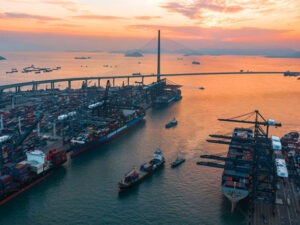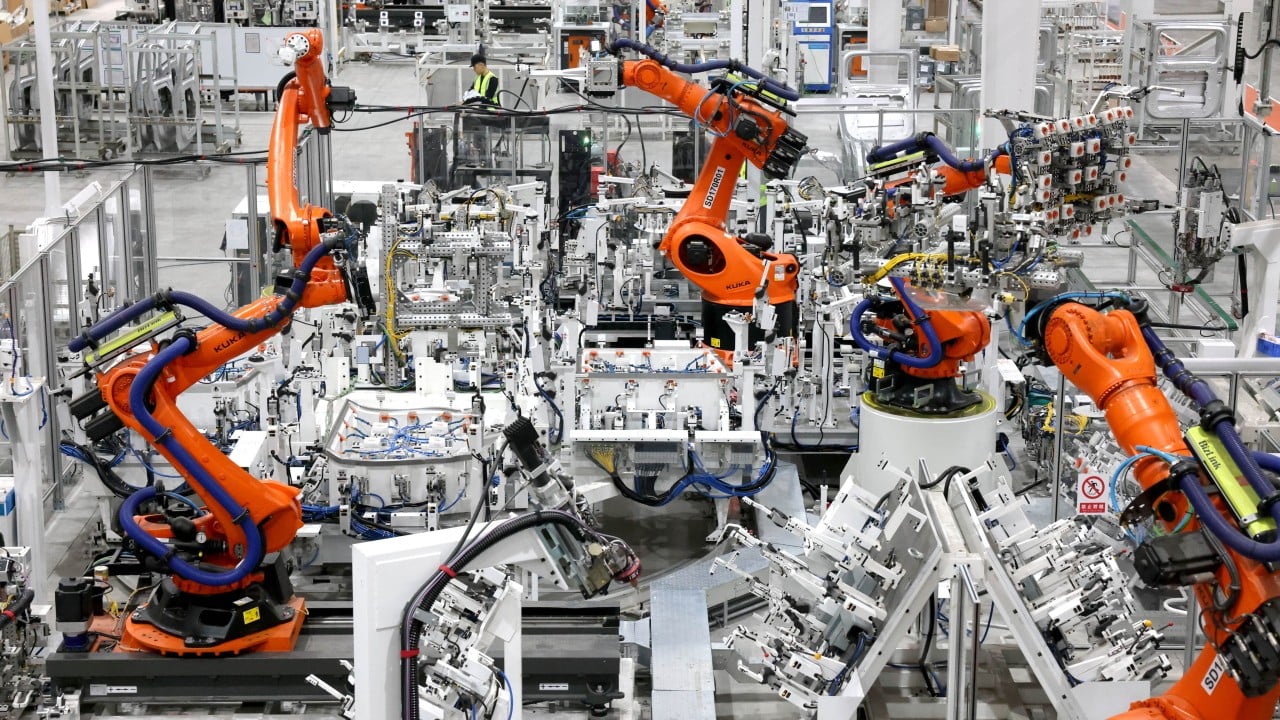
The air inside the workshop in Dongguan used to smell of burnt rubber and industrial adhesive. It was a thick, heavy scent that clung to your skin long after the shift ended. Ten years ago, if you walked through these streets, you would hear the rhythmic, aggressive staccato of ten thousand sewing machines. It was the heartbeat of a city that shod the world.
Zhang remembers that sound. He spent his twenties hunched over a conveyor belt, stitching the leather uppers of sneakers that would eventually find their way to suburban malls in Ohio or high streets in London. He was a small cog in a massive, low-margin machine. Back then, China’s economic identity was wrapped in cardboard boxes and "Made in China" stickers slapped on the bottom of plastic toys. It was volume over value. Sweat over software.
Today, Zhang still works in Dongguan. But the smell of rubber is gone, replaced by the sterile, ozone tang of climate-controlled server rooms. The sewing machine has been silenced. In its place is the hum of high-end circuitry.
Zhang doesn’t stitch leather anymore. He monitors a fleet of automated systems that export AI-driven logistics software to Southeast Asia. His story isn't just about a career change; it is the blueprint of a global tectonic shift. China is shedding its skin. The world’s factory is becoming the world’s laboratory, and the implications are rattling the foundations of global trade.
The Great Migration of Value
For decades, the global hierarchy was simple. The West provided the "brain"—the design, the branding, and the high-tech IP. China provided the "muscle"—the assembly, the labor, and the logistics. It was a comfortable arrangement for the buyers, who enjoyed cheap goods, and a necessary one for a nation lifting hundreds of millions out of poverty.
But muscle has a ceiling.
As wages rose and the cost of living climbed in coastal provinces, the low-end manufacturing that built modern China began to leak away. The sneakers and t-shirts started moving to Vietnam, Bangladesh, and Ethiopia. To an outsider, this looked like a decline. In reality, it was an eviction. China was intentionally clearing out the basement to make room for the penthouse.
The shift is visible in the hard numbers of the customs declarations. Exports of labor-intensive goods—the "old three" of clothing, furniture, and appliances—are no longer the primary engines of growth. They have been replaced by the "new three": electric vehicles, lithium-ion batteries, and solar products. But even those are just the physical manifestations of a deeper, invisible export.
The real cargo is data.
Selling the Brain
Consider the logistics of a modern port in South America or a warehouse district in Riyadh. A decade ago, a Chinese company might have sold them the forklifts or the steel racking. Now, they are selling the "SaaS" (Software as a Service) that runs the entire operation.
This is the transition from "Made in China" to "Managed by China."
When a Chinese firm exports an AI-driven facial recognition system or an automated credit-scoring algorithm to an emerging market, they aren't just selling a product. They are exporting a standard. They are embedding their logic, their ethics, and their technical architecture into the infrastructure of another nation.
It is a far more "sticky" relationship than selling footwear. You can switch shoe suppliers in an afternoon. Switching your national digital infrastructure or your banking AI is a marriage that lasts decades. This is the "value chain" climb that economists talk about in dry terms, but on the ground, it feels like a grab for the very nervous system of the global economy.
The Invisible Stakes
Why does this matter to a person buying a laptop in Berlin or a farmer in Brazil?
Because the cost of entry has changed. When China exported cheap goods, it drove down inflation and made a middle-class lifestyle affordable for millions. As it exports high-value technology, it is challenging the monopoly that Western firms have held on innovation.
But there is a friction here.
High-tech exports carry a weight that sneakers never did. Nobody worried about the "security implications" of a pair of canvas high-tops. But when the export is a 5G base station or an AI model that can process a billion data points a second, the trade deal becomes a geopolitical chess move. The "value chain" isn't just an economic ladder; it’s a high-stakes arena where the prize is technological sovereignty.
The tension is palpable in the boardrooms of Shenzhen and the legislative chambers of Washington. There is a fear that the world is splitting into two distinct tech ecosystems—one built on Western protocols and another on Chinese AI. For the consumer, this could mean a future where your devices don't talk to each other, or where the "intelligence" behind your apps depends entirely on which side of a digital curtain you reside.
The Human Cost of Complexity
We often talk about these shifts as if they are inevitable, like the weather. We forget the people like Zhang.
While the "value chain" move is a triumph of national policy, it is a brutal transition for the individual. The millions who spent their lives perfecting the art of manual assembly cannot all become AI supervisors overnight. There is a widening gap between the gleaming tech hubs of Hangzhou and the rusting skeletons of the old industrial belts.
The move up the chain requires a different kind of person. It requires the "new" Chinese worker: highly educated, tech-literate, and under immense pressure to innovate faster than the competition. The "996" culture—working 9 a.m. to 9 p.m., six days a week—wasn't born in the shoe factories. It was born in the software parks.
The stakes are no longer about hitting a daily quota of 500 soles. They are about winning a global race for patents in 6G, quantum computing, and generative AI. The pressure is atmospheric.
A New Kind of Influence
The most profound change, however, is not in what China sells, but in how it thinks.
For a century, China was a student of the global markets. It watched, it copied, and it optimized. Now, it is the teacher. In fields like mobile payments, high-speed rail, and short-video algorithms, the world is looking to China for the "next big thing."
When China moves up the value chain, it isn't just moving to a more expensive neighborhood. It is rewriting the rules of the neighborhood.
Think about the way you shop or interact with your phone. The "super-app" model—one application to rule your banking, your social life, and your groceries—is a Chinese export of thought. Even if the app on your phone was made in Silicon Valley, the DNA of the user experience often traces back to the innovations born in the high-pressure cookers of Beijing’s tech districts.
The Ghost in the Machine
Back in Dongguan, Zhang looks out over a skyline that is unrecognizable from his youth. The old dormitories are being torn down to make way for R&D centers. The trucks leaving the city aren't filled with boxes of sneakers anymore; they are carrying precision sensors and high-end medical equipment.
There is a certain melancholy in the silence of the old workshops. The "Made in China" we once knew was a physical, tangible thing. You could touch the fabric; you could see the stitching. The new "Made in China" is invisible. It is the code running in the background of your smart home. It is the algorithm that decides which video you see next. It is the AI that manages the power grid in a city halfway across the globe.
We used to worry about whether the soles of our shoes would hold up. Now, we have to wonder about the logic of the systems that manage our lives.
The transition is complete. The factory has found its soul, and it is made of silicon and light. The world is only just beginning to realize that when you buy the brain, you don't just own the product. You are part of the system.
The sewing machine is a ghost. The algorithm is the new architect.