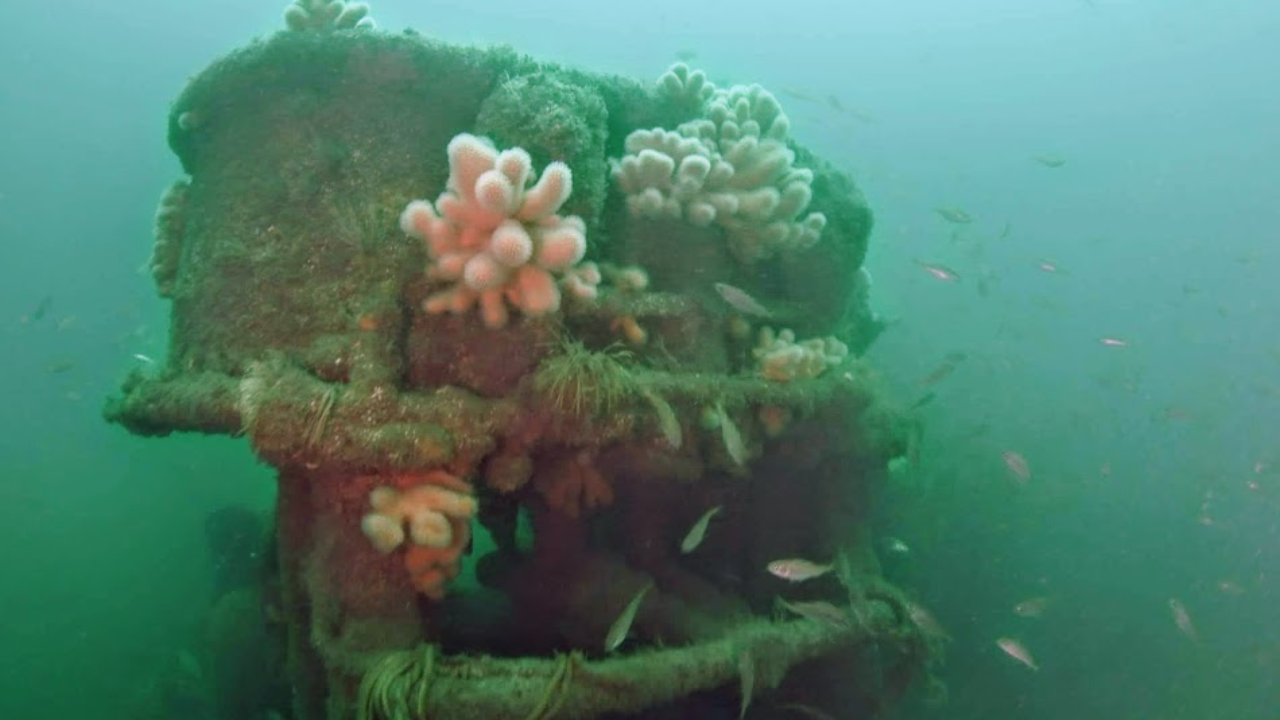
Twelve years ago, a rusting freighter carrying thirty-two million contraband cigarettes settled into the cold, turbulent waters off the southern coast of Ireland. Today, that submerged vessel functions as a thriving artificial reef, populated by marine life that treats the wreckage of illicit commerce as a permanent home. The progression from high-stakes maritime smuggling to an unexpected underwater ecosystem reveals the strange intersections between international crime and marine biology.
The vessel, named the MV Brink during its final notorious voyage, did not sink by accident. Law enforcement agencies and customs officials had tracked the ship for days across the Atlantic as part of a coordinated international operation targeting transnational tobacco smuggling networks. When Irish authorities moved in to intercept, the crew scuttled the ship to destroy evidence, plunging tens of millions of untaxed cigarettes into the depths of the Celtic Sea.
Smuggling tobacco on this scale requires sophisticated logistics, secretive financing routes, and cold calculation. Organized crime syndicates view illicit cigarette trafficking as a low-risk, high-reward alternative to narcotics. Penalties historically carried lighter sentences, while profit margins rivaled those of hard drugs. A single cargo haul worth tens of millions on the black market can fund entire criminal networks for years. Yet, when enforcement pressure mounts, criminal organizations routinely abandon or scuttle assets, treating multi-million dollar hulls as disposable tools of the trade.
Beneath the surface, however, human criminality holds no sway. Nature operates on a different timetable governed by biology, chemistry, and physics.
When a steel hull descends to the seabed, it triggers a predictable ecological sequence. Within weeks, algae and barnacles attach to the pitted metal plates. Filter feeders arrive shortly thereafter, drawing sustenance from the nutrient-rich currents sweeping up from the continental shelf. Within a few years, the structure evolves into a haven for fish species seeking shelter from open-water predators.
Cod, pollack, and conger eels now patrol the rusted cargo holds where wooden pallets once stacked master cartons of duty-free cigarettes. Sponges encrust the machinery, and soft corals drape over the twisted remnants of the bridge. The marine growth has integrated so thoroughly with the sunken steel that separating the original wreck from the natural reef has become impossible.
The presence of the wreck also transformed the local maritime geography. Traditional fishermen often avoid charted wrecks to prevent losing expensive nets, creating de facto marine reserves around sunken hulls. Freed from commercial trawling pressure, fish populations inside these protected zones rebound significantly. Iron leaching slowly from the deteriorating steel provides trace nutrients that stimulate localized biological activity, accelerating the colonization process.
This transformation highlights an irony of modern maritime enforcement. Authorities sought to eliminate a vector of illegal trade and economic sabotage, yet the ultimate outcome was the unintentional creation of a marine sanctuary. The tobacco products themselves—paper, cellulose filters, chemical additives, and plastic packaging—largely degraded or remained trapped within sealed metal containers, minimizing long-term chemical pollution compared to a standard oil tanker spill, though microplastic shedding from synthetic filter materials remains an ongoing, silent hazard for bottom-dwelling organisms.
As marine ecosystems face mounting pressures from overfishing, rising ocean temperatures, and industrial disruption, artificial structures on the seabed assume an unexpected ecological role. Shipwrecks, oil rigs, and even discarded military hardware frequently evolve into vital stepping stones for marine biodiversity.
The cargo may have been destined for underground markets to evade government taxes and fuel shadow economies, but the hull ended up serving an entirely different master. Twelve years after the crew opened the sea cocks and abandoned ship, the thirty-two million illegal cigarettes are long gone, replaced by pulsing gills, swaying anemones, and a silent, enduring marine community that reclaimed a monument to human greed.