Rain on the Welsh hills does not fall so much as it occupies the air. It is a gray, persistent dampness that gets into the wool of your coat and stays there, smelling of wet slate and decaying bracken. Standing up here, looking down at the jagged curve of the Tywi Valley where the green drops away into shadow, you understand why the local shepherds used to speak in low voices about the high places.
For generations, the hills kept their own counsel. If you found value in this post, you should read: this related article.
Down in the valleys, beneath the modern fences and the tarmac of Welsh country lanes, something else was resting. Something heavy. Something built of iron discipline, wet mortar, and imperial hubris.
Consider what happens next: a team of archaeologists, kneeling in the mud with trowels no wider than a butter knife, scrape away two thousand years of cow dung and topsoil to find the exact line of a ditch. Not just any ditch. A military ditch. Deep. V-shaped. Dug with the rhythmic, back-breaking swing of thousands of legionaries who hated the rain just as much as we do today. For another perspective on this development, see the recent coverage from NPR.
History is rarely written in books. It is written in dirt.
For centuries, historians debated a ghost story. It was a tale recorded by ancient writers about the formidable campaigns of Roman general and future emperor Titus Flavius Domitianus—or more likely, his father Vespasian and general Frontinus—pushing deep into the unyielding heart of Wales during the conquest of the Silures. Chronicles whispered of temporary marching camps thrown up in days, left behind like footprints in the snow as the iron fist of Rome squeezed the throat of British resistance.
Skeptics smiled. They called it political propaganda. They argued that Rome lacked the infrastructure, the time, or the sheer logistical madness to drag thousands of heavily armored men up into these lung-bursting Welsh ridges just to make a point. They said the camp was a myth. A phantom garrison conjured by chroniclers who needed a good story to entertain the senators back in Rome.
Then came the aerial laser scans.
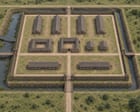
LiDAR technology, bouncing invisible pulses off the Welsh landscape, stripped away the trees and the modern pastures to reveal the ghost beneath. And there it was. A sprawling, rectangular footprint stamped into the earth at high altitude, perfectly aligned with the strategic geometries of imperial domination. Ground teams moved in. They dug. They found the post-holes, the burnt hearths, the scatter of broken pottery, the unmistakable profile of a Roman defensive earthwork.
The myth was real.
Imagine standing on that ridge nineteen centuries ago as the light died behind the western peaks. Picture a young auxiliary soldier from the sun-baked plains of Spain or the rolling hills of Gaul, shivering in his wool tunic, watching the mist roll over the Welsh valley. He is twenty miles from his nearest support. His boots are rotting in the bog. Around him, three thousand men are hammering wooden stakes into the wet sod, digging trenches by torchlight while invisible enemies watch from the treeline.
That is not an abstract historical data point. That is human endurance pushed to the absolute edge of geography.
The Romans didn't conquer the world with grand speeches or maps. They conquered it with sweat, blisters, and shovels. Every single march was an act of architectural defiance against nature itself. When you walk the line of this newly discovered fort in Wales, you are tracing the physical boundary where two entirely different worlds collided. On one side stood the indigenous tribes, fighting for their ancestral hills with a fierce, guerrilla tenacity that drove Roman commanders to distraction. On the other stood the greatest war machine of the ancient world, meticulously recording every yard of blood and mud.
Why does this matter now?
Because we live in an era that thinks it has invented connectivity, logistics, and rapid mobilization. We look at our global supply chains and digital dashboards with quiet pride. Yet two thousand years ago, without a single satellite or combustion engine, a commander in Rome could project force into the wet highlands of Britannia and leave a permanent mark on the stone.
When the archaeologists pull a fragment of Samian ware from the Welsh silt, they are pulling up a thread that connects our modern, frantic lives to a forgotten Tuesday in the autumn of 75 AD.
The rain continues to fall on the ridge. The sheep graze indifferently over the buried ramparts, chewing the cud where centurions once barked orders in Latin. The ghosts of the empire do not rattle chains. They sleep quietly beneath the turf, waiting for someone with a trowel and a stubborn imagination to wake them up.



