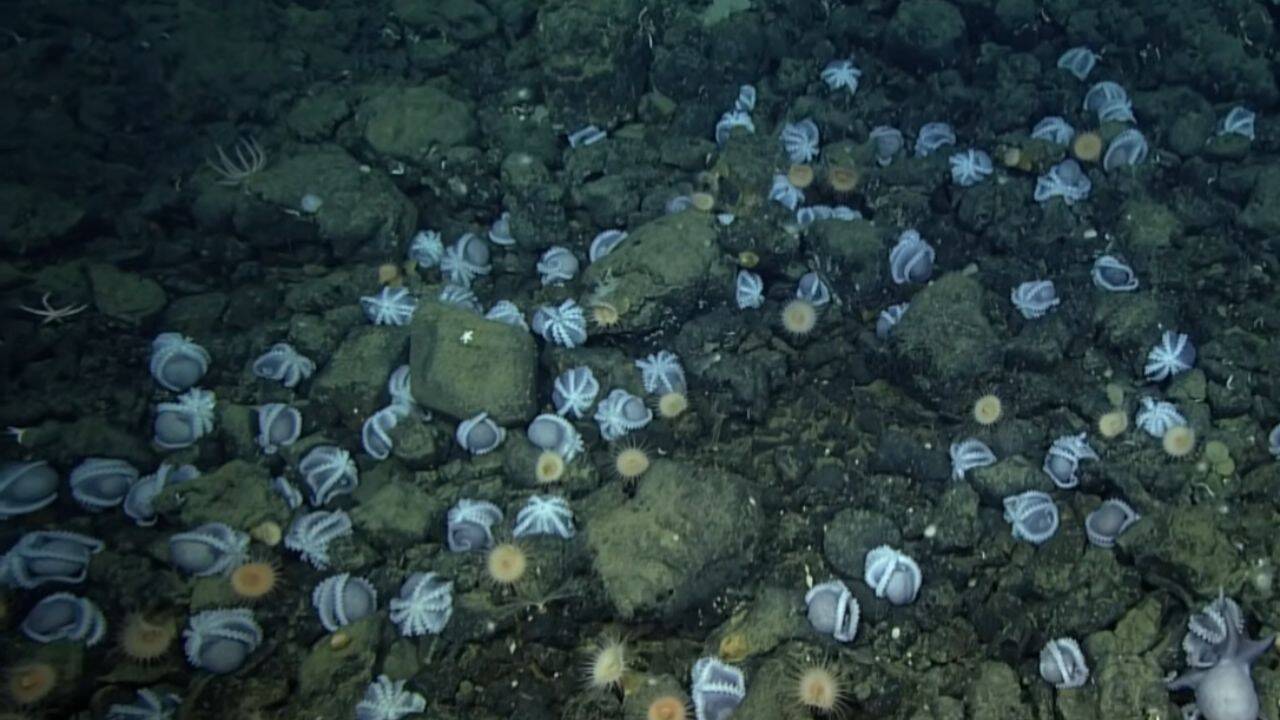
Thousands of cephalopods huddled together in the freezing dark sounds like a sci-fi movie. It is actually happening right off the coast of California. Deep beneath the surface near an extinct underwater volcano, researchers stumbled upon a massive gathering of brooding octopuses. We aren't talking about a few dozen animals sharing a rock. We are talking about an underwater city holding thousands of octopus nests.
Most people picture marine life as a solitary struggle for survival. You assume creatures float around alone, hunting, hiding, and avoiding each other at all costs. This massive discovery shatters that tired assumption completely. Mother nature loves surprising us. When marine scientists first spotted this site at the base of an underwater mountain known as Davidson Seamount, they were hunting for something else entirely. Instead, they found a dense nursery packed with Pearl octopuses taking advantage of unusual environmental conditions.
The Heat Driving the Octopus Nursery
Location matters. Why would thousands of deep-sea animals crowd into one specific spot? The answer comes down to thermal vents.
The Davidson Seamount sits roughly 80 miles off the coast of central California. It rises thousands of feet from the ocean floor. While the surrounding deep sea sits at a numbing near-freezing temperature, warm water seeps out of fissures in the volcanic rock around the seamount.
Cephalopods are cold-blooded. Cold water slows down their metabolism drastically. When a mother octopus has to brood her eggs, low temperatures mean the embryos take years to develop. That waiting period drains the mother's energy until she usually dies of exhaustion before her eggs even hatch.
Those warm water vents change the math. The gentle heat speeds up embryonic development. What usually takes years happens in months. That thermal boost explains why thousands of females flock to this exact coordinate. They trade the dangerous solitude of the open deep sea for a crowded, warm neighborhood that gives their offspring a real fighting chance.
Spotting the Seamount Secret
Finding an underwater metropolis thousands of feet underwater takes serious tech. Researchers used advanced remotely operated vehicles to scan the rugged underwater terrain.
If you have ever tried to spot camouflage in nature, you know how hard it is. Pearl octopuses are masters of blending in. They wrap themselves tightly against the rocky substrate, pressing their bodies over their clutch of eggs to protect them from hungry predators like crabs and fish.
At first glance, the footage just looked like bumpy rock formations. Look closer. Each bump has eyes.
Researchers counted over a thousand nests in a single dive. Extrapolating across the broader thermal vent field pushed estimates past the 20,000 mark. That makes this California site the largest known aggregation of octopuses on the planet. Previously, scientists found smaller clusters in Costa Rica, but the California discovery dwarfs them all by an order of magnitude.
What This Means for Deep Sea Protection
Discovering a massive gathering of brooding cephalopods right in our backyard is thrilling. It also creates an urgent conservation headache.
The deep sea is not as isolated from human impact as we like to think. Deep-sea mining, bottom trawling, and climate shifts threaten fragile ecosystems we barely understand. When you find a critical breeding ground hosting tens of thousands of animals, you have to protect it.
These creatures are remarkably sensitive to environmental changes. If warming shifts or pollution alters the chemistry around those thermal vents, an entire generation of a species could face wipeout in a single season.
We need to treat these underwater nurseries like national parks. Pushing for strict no-fishing and no-mining zones around seamounts along the Pacific coast is the only way to ensure these cities survive industrial encroachment.
Check out marine research updates from organizations like the Monterey Bay Aquarium Research Institute if you want to track how scientists monitor these sites in real time. Pay attention to local ocean conservation policies. Support marine protected area expansions whenever they land on ballots. The ocean hides incredible secrets beneath the waves, but those secrets only survive if we stop treating the deep sea like a dumping ground.