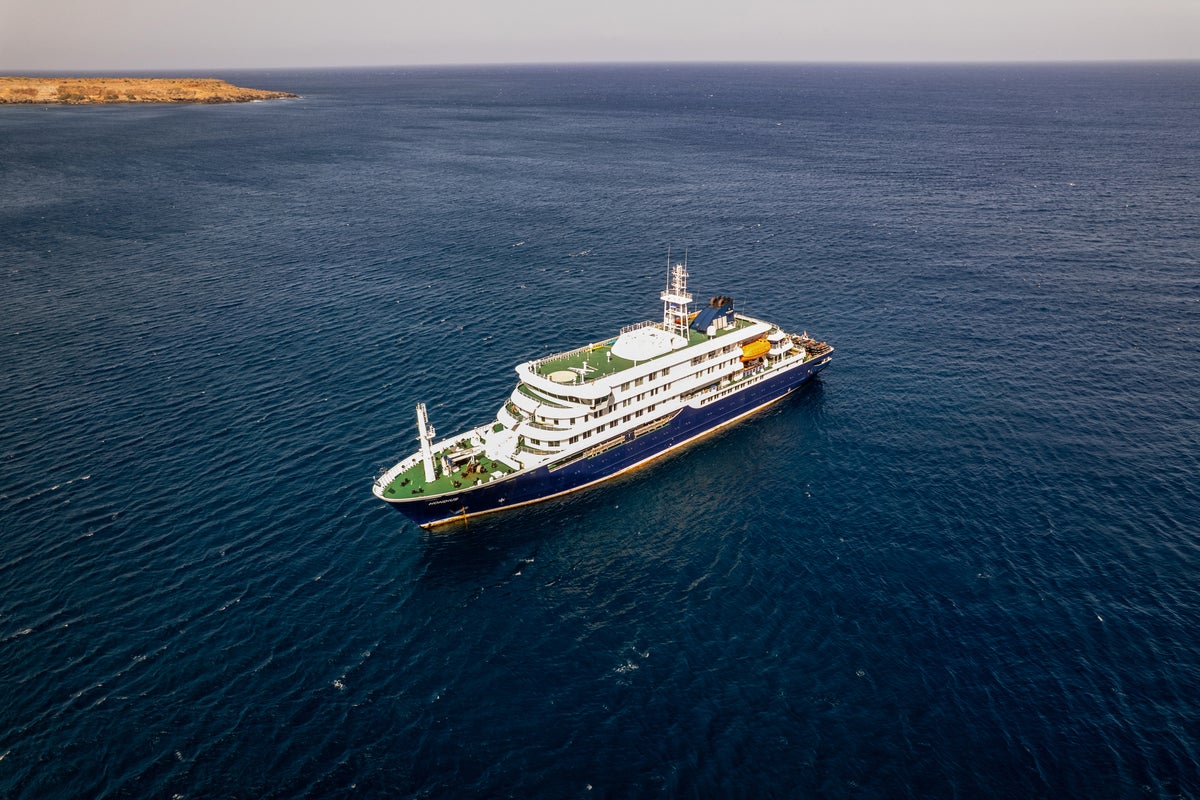
The sea has a way of erasing the world behind you. When the MS Oceanic Pearl pulled away from the dock, the thousand passengers on board weren’t thinking about biology. They were thinking about the sapphire expanse of the Atlantic and the midnight buffets. They were thinking about the disconnect from the digital noise of the shore. But while the guests watched the horizon, something else was already settling into the velvet upholstery and the ventilation shafts.
It started with a cough. A dry, unremarkable sound tucked into the corner of the Grand Ballroom.
We tend to view cruise ships as floating cities, but they are actually closed ecosystems. In a city, you can walk away. On a ship, you are sharing the same recycled air and the same polished surfaces with three thousand strangers. When an outbreak hits, the luxury of isolation becomes a terrifying liability.
The Fever in Cabin 402
Imagine a traveler named Elias. He is seventy-two, a retired teacher from Bristol who saved for three years to take this crossing. Two days into the voyage, the fatigue hits him like a physical weight. He assumes it’s the sea legs or the rich food. By the third day, the muscles in his thighs and back ache with a dull, throb-heavy intensity that feels like the flu but carries a darker edge.
This isn’t the norovirus we usually associate with cruise ships. This isn't a simple matter of bad shrimp or unwashed hands. This is Hantavirus.
Hantavirus is a respiratory disease typically spread by rodents—specifically through the inhalation of aerosolized droppings or urine. On a ship, the idea of a "rat in the pantry" feels like a relic of the nineteenth century. Yet, the reality of modern logistics means that cargo, food crates, and even luggage can carry stowaways from port to port. Once the virus finds a host, it waits. The incubation period is a ticking clock that no one can hear.
By the time Elias is moved to the ship’s infirmary, his lungs are beginning to fill with fluid. The medical staff, trained for broken bones and seasickness, suddenly find themselves in a race against a pathogen that causes the body’s own immune system to turn against its respiratory tissues.
The Statistics of Grief
The news reports will tell you that three people have died. They will mention, in a sterile tone, that a British tourist remains in intensive care. But these numbers are bloodless. They don't capture the sound of the ship’s PA system calling for emergency medical personnel while the rest of the passengers are trying to enjoy a Broadway-style revue in the theater.
The mortality rate for Hantavirus Pulmonary Syndrome (HPS) is staggering. It hovers around 38 percent. To put that in perspective: if ten people in that ballroom contract it, four of them may never see the shore again. It is a ruthless, efficient killer that mimics common ailments until it is nearly too late to intervene.
The "British tourist" isn't a headline. She is a grandmother named Sarah who is currently hooked to a ventilator while the Atlantic swells rise and fall outside her porthole. Her family is thousands of miles away, receiving updates via satellite phone calls that crackle with static and desperation.
The Invisible Stakes
Why does this happen on a multi-million dollar vessel? The answer lies in the friction between luxury and nature. We build these ships to be impenetrable fortresses of comfort, but biology finds the cracks.
A single crate of grain brought on board in a tropical port can house a nesting site. A vent that hasn't been deep-cleaned in a month becomes a highway for microscopic particles. When the ship's air conditioning kicks on to combat the humidity of the mid-Atlantic, it isn't just cooling the air. It is distributing the risk.
The crew works in the shadows, scrubbing surfaces with industrial-grade disinfectants, their faces masked, while just a few decks above, people are still clinking champagne glasses. The cognitive dissonance is profound. You are trapped in a paradise that has become a laboratory.
Consider the logistics of a mid-ocean quarantine. You cannot simply pull over. The nearest specialized hospital might be two days away at full steam. The ship becomes a high-speed ambulance, racing across a vacuum of water, carrying a cargo of fear.
The Breaking Point
The transition from a vacation to a crisis happens in the blink of an eye. One moment, the biggest concern is the seating chart for dinner. The next, the captain is announcing "enhanced health protocols" and restricted movement. The buffet—that symbol of cruise ship decadence—is shut down. The halls, usually filled with the sound of laughter and rolling suitcases, grow silent.
For those in the infirmary, the world narrows down to the hiss of oxygen and the rhythmic beep of a heart monitor. The virus works by causing the capillaries in the lungs to leak. The patient is effectively drowning from the inside out.
Medical experts often talk about "viral load" and "vectors," but for the people on the Oceanic Pearl, the struggle is much more primal. It is the fight for the next breath. It is the realization that the ocean, which seemed so inviting from the balcony, is now a barrier between them and the specialized care they need to survive.
The Cost of the Horizon
We are drawn to the sea because it represents freedom. We pay thousands of pounds to escape the mundane risks of life on land. We assume that the price of the ticket includes a guarantee of safety, a bubble of protection provided by the cruise line.
But the bubble is porous.
The three individuals who lost their lives on this voyage weren't thrill-seekers. They weren't taking risks. They were victims of a biological fluke, a convergence of a specific virus and a specific environment that turned a dream into a tragedy.
As the ship finally limps toward the harbor, the lights of the city appearing like a constellation on the horizon, the mood on board is not one of relief. It is one of exhaustion. The passengers will disembark into a flurry of flashbulbs and questions from reporters. They will go back to their homes in Bristol, London, and Manchester.
But they will carry the weight of what they saw. They will remember the way the ship felt when it was no longer a vessel of escape, but a prison of invisible threats. They will remember that for all our engineering and our opulence, we are still remarkably fragile.
The sea remains. It is indifferent to the dramas played out upon its surface. The Oceanic Pearl will be scrubbed, sanitized, and sent out again with a new group of travelers looking for the horizon. The carpets will be vacuumed, the vents will be cleared, and the memory of the fever will be buried under new layers of luxury.
Somewhere in a hospital ward, Sarah is still fighting for that next breath, the rhythm of the ventilator mimicking the slow, steady pulse of the waves she so badly wanted to see.