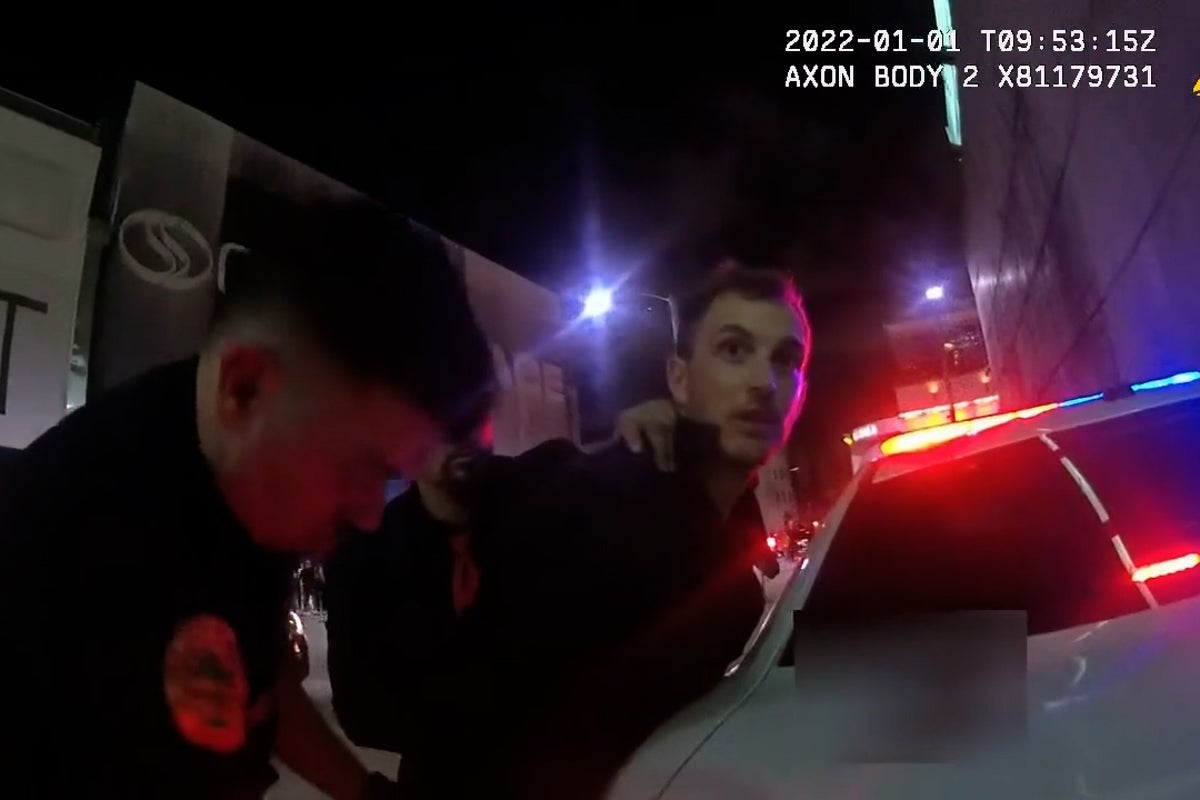
When the blue lights start flashing in the palm-lined streets of Jupiter, Florida, the standard script for the ultra-wealthy usually involves a polite call to a private attorney and a quiet ride to the station. But for those swimming in the orbit of the Trump inner circle, the script often takes a more aggressive, entitlement-heavy turn. The recent detention of a close associate of Donald Trump Jr. on cocaine charges has peeled back the curtain on a specific brand of political proximity used as a blunt instrument against local law enforcement.
The incident began as a routine traffic stop but quickly escalated into a display of desperate social posturing. Officers reportedly discovered a significant quantity of cocaine, but instead of the usual "yes sir, no sir" of a suspect facing felony charges, they were met with a relentless barrage of high-level name-dropping. The suspect didn't just mention the former First Family; he attempted to weaponize the relationship to freeze the investigation in its tracks. It failed.
The Mechanics of Proximity Power
In the corridors of Palm Beach and Jupiter, influence is the local currency. Usually, this power is soft—a reserved table at a private club, a permit expedited through a friendly councilman, or a quiet word to a donor. However, when the handcuffs come out, soft power often hardens into a frantic attempt at intimidation.
The suspect in question wasn't just a casual acquaintance; he was part of the recreational and social fabric that surrounds Donald Trump Jr. This proximity creates a psychological bubble where the individual believes they are insulated from the mundane realities of the criminal justice system. They operate under the assumption that the "MAGA" brand serves as a jurisdictional bypass. This isn't just about arrogance; it’s about the perceived privatization of law enforcement loyalty.
When the arresting officers told the suspect to "stop dropping names," they weren't just issuing a command for silence. They were asserting the sovereignty of the badge over the influence of the donor class. This friction point is where the reality of the American legal system meets the fantasy of political untouchability.
The Cocaine Connection and the Junior Orbit
Cocaine has long been the background noise of high-stakes political and social circles, but the context here matters. Donald Trump Jr. has spent years cultivating an image of a rugged, outdoorsy alpha-male, frequently railing against the "decadence" and "lawlessness" of blue cities. Having a close associate caught with a baggie and a list of powerful friends creates a glaring cognitive dissonance.
The investigative reality is that these social circles are often tight-knit and fiercely loyal until a liability emerges. We have seen this pattern before. When a "friend" becomes a headline involving narcotics, the inner circle typically goes into a rapid-response defensive crouch. They don't just distance themselves; they incinerate the bridge.
However, the "name-dropping" aspect makes this harder to scrub. It suggests that the suspect felt his relationship with Trump Jr. was his strongest asset—a "get out of jail free" card that he had likely used, or seen used, in less formal settings.
Why the Name Dropping Failed
In many jurisdictions, mentioning a powerful friend might actually work. A nervous rookie might hesitate, or a politically ambitious sergeant might decide a warning is better for his career than a headache with the front office. But the officers in this case represent a shift in how local police handle the political elite.
Florida’s law enforcement culture is currently caught between two worlds. On one hand, there is a deep-seated institutional respect for the Trump family and their supporters. On the other, there is an increasing exhaustion with the "do you know who I am?" attitude that has become synonymous with the local transplant elite.
The officers’ reported retort—telling the man to stop talking about his famous friends—signals a breaking point. It indicates that the "Trump card" is losing its value on the street level. When a cop is staring at a felony amount of white powder, the name of a former president’s son doesn't change the chemistry of the evidence or the requirements of the police report.
The Liability of the Entourage
Political figures are rarely brought down by their own direct actions; they are eroded by the company they keep. Donald Trump Jr. is currently a central figure in his father’s 2024 campaign apparatus, serving as a bridge to the more aggressive, younger wing of the party. Every associate who acts out in the back of a squad car becomes a data point for the opposition.
The problem for Trump Jr. isn't the cocaine—most voters are cynical enough to expect some level of vice in the high-society world. The problem is the perception of an untouchable class. The populist message that the Trump family champions relies on the idea that they are fighting for the "forgotten man" against a corrupt, elite "deep state." When their own friends try to use their names to bully a local cop out of a drug arrest, that populist narrative fractures.
A Pattern of Peripheral Chaos
If we look at the broader history of political entourages, this incident fits a predictable mold. From the Carter family to the Bidens, siblings and friends have always been the soft underbelly of the principal. But the Trump era introduced a different flavor of this chaos. It’s a brand of loyalty that borders on a request for immunity.
The suspect’s behavior reflects a belief system where the law is something that happens to "other people"—the people without the right cell phone numbers in their contacts list. This is the "Gilded Shield" in action. It is the belief that if you are close enough to the sun, the heat of the law won't burn you.
The Legal Fallout and the Silence to Come
Moving forward, the strategy for the Trump Jr. camp is predictable: total silence followed by a quiet distancing. The suspect will likely find himself persona non grata at Mar-a-Lago or the various hunting retreats favored by the Junior circle.
But the damage to the "law and order" brand is harder to repair. You cannot claim to be the champion of the police while your associates treat those same police officers like inconvenient waitstaff. The transcript of that arrest, if it ever fully surfaces, will likely serve as a masterclass in the hubris of the modern political elite.
There is no "soft landing" for a drug bust of this nature when the suspect has already insulted the integrity of the arresting officers by trying to buy his way out with social capital. The cocaine is a legal problem; the name-dropping is a character study.
The Institutional Pushback
Local police departments are increasingly weary of being used as pawns in political theater. In a post-2020 world, the scrutiny on police conduct is at an all-time high. Body cameras have changed the game. An officer who lets a "friend of a friend" slide on a drug charge is now risking a career-ending viral video or an internal affairs investigation.
The suspect in Jupiter didn't realize he was playing an outdated hand. In the age of digital transparency, a name is no longer a shield; it’s a spotlight. The more he shouted about his connections, the more he ensured that the officers would follow the book to the letter to protect themselves from accusations of favoritism.
Proximity to power is not a legal defense. It is a magnifying glass.
When the "stop dropping names" order was given, it marked the end of an era where a certain type of Florida resident could expect a wink and a nod. The law, at least in that moment on the side of the road, was blind to the guest list at the next Mar-a-Lago fundraiser.
The suspect now faces the grueling reality of the Florida court system. No amount of proximity to the 2024 campaign trail can alter the weight of the evidence or the fact that, in the eyes of the state, he is just another individual in possession of a controlled substance. The Gilded Shield didn't just crack; it shattered under the weight of its own ego.
Watch the court filings in the coming weeks. The transition from "powerful friend" to "isolated defendant" will be swift, brutal, and entirely televised.