The current global health infrastructure functions on a voluntary disclosure model that is fundamentally mismatched with the velocity of modern viral transmission. When the World Health Organization (WHO) warns of pandemic vulnerability, it is not issuing a vague prophecy; it is identifying a failure in the Information-Response Loop. This failure is driven by two structural bottlenecks: the sovereign right to suppress data and the absence of a standardized, automated trigger for international intervention.
To bridge the gap between "warning" and "prevention," the international community must move past the rhetoric of cooperation and address the specific mechanisms of biological risk management.
The Triad of Pandemic Vulnerability
Vulnerability is not an abstract state of being. It is a measurable result of the intersection between three specific variables:
- Pathogen Evolution Rate: The speed at which zoonotic spillover occurs, accelerated by urban expansion and intensive animal husbandry.
- Detection Latency: The time elapsed between the first human infection and the identification of a novel strain.
- Political Friction: The delay caused by administrative verification and the diplomatic negotiation required to share data across borders.
The "warning" issued by global health authorities centers on the fact that while Pathogen Evolution is accelerating, Detection Latency remains tied to legacy laboratory systems, and Political Friction has increased due to geopolitical polarization.
The Transparency Gap as a Structural Failure
The tension regarding China’s reporting on the origins of SARS-CoV-2 serves as a case study in Asymmetric Information Risk. In a decentralized global health system, the primary actor (the nation-state where an outbreak begins) possesses full information, while the secondary actors (the WHO and other nations) possess none.
This creates a "Principal-Agent Problem." The agent (the nation-state) may perceive that full transparency leads to immediate economic harm—trade bans, travel restrictions, and reputational damage. Therefore, the rational actor, in the absence of an enforcement mechanism, chooses to withhold data to protect short-term domestic stability.
The Cost of Information Silos
When raw genomic sequences and early epidemiological data are withheld, the global scientific community loses the ability to perform Forward-Looking Modeling.
- Early-Stage Mapping: Without patient-zero data, we cannot determine the basic reproduction number ($R_0$) in a specific environmental context.
- Diagnostic Lag: Delays in sharing viral sequences prevent the immediate development of PCR primers, allowing the virus to spread undetected through international transit hubs.
- Vaccine Iteration: The lack of transparency regarding the evolution of a virus in its "home" environment slows the development of multivalent vaccines.
Quantifying the Information-Response Loop
The effectiveness of a pandemic response can be expressed as a function of time and data accuracy. If we define the total impact ($I$) as the product of the time to react ($t$) and the viral transmission rate ($r$), any increase in $t$ due to a lack of transparency results in an exponential increase in $I$.
$$I = \int_{t_0}^{t_n} r(t) dt$$
Where $t_0$ is the moment of spillover. When a state delays reporting by even 14 days, the value of $t_0$ is effectively shifted, making the subsequent containment efforts significantly more expensive and less likely to succeed. The objective of a reformed global health architecture must be to minimize the delta between $t_0$ and the moment of global notification.
The Architecture of a Resilient System
A "Masterclass" in pandemic preparedness requires moving from a trust-based system to a Verification-Based System. This involves the implementation of three distinct layers of infrastructure.
1. The Passive Surveillance Layer
Instead of relying on clinical reports—which depend on doctors noticing a pattern and bureaucrats reporting it—we must deploy ubiquitous bio-surveillance.
- Wastewater Sequencing: Automated, real-time genomic sequencing of urban wastewater. This provides a "heat map" of viral presence without requiring individual testing or state permission for specific clinical trials.
- Atmospheric Sampling: High-traffic transit hubs (airports, train stations) should be equipped with air filtration sensors that screen for high-consequence pathogens.
2. The Incentive Realignment Layer
To solve the transparency problem, the international community must lower the "Cost of Honesty." Currently, a country that reports an outbreak is punished with immediate economic isolation.
- Pandemic Insurance Pools: A global fund that automatically disburses liquidity to a nation that self-reports an outbreak and initiates a voluntary lockdown. This compensates for lost GDP and incentivizes early disclosure.
- Sovereign Data Protection: Creating "Clean Room" environments where sensitive epidemiological data can be analyzed by a verified subset of international scientists without being immediately politicized in the global media.
3. The Standardized Intervention Trigger
The WHO's "Public Health Emergency of International Concern" (PHEIC) is currently a subjective designation. It needs to be replaced by a Quantitative Trigger Framework. If a novel pathogen hits specific thresholds—for example, an $R_0 > 1.5$ with a case fatality rate (CFR) $> 1%$—international protocols regarding border control and resource allocation should activate automatically.
The Geopolitical Bottleneck
The fundamental obstacle to this structured approach is the resurgence of Westphalian sovereignty. When health data is treated as a national security asset rather than a global public good, the system breaks.
The "vulnerability" mentioned by the WHO chief is specifically a reference to the Balkanization of Bio-Data. If the United States, China, and the European Union maintain separate, non-interoperable data silos, the "Global Virome Project" remains a theoretical exercise rather than a functional defense.
Technical Debt in Public Health
Many nations are operating on "Technical Debt"—using surveillance systems built for the 20th century to combat 21st-century biological threats.
- Fragmented Data Standards: Clinical data in one province may not be compatible with the database of a neighboring country.
- Lack of Real-Time Synthesis: Information often moves through administrative layers (local to regional to national to WHO) rather than being synthesized instantly via cloud-based analytics.
- Human Capital Shortage: There is a global deficit in "Bio-Informaticians"—specialists who can bridge the gap between bench biology and big-data analytics.
Strategic Shift: From Containment to Resilient Design
The historical focus of pandemic management has been "Containment"—stopping the virus at the source. While ideal, the connectivity of the modern world makes total containment increasingly improbable. We must shift toward "Resilient Design."
Resilient design assumes that spillovers will happen and that some data will be suppressed. A resilient system focuses on:
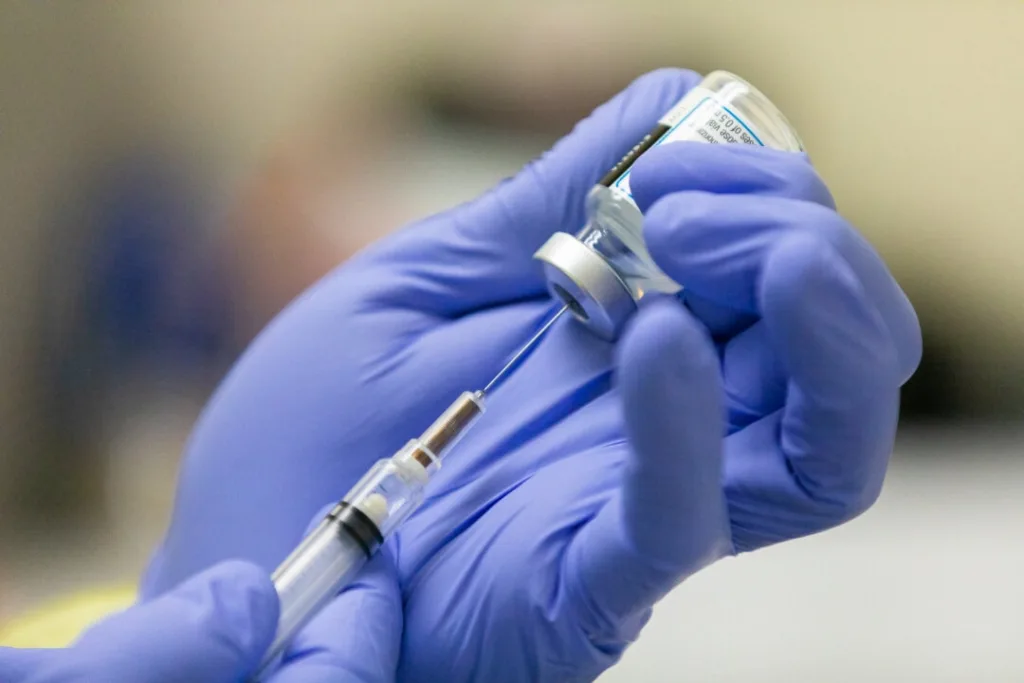
- Platform Technologies: Developing mRNA and viral vector platforms that can be re-coded for a new pathogen in days, not months.
- Decentralized Manufacturing: Distributing vaccine and therapeutic production capacity globally so that no single nation can hoard the "Cure."
- Elastic Healthcare Systems: Designing hospitals with modular isolation units that can be scaled up instantly without disrupting elective care.
The current friction between the WHO and member states regarding transparency is a symptom of a deeper misalignment: the world wants the benefits of a globalized economy without accepting the costs of globalized biosafety.
The strategic play is no longer to wait for universal transparency. It is to build a redundant, high-tech surveillance and response network that treats data as a commodity to be captured independently, while simultaneously building the economic rails that make transparency the most profitable option for every nation-state involved.
A move toward a "Global Bio-Cloud"—where sequencing data is uploaded automatically from decentralized nodes—bypasses the political bottleneck and puts the timeline of the response back into the hands of science rather than diplomacy.