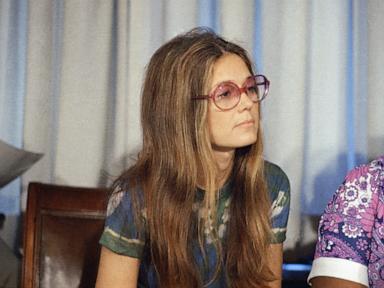
Gloria Steinem did not invent the second wave of the American women's movement, but she became its most visible lightning rod because she understood how media infrastructure worked. When Steinem died at her home in New York City at the age of 92, she left behind a landscape of reproductive rights, legal protections, and workplace standards that were entirely unimaginable when she began her career in the mid-twentieth century. Yet the standard mainstream obituaries celebrating her life gloss over the structural friction she spent decades navigating. Steinem's legacy is defined less by neat historical milestones and more by the messy, often contradictory reality of trying to commercialize radical liberation without neutralizing its core demands.
To understand her trajectory, one must look past the aviator glasses and the iconic blonde streak to the machinery of print journalism in 1960s America. Before she was a movement leader, Steinem was a jobbing freelancer operating in an ecosystem that viewed women writers through a narrow, decorative lens. Her breakthrough came not through high-minded editorial manifestos, but through an act of undercover industrial reporting. In 1963, she took a job as a waitress at the New York Playboy Club for Show magazine. The resulting expose, "A Bunny's Tale," laid bare the physical humiliation, meager wages, and mandatory sexualized compliance demanded by corporate leisure spaces.
The piece made her name, but it also exposed a professional dilemma that would shadow her for the rest of her life. Steinem possessed a rare combination of journalistic rigor and photogenic convention. Mainstream media outlets discovered they could package her commentary for audiences that might otherwise reject radical rhetoric. This dynamic turned her into a cultural icon, but it also invited critique from ideological purists who argued that her polished image sanitized a movement built on class struggle and racial equity.
When Steinem and her co-founders launched Ms. Magazine in 1972, they attempted an unprecedented experiment: a commercial periodical controlled by women, funded largely by subscriptions rather than advertising, that refused to treat its readers as mere consumers of domestic products. The publication tackled domestic violence, abortion, unequal pay, and systemic discrimination long before those topics entered mainstream political discourse.
Yet running Ms. required constant compromises with the capitalist realities of magazine publishing. Securing distribution deals and advertising revenue meant walking a permanent tightrope between revolutionary politics and corporate survival. When the magazine eventually accepted advertising, critics within the broader leftist movement pointed to the inherent contradiction of promoting consumer goods within a publication dedicated to dismantling patriarchal structures. Steinem never pretended the contradictions did not exist. She argued consistently that working within imperfect systems was the only practical way to force structural change, choosing incremental institutional entry over absolute ideological isolation.
Her activism extended far beyond editorial desks. Steinem spent decades on the road, visiting college campuses, union halls, and state legislatures. This constant travel gave her a finger on the pulse of working-class American women, shielding her somewhat from the insulated bubble of coastal media elites. She understood that legal victories like Roe v. Wade were meaningless if women in rural or economically depressed areas lacked physical access to healthcare facilities or financial independence.
Her personal life frequently became a canvas for public projection. When she married entrepreneur David Bale in 2000 at the age of 66, headline writers treated the event as a betrayal of her famous aphorism that a woman needs a man like a fish needs a bicycle. Steinem pushed back against this superficial reading with characteristic sharpness, noting that marriage itself had been legally transformed over the previous three decades. She pointed out that if she had married during her twenties, she would have legally forfeited her surname, her independent credit rating, and vital civil rights. Her marriage was possible only because the legal architecture of the nation had shifted underneath her feet—a shift she had actively engineered.
The later chapters of her life brought new ideological fractures. As digital-age movements redefined the vocabulary of intersectionality, identity, and gender, legacy figures like Steinem occasionally found themselves scrutinized by younger activists who viewed second-wave feminism as insufficiently attentive to racial and trans-inclusive frameworks. Steinem adapted over time, frequently emphasizing that the liberation of women was impossible without dismantling white supremacy and economic exploitation, but the generational friction remained palpable.
Her public endorsement of political figures like Hillary Clinton during contentious primary cycles also exposed deep divides regarding how feminist power should engage with institutional gatekeeping. Critics argued that backing establishment candidates compromised the anti-authoritarian roots of women's liberation. Supporters countered that pragmatism required backing candidates who could actually appoint federal judges and protect baseline administrative rights. Steinem chose the pragmatic route, prioritizing harm reduction over ideological purity.
History will record her not as an infallible saint of social justice, but as an acute strategist who leveraged media visibility to reshape the boundaries of public life. She took the raw anger of millions of marginalized people and translated it into language that institutional power structures could not entirely ignore. The institutions did not emerge unchanged, and neither did she.
The structures she spent a lifetime fighting have proven remarkably resilient, constantly adapting to absorb and neutralize modern threats to equality. The true measure of her work rests not in the eulogies written by politicians and corporate boards, but in the enduring refusal of ordinary people to accept the limits assigned to them by birth.