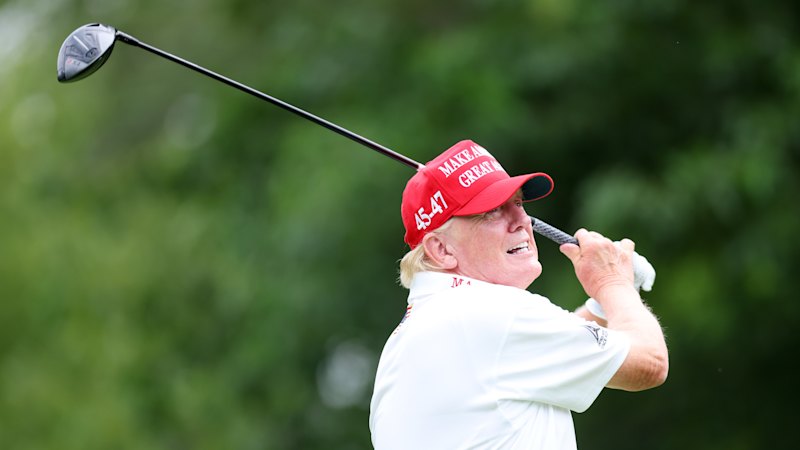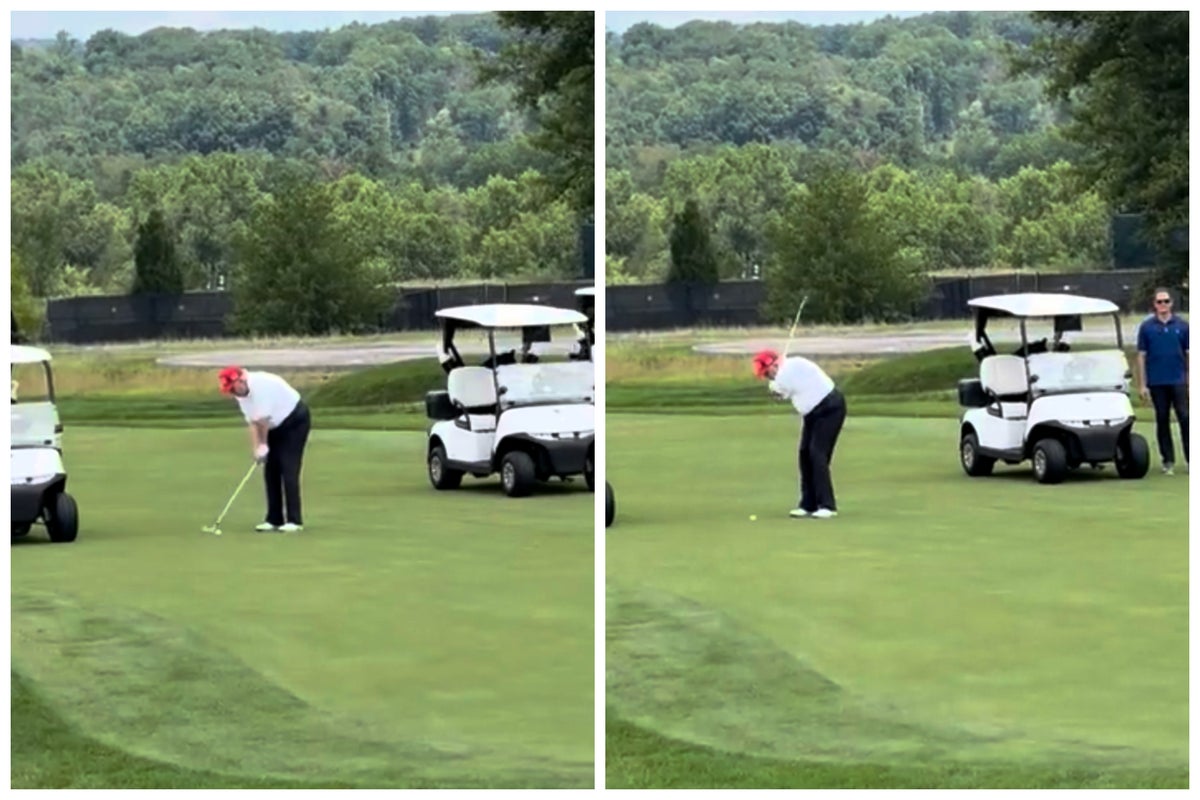
Green grass stretches toward a cloudless sky. The air smells of cut blades, damp earth, and expensive sunscreen. For most, a golf course is a sanctuary of quiet frustration, a place where a small white sphere dictates an afternoon of humility. But for a select few, the fairway is something entirely different. It is a stage. It is an amphitheater built of bunkers and manicured greens where every swing is broadcast to an audience waiting to applaud or critique.
Silence. The crowd holds its breath.
A club connects with a ball. The sharp crack echoes across the manicured acreage. Everyone watches the flight path, tracing the white speck as it arcs against the blue and lands precisely where it was commanded to go.
Then comes the commentary.
On a private course bearing his own name, Donald Trump recently captured a club championship trophy. It was a victory won on turf he knows intimately, among players whose swings he has watched for years. Yet, the celebration did not linger solely on the scorecards or the mechanics of the game. Instead, it spilled over into a public declaration, a critique of fellow competitors. They lacked talent, the statement suggested. The triumph was his, earned through superiority, while others fell short.
To understand why this moment resonates far beyond the clubhouse, we have to look at the psychology of competition.
Competition strips away polite convention. It reveals how we process victory and how we handle defeat. When someone wins on their home turf, the victory carries a double-edged sword. On one side, it is the ultimate validation of mastery. On the other, it invites skepticism. Did the terrain favor the host? Did the opponents falter under the weight of the venue's symbolic gravity?
Consider the weekend warrior. Imagine a local club player named Arthur. Arthur spends his Saturdays slicing balls into the woods, nursing a stubborn hook, and muttering apologies to his foursome. For Arthur, golf is an equalizer. The course does not care about your title, your bank account, or your status. The course only cares about the next stroke. When Arthur finally sinks a twenty-foot putt on the eighteenth hole, he feels a surge of genuine, unbridled pride. He does not need to belittle his partners to enjoy the moment. The victory is sweet precisely because it was hard-fought against an indifferent landscape.
Now shift the lens back to the upper echelons of the sport.
When public figures step onto the tee box, the stakes transcend par and bogey. Every swing is scrutinized for political posture. Every remark is dissected for underlying subtext. Calling competitors talentless is not merely an observation about swing mechanics or putting strokes; it is a assertion of dominance. It draws a sharp, unyielding line between the victor and the vanquished.
Why do we care?
Because sports mirror our broader cultural anxieties. We live in an era obsessed with winning, where second place is frequently reframed as the first loser. The language of modern achievement demands hyperbole. Good is never enough. It must be unprecedented. Dominant. Absolute.
When a prominent figure claims a club trophy and follows it with sharp words about his peers' abilities, he taps into a familiar cultural script. It is the narrative of the lone titan standing above the fray, surrounded by lesser talents who simply cannot keep up.
But let us pause and look closer at the reality of golf.
Golf is famously characterized as a game played on a five-inch course—the space between your ears. It is an exercise in neurosis. Even the greatest players in history have broken putters, shanked drives, and suffered public collapses. Talent in golf is fleeting, fragile, and notoriously difficult to measure on any single given Sunday. A champion today can be a weekend hacker tomorrow. The wind shifts. The green hardens. The mind drifts.
To declare others lacking in talent while hoisting a trophy on one's own grounds is a fascinating rhetorical choice. It shifts the narrative away from the collective camaraderie that golf traditionally fosters. Traditionally, golf is a game of honor. Players call penalties on themselves. They keep each other's scorecards. They shake hands at the end of eighteen holes, win or lose, acknowledging that the course defeated them all equally in the end.
When that tradition of mutual respect gives way to public denigration, something subtle shifts in the atmosphere. The game stops being a shared test of character and becomes an individualized display of supremacy.
The trophy sits on a shelf now. The dust motes dance in the sunlight falling through the clubhouse window, settling quietly on the polished metal. Outside, the wind moves through the pines, whispering across the greens where another round is already underway, waiting for the next swing, the next missed putt, and the next story we tell ourselves about who we are when the scorecard is finally signed.