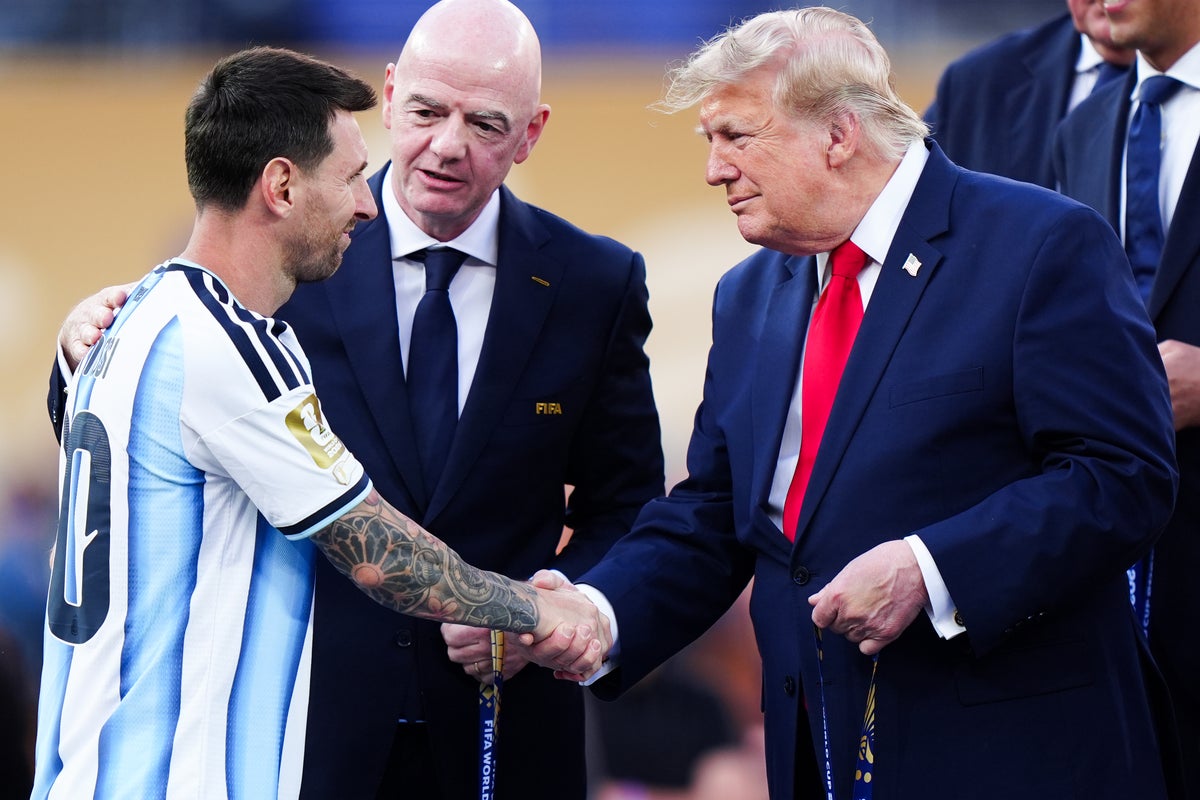
The air inside the Lusail Stadium tasted of dust, expensive perfume, and collective anxiety. Eighty-nine thousand people were screaming, but if you stood close enough to the pitch, you could hear the distinct, rhythmic thump of leather meeting boot. It was December 18, 2022. History will record this day as the moment Lionel Messi finally lifted the World Cup, cementing his status in the pantheon of football gods.
But history often forgets the secondary plotlines, the cruel little sub-tragedies that happen in the margins of a great triumph.
While the world watched Messi chase his ghost, a silent, parallel war was being waged. It was a battle fought in decimals, tiebreakers, and pure, unadulterated adrenaline. Kylian Mbappé and Lionel Messi were not just playing for a golden star above their team crests. They were locked in a cold war for the Golden Boot, the trophy awarded to the tournament’s top goalscorer.
To the casual observer, an individual trophy inside a team sport feels like a vanity project. It feels small. But to understand the true weight of that heavy, gilded shoe, you have to understand the sheer psychological violence of the ninety minutes—and eventual extra time—that unfolded in the desert.
The Mathematical Cruelty of the Pitch
Going into the final, the leaderboard was a dead heat. Messi had five goals. Mbappé had five goals. The narrative symmetry was almost too perfect, the kind of script a Hollywood writer would reject for being too on the nose.
Consider the sheer pressure of that reality. Every time Messi stepped up to take a penalty, he wasn't just shooting against the French goalkeeper; he was shooting against his own club teammate. Every time Mbappé picked up the ball on the left wing, exploding into spaces that did not seem to exist a second prior, he was chasing a ghost wearing blue and white stripes.
The algorithm that decides the Golden Boot is simple yet brutal. First, it counts goals. If goals are tied, it counts assists. If those are tied, it counts the fewest minutes played. It is a system designed by bureaucrats to measure art.
Messi struck first. A coolly converted penalty in the 23rd minute.
Suddenly, the virtual leaderboard shifted. Messi was on six goals. The stadium erupted, a sea of blue and white flags waving in frantic unison. In that moment, Mbappé looked isolated. For nearly eighty minutes, the French wunderkind was starved of service, wandering the pitch like a ghost in a blue jersey. The match felt over. The narrative felt sealed.
Then, the world shifted on its axis.
Eighty Seconds of Madness
Football is a game of long, agonizing stretches of nothing, punctuated by seconds of absolute chaos.
In the 80th minute, France won a penalty. Mbappé stepped up. His face was a mask of pure concentration, devoid of the boyish joy he usually carried. He scored. Six goals each.
But the universe wasn't done. Just eighty seconds later, the ball floated toward the edge of the Argentine box. Mbappé didn't think. He didn't calibrate. He simply launched his body into the air, striking a volley with such ferocious velocity that it felt less like a sport and more like an act of defiance. The ball tore into the side netting.
Seven goals.
In the span of a single minute and twenty seconds, Mbappé had dragged France back from the dead and snatched the virtual Golden Boot from the hands of the greatest player to ever live. The press box went silent. The sheer kinetic shock of what we were witnessing defied standard analysis. This wasn't tactics. This was human will refusing to bend.
The Final Accounting
The drama extended into extra time, a grueling test of human endurance where legs cramped and lungs burned. Messi scored again, poaching a chaotic rebound in the 108th minute. Seven goals each. The assist tiebreaker now favored Messi. If the game ended there, the trophy belonged to the Argentine.
But Mbappé wasn't finished writing his own story. Another penalty awarded to France in the 118th minute. The pressure was suffocating. Millions of eyes were glued to screens across the globe. A single slip, a muddy patch of turf, a slight miscalculation of the hips, and the dream would vanish.
Mbappé buried it.
Three goals in a World Cup final. A hat-trick on the grandest stage imaginable. With that eighth goal, the Golden Boot was officially secured.
When the final whistle blew after the penalty shootout, the contrast was stark. Messi was surrounded by a mob of weeping teammates, finally draped in the black and gold bisht, holding the World Cup trophy he had chased for two decades.
A few yards away sat Mbappé.
He looked entirely alone. His hands were resting on his knees, his eyes staring blankly into the middle distance. He had scored eight goals in a single World Cup tournament, a feat not accomplished since Ronaldo Nazário in 2002. He had won the Golden Boot. He had written his name into the record books with golden ink.
Yet, as he walked up to collect his individual trophy, passing the glittering World Cup along the way, he barely looked at the golden shoe in his hands. The trophy was heavy, beautiful, and entirely useless in comforting the sting of defeat.
The Golden Boot is often celebrated as the ultimate mark of individual clinical excellence. But on that warm night in Lusail, it served as a poignant reminder of the beautiful, agonizing contradiction of football: you can achieve absolute perfection on the pitch, you can score more than anyone else, and you can still walk away into the desert night with nothing but a heavy piece of metal and a heart full of what-ifs.