We built our childhoods around a lie.
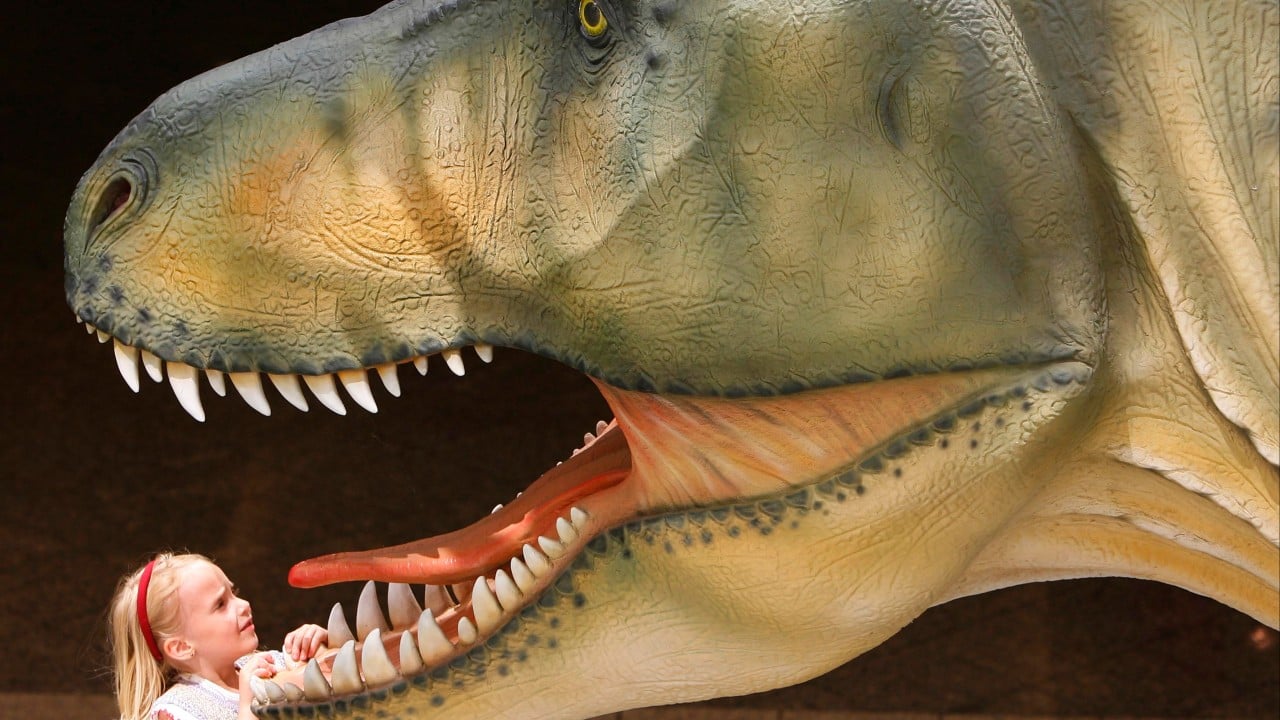
For generations, the undisputed king of the prehistoric world was cast in a specific mold. Picture it. A colossal, scaly titan dragging its heavy tail across a swampy fern prairie, moving with the sluggish, cold endurance of a giant crocodile. It waited. It basked. It absorbed the sun's morning rays just to summon the sluggish energy required to hunt. In our collective imagination, the Tyrannosaurus rex was a creature of the weather, at the mercy of the elements, governed by the cold physics of an ancient, creeping lizard.
Then the bones began to speak differently.
Imagine standing in a sterile laboratory, the smell of ancient dust and chemical binders sharp in the air. Before you lies a fragment of fossilized eggshell, millions of years old. Inside that microscopic mineral matrix lies an invisible archive. Geochemists look past the outer crust and read the isotopic signatures locked within the calcium and oxygen bonds. These are tiny chemical thermometers. They do not guess. They record.
When scientists extracted those signatures from the teeth of apex predators that walked the earth sixty-6 million years ago, the old story shattered.
The Tyrannosaurus rex was not cold-blooded. It ran hot.
Consider what that actually means for a creature weighing nine tons. Maintaining a body temperature hovering comfortably around human levels—roughly thirty-seven to thirty-eight degrees Celsius—inside a mountain of muscle and bone is no small biological feat. It requires an engine. It demands a metabolic rate that defies the sleepy, sun-basking reptile caricature of old.
To understand the shift, you have to step away from the textbook and look at the physics of heat. A small lizard warms up quickly because its surface area dwarfs its volume. A creature the size of a city bus does the opposite. If a giant animal produces too much internal heat without a way to shed it, it cooks from the inside out. Conversely, if it is a true cold-blooded creature of that scale, it freezes in the shadow of a single afternoon cloud.
The new data reveals a creature engineered for constant, relentless motion. This was an endotherm. A warm-blooded hunter whose internal furnace burned with the steady, fierce intensity of a modern mammal or bird.
Walk into a modern paleontology lab today, and the atmosphere feels less like a dusty archive and more like a crime scene investigation. Researchers are piecing together the invisible stakes of prehistoric survival. Every ridge on a bone tells a story of stress, growth, and energy expenditure.
When you picture the tyrant lizard now, erase the sluggish drifter. Replace it with a creature burning through calories at a staggering rate, breathing hot, oxygen-rich air through complex nasal passages, pacing its territory with the tireless rhythm of an absolute ruler. It was an animal that lived fast, burned bright, and commanded its environment through sheer physiological supremacy.
The textbooks are rewriting themselves. And the king of the Cretaceous has finally reclaimed its true, fiery crown.