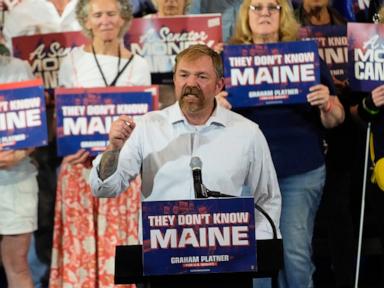
Winning a primary election while your personal life implodes in the national headlines takes a specific kind of political armor. Graham Platner just proved he has it. The 41-year-old oyster farmer, combat veteran, and progressive outsider locked up the Maine Democratic Senate nomination on Tuesday night, pulling in roughly 75% of the vote. He comfortably dispatched a ballot that still featured state political heavyweight Gov. Janet Mills, who technically suspended her campaign back in April but lingered as a ghost candidate for disgruntled voters.
If you look at the surface-level commentary, the take is predictable. It says Platner won because Democratic primary voters care more about flipping Susan Collins's Senate seat than they do about a candidate's personal baggage. But that view misses the actual mechanics of what just happened in Maine.
Voters did not just plug their noses and vote for a flawed candidate out of pure cynicism. Platner won because he redefined what accountability looks like to a working-class electorate that is deeply cynical about pristine, polished politicians. By turning his own messy history into a story about redemption and post-traumatic growth, he built a shield that traditional political attacks simply could not pierce.
The Baggage That Didn't Block the Ballot
Let's be clear about what Platner carried into Tuesday night. This was not a standard case of political opposition research uncovering a few bad votes or an old tax lien. The hits against him were steady, deeply personal, and dropped with maximum timing.
- The Texting Scandal: Just a week before the vote, reports confirmed Platner had exchanged sexually explicit messages with multiple women while married.
- The Domestic Allegations: A New York Times report followed, featuring accounts from former partners who described his past dating behavior as volatile and intimidating. One former girlfriend alleged he physically restrained her, a claim Platner denied, pointing out her work as a Republican activist.
- The Digital History: Old Reddit comments surfaced where he appeared to shrug off military sexual assault, criticize rural communities, and float rhetoric endorsing political violence. He blamed these on a dark period dealing with untreated PTSD and depression.
- The Tattoo: Early in the campaign, a video revealed a chest tattoo resembling the Nazi SS Totenkopf symbol. Platner claimed ignorance of the connection and quickly got it covered up.
In any election cycle ten years ago, this volume of negative press would have triggered a swift, quiet exit from the race. Instead, Platner’s support barely wavered. The primary night watch party at a Blue Hill YMCA looked less like a damage-control operation and more like a populist revival.
The strategy was clear. Platner did not try to hide from the mess. He leaned into it. Flanked by his mother and his wife, Amy Gertner, he explicitly told the crowd that if people want to change the country's politics, they have to believe that people can change too. It was a calculated, raw appeal to an audience that prefers a flawed human to a curated corporate product.
How the Electability Standard Flipped
The institutional Democratic response to Platner’s victory reveals an aggressive shift in how the party views modern campaigns. For years, Democrats prided themselves on a strict standard for personal conduct, often forcing their own out of office at the first sign of credible scandal. Think back to Al Franken's resignation in 2018.
Now look at who backed Platner. Minnesota Sen. Tina Smith, who literally took Franken’s seat after his resignation, gave Platner an unequivocal endorsement just hours before the polls closed. National progressive icons like Bernie Sanders and Elizabeth Warren kept their shoulders behind his campaign throughout the worst of the news cycles.
This isn't a double standard; it’s an adaptation to the current environment. Voters have watched political figures survive seemingly disqualifying scandals for a decade by simply refusing to quit. Democrats have realized that weaponizing personal morality doesn't work when the electorate is focused entirely on corporate accountability and economic survival.
The working-class base in Maine is dealing with soaring housing costs, inflation, and a rugged coastal economy. To a voter struggling to pay for heating oil or groceries, an oyster farmer who talks openly about his struggles with PTSD, bad text messages, and a messy divorce feels relatable. A polished candidate who says all the right things but leaves the economic status quo untouched feels like the real threat.
The Real Battle Against Susan Collins
Platner’s real test begins now. Winning a primary when you are the darling of the progressive base is one thing. Beating Susan Collins in a general election in Maine is an entirely different animal.
Collins has held her seat since 1997. She is running for her sixth term. While progressives view her as a rubber stamp for conservative judicial nominees and corporate interests, local voters view her as a formidable, deeply entrenched institution. She went unchallenged in her own primary, allowing her campaign to save cash and watch the Democrats air their dirty laundry.
Platner didn't waste time transitioning to the general election. His acceptance speech bypassed the primary completely to launch a direct assault on Collins’s foreign policy record and corporate ties. He leaned heavily on his background as a Marine and Army veteran to attack her votes on defense spending and military interventions, a line of critique designed to appeal to Maine’s independent voters.
Maine U.S. Senate Historical Context:
A Democratic Party candidate has not won a U.S. Senate election in Maine since 1988. The state frequently favors independent-minded figures or moderate incumbents, making the Collins-Platner matchup an uphill battle for the progressive left.
Republicans have already signaled their general election strategy. They don't need to debate Platner on economic populist theory. They just need to keep his personal life in the headlines until November. Every explicit text message, every old internet comment, and every relationship allegation will be packaged into television ads aimed directly at suburban voters in towns like Brunswick and Portland.
The Next Moves for the Campaign
For Platner to stay competitive through the fall, his campaign has to shift from defensive damage control to an aggressive, issues-first ground game. The novelty of the "authentic, flawed veteran" will wear off once the multi-million-dollar attack ads start hitting the airwaves.
First, the campaign must formalize its policy positions on working-class economic relief. Talk about income inequality works at a rally, but voters need concrete proposals on housing affordability and healthcare access to look past the personal drama. Platner needs to tie his populist rhetoric to specific legislative goals that contrast sharply with Collins's voting record.
Second, he has to mend fences within his own state party. While national progressives are thrilled, local figures remain uneasy. Gov. Janet Mills’s silent presence on the ballot pulled a notable percentage of protest votes from Democrats who couldn't stomach Platner's baggage. He cannot win a general election with a fractured base.
The campaign must launch a statewide listening tour that targets these skeptical, moderate Democratic enclaves. He needs to face those voters with the same directness he showed in Blue Hill, proving he can handle the heat without losing his temper or blaming the media. If he can convince the party faithful that his focus is entirely on unseating Collins rather than litigating his past, he might just pull off the ultimate political pivot.