The Mechanism of Influence in an Anti-Establishment Ecosystem
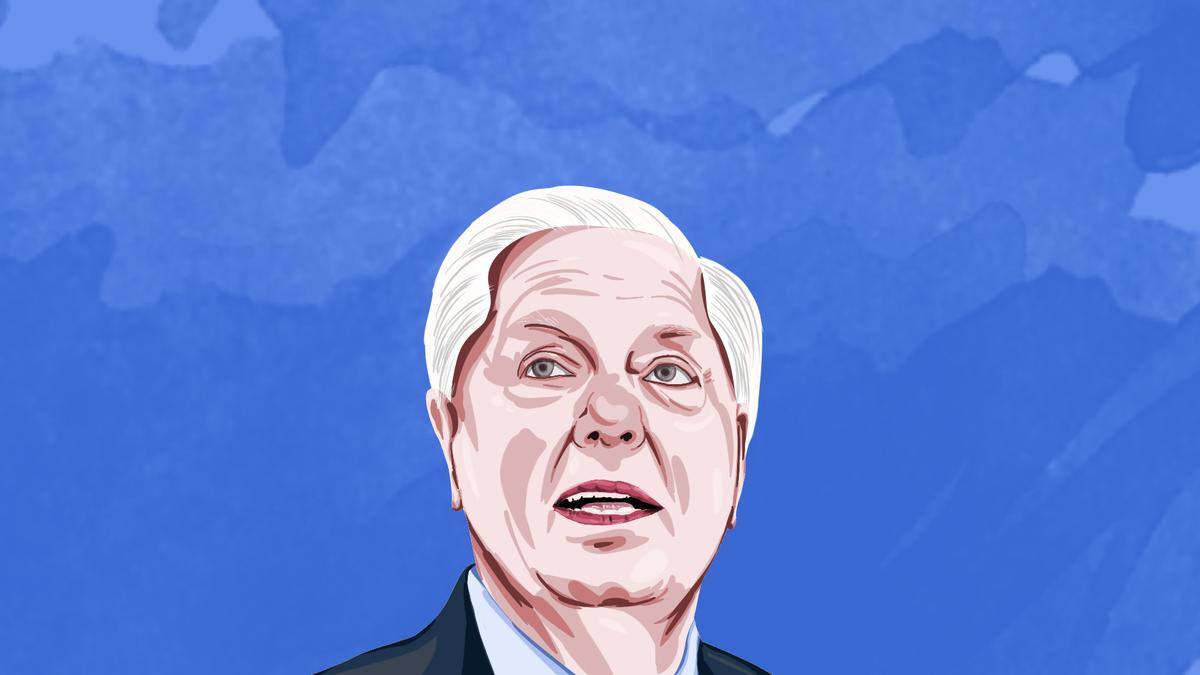
The enduring political viability of Senator Lindsey Graham within the orbit of Donald Trump is not a product of personal loyalty or ideological conversion. It is a calculated structural adaptation. In a political environment defined by the rejection of traditional institutional expertise, Graham has successfully engineered a role as the "institutional bridge." He provides the Trump administration with a necessary conduit to the permanent national security state while offering the Republican establishment a mechanism to influence an otherwise unpredictable executive.
This relationship functions through a high-stakes exchange of political capital. Graham offers Trump the "seal of approval" from the hawk wing of the GOP, which mitigates internal party resistance to populist trade or social policies. In return, Graham secures a seat at the table where he can constrain the President’s isolationist impulses. This is not a "whisperer" dynamic based on mysticism; it is a transactional equilibrium designed to manage the volatility of American hegemony.
The Three Pillars of the Graham-Trump Calculus
The stability of this alliance rests on three distinct operational pillars that allow two seemingly incompatible worldviews to coexist and, at times, synchronize.
1. The Validation Feedback Loop
Trump’s political identity is built on the narrative of the "outsider" fighting a "corrupt" system. However, governing requires the cooperation of that very system. Graham serves as the validator. When Graham supports a Trump foreign policy move—even one that contradicts Graham’s own history, such as the initial engagement with North Korea—it signals to the broader conservative base that the move is "safe" and "strong." This feedback loop converts populist energy into institutional policy without the friction of a floor fight in the Senate.
2. The Interventionist Constraint
Graham’s primary objective remains the maintenance of an activist U.S. foreign policy. He views American withdrawal from global flashpoints as a systemic risk. By staying close to Trump, Graham acts as a human "governor" on the engine of isolationism. When the President suggests a total withdrawal from Syria or a scaling back of NATO commitments, Graham does not attack from the outside. He utilizes his proximity to reframe the cost-benefit analysis in terms Trump respects: strength, leverage, and "winning."
3. Judicial Confirmation Synergy
The most tangible output of the Graham-Trump alliance is the fundamental restructuring of the federal judiciary. As a senior member (and former Chairman) of the Senate Judiciary Committee, Graham transformed from a "maverick" negotiator into a relentless partisan fighter during the Brett Kavanaugh and Amy Coney Barrett confirmations. This signaled to the Trump base that Graham was willing to "fight" in the trenches, a prerequisite for trust in the MAGA era. This judicial success provided the political cover necessary for Graham to continue pushing traditional neoconservative foreign policy agendas that might otherwise be labeled "Deep State" by the President’s more populist advisors.
The Cost Function of Proximity
Operating as a bridge carries significant political depreciation. For Graham, the cost is a loss of credibility with the traditional bipartisan center. For Trump, the cost is the persistent presence of an interventionist voice that complicates his "America First" rhetoric.
The friction points usually emerge in the following areas:
- The Ukraine-Russia Variable: Graham’s career-long commitment to countering Russian influence directly clashes with Trump’s desire for a negotiated settlement that might involve territorial concessions. Graham’s strategy here is to frame support for Ukraine not as a "liberal internationalist" project, but as a "hard power" investment that depletes a primary adversary’s military without American boots on the ground.
- The Foreign Aid Paradox: Trump’s base views foreign aid as a "zero-sum" loss for the American taxpayer. Graham views it as "soft power" that prevents "hard power" costs later. To reconcile this, Graham has shifted his rhetoric to emphasize "security assistance" over "humanitarian aid," aligning the language with the administration’s focus on national interest.
Logistic Realities of Senate Power
The internal mechanics of the Senate provide Graham with a structural advantage that the White House cannot ignore. As a senior member of the Appropriations and Judiciary committees, Graham controls the flow of two things any President needs: money and personnel.
The President can ignore a critic, but he cannot ignore the person who oversees the budget for the Department of State or the confirmation of his Cabinet. Graham leverages this "power of the purse" to ensure his voice is heard on matters of war and peace. This is a cold, mathematical reality of the separation of powers. Even if Trump’s personal instincts lean toward isolationism, the legislative requirements for funding the military and intelligence services force a continuous negotiation with Graham.
The Resilience of the "Graham Doctrine"
While many analysts viewed Graham’s shift toward Trump as a sign of political weakness, it was actually an exercise in high-level risk management. The "Graham Doctrine" posits that the best way to preserve the liberal international order is to wrap it in the language of populist nationalism.
By framing a strong military presence in the Middle East as "killing them over there so we don't have to fight them here," Graham translates complex geopolitical strategy into the vernacular of the Trump movement. This linguistic shift allows the underlying policy—permanent bases, drone programs, and alliance maintenance—to remain largely intact despite a radical change in executive rhetoric.
Strategic Divergence and the Limit of Influence
There is a hard ceiling to Graham’s influence. When a policy becomes a central pillar of Trump’s "brand," Graham’s ability to pivot the President is neutralized. For example, on trade tariffs and border construction, Graham’s traditional "Chamber of Commerce" Republicanism was forced to give way entirely.
The relationship is asymmetric:
- High Influence Zones: Foreign military interventions, judicial appointments, intelligence community funding.
- Low Influence Zones: Trade policy, immigration rhetoric, domestic populist grievances.
Graham survives by knowing exactly where that line is drawn. He does not waste political capital on domestic issues where Trump is immovable; he saves it for the moments when the President is considering a fundamental shift in the global security architecture.
The Forecast for Institutional Populism
The Graham-Trump model serves as the blueprint for how traditional power brokers will operate in a second Trump term or under a Trump-aligned successor. The era of the "Never Trump" Republican is effectively over as a viable legislative strategy. Instead, the "Graham Path" involves total public alignment on cultural and judicial issues in exchange for behind-the-scenes control over the levers of the national security state.
This creates a hybrid governance model: a populist "front-end" that handles communication and base mobilization, and a traditional "back-end" that manages the actual machinery of the empire.
The strategic play for Graham, and those who follow his model, is to remain the only person in the room who can speak both "MAGA" and "Pentagon." As long as Trump requires the legitimacy of the Senate and the functionality of the military, Graham’s position as the indispensable intermediary is secure. The goal is not to change Trump, but to narrow the range of his viable options until they align with the requirements of American global dominance. This is the ultimate preservation of the status quo disguised as a revolution.
Monitor the chair appointments on the Senate Foreign Relations and Armed Services committees. If Graham or his direct ideological allies maintain these seats, the "whisperer" dynamic will continue to serve as the primary constraint on any radical shift in U.S. global posture, regardless of the rhetoric coming from the Oval Office. Identify the specific legislative riders attached to defense authorization bills; these are the true fingerprints of Graham’s influence, far more than any televised golf outing.