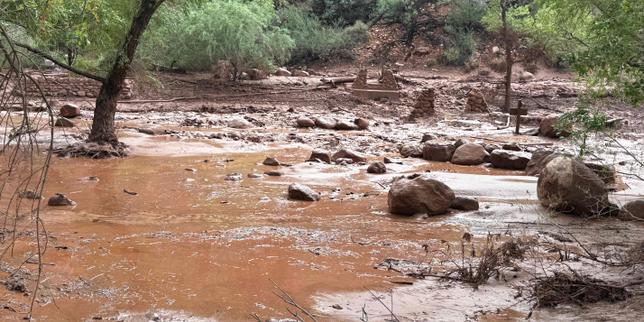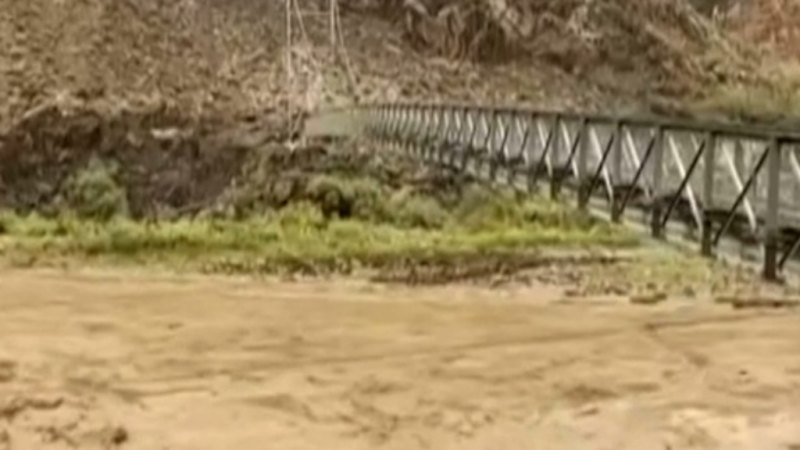
Flash floods in canyon environments present a catastrophic systems failure for wilderness management, tourist safety, and emergency response logistics. When sixty tourists found themselves stranded following sudden hydrological inundation in the Grand Canyon, standard evacuation protocols proved insufficient, necessitating an immediate pivot to aerial extraction. Evaluating this incident requires deconstructing the physical mechanics of slot canyon flooding, the economic and operational constraints of vertical lift operations, and the systemic vulnerabilities inherent in high-risk recreational tourism.
The Hydrological Dynamics of Canyon Inundation
Understanding why sixty individuals required airlifting demands an examination of the watershed mechanics governing arid environments. Flash floods in the American Southwest rarely originate from local precipitation. Instead, storms miles away dump high volumes of water onto impermeable sandstone and clay crusts, which act as natural chutes channeling runoff into narrow tributaries.
The time lag between a distant rain event and the arrival of a wall of water can be minimal, often measured in minutes. This creates a critical intelligence deficit for visitors lacking real-time meteorological data feeds. The physics of the flood involve rapid mass accumulation. As water funnels into restricted geometries, velocity and hydraulic pressure increase exponentially. A stream inches deep can transform into a roaring torrent capable of displacing boulders and sweeping human bodies downstream with absolute mechanical indifference.
When sixty tourists are caught in such an event, the immediate priority is vertical displacement. Traditional ground-based extraction via hiking out or scaling canyon walls is negated by sheer topography, exhaustion, hypothermia, and blocked pathways. The situation converts instantly from a recreation management problem into a high-consequence search and rescue operation governed by time-sensitive triage.
The Operational Economics and Logistics of Aerial Extraction
Deploying helicopters for mass evacuations in remote terrain involves a complex calculus of asset availability, meteorological constraints, and payload physics.
Asset Availability and Response Time
Emergency response agencies operating in the Grand Canyon region rely on specialized aviation units equipped with high-altitude, power-dense airframes. These helicopters must possess sufficient torque and rotor clearance to operate in confined spaces where downdrafts and canyon walls create severe aerodynamic turbulence. The baseline constraint is the prepositioning of assets. When sixty people require extraction, a single airframe is mathematically inadequate due to weight limits, fuel consumption, and transit time to safe staging areas.
Payload Constraints and Rotation Cycles
A standard tactical rescue helicopter cannot lift dozens of passengers simultaneously. Weight and balance calculations, density altitude, and fuel reserves dictate strict passenger limits per sortie.
- The Weight Variable: High ambient temperatures in canyon environments reduce air density, directly degrading engine performance and lifting capacity.
- The Cycle Time: Each extraction cycle requires ingress, hovering or landing in treacherous terrain, loading passengers under extreme physiological stress, egress to a triage point, offloading, and refueling.
Multiplying this cycle across sixty stranded individuals reveals a protracted multi-hour operation. During this window, exposure, panic, and secondary injuries compound the operational risk profile for both the victims and the flight crews.
Institutional Vulnerabilities in Wilderness Tourism
The incident exposes systemic vulnerabilities in how adventure tourism manages environmental volatility. Risk mitigation in remote environments relies on a three-tier framework: hazard identification, visitor communication, and self-rescue capability. Each tier experienced systemic friction during the Grand Canyon flooding event.
Predicting localized flash floods with precision remains technologically constrained. National Weather Service advisories cover broad zones, but microclimates and localized watershed funnels create hyper-specific dangers that generalized warnings fail to capture. Tourists relying on standard mobile devices or casual pre-trip briefings often lack the situational awareness required to interpret upstream radar loops or barometric shifts.
Furthermore, the commercialization of wilderness access creates a moral hazard. Independent travelers and guided groups alike frequently underestimate the speed of ecological shifts. When infrastructure collapses—trails wash out, footbridges are destroyed, and communication links sever—the burden of rescue shifts entirely to public safety agencies funded by taxpayers, highlighting a misalignment between private recreation consumption and public rescue costs.
Capital Allocation and Predictive Infrastructure for Extreme Weather
Mitigating future mass-casualty events in remote gorges requires shifting from reactive extraction to predictive architectural hardening and localized early-warning integration. Traditional signage and static warnings are obsolete when confronted with cognitive biases like optimism bias among tourists.
Agencies managing high-traffic wilderness corridors must invest in automated sensor arrays deployed at critical watershed choke points. These telemetry units measure real-time water displacement and velocity, transmitting automated triggers to localized acoustic warning systems installed along popular hiking corridors. Providing tourists with localized, hard-to-ignore physical alarms reduces the cognitive latency between environmental threat onset and self-evacuation initiation.
Simultaneously, commercial operators and park authorities must enforce mandatory hard-stop thresholds based on watershed saturation models rather than subjective visual assessments. By removing human discretion from the decision to close high-risk zones during high-probability rain events, the frequency of large-scale emergency airlift deployments will decline. The strategic objective is eliminating the necessity of the rescue entirely through uncompromising environmental gating.