The Transparency Trap
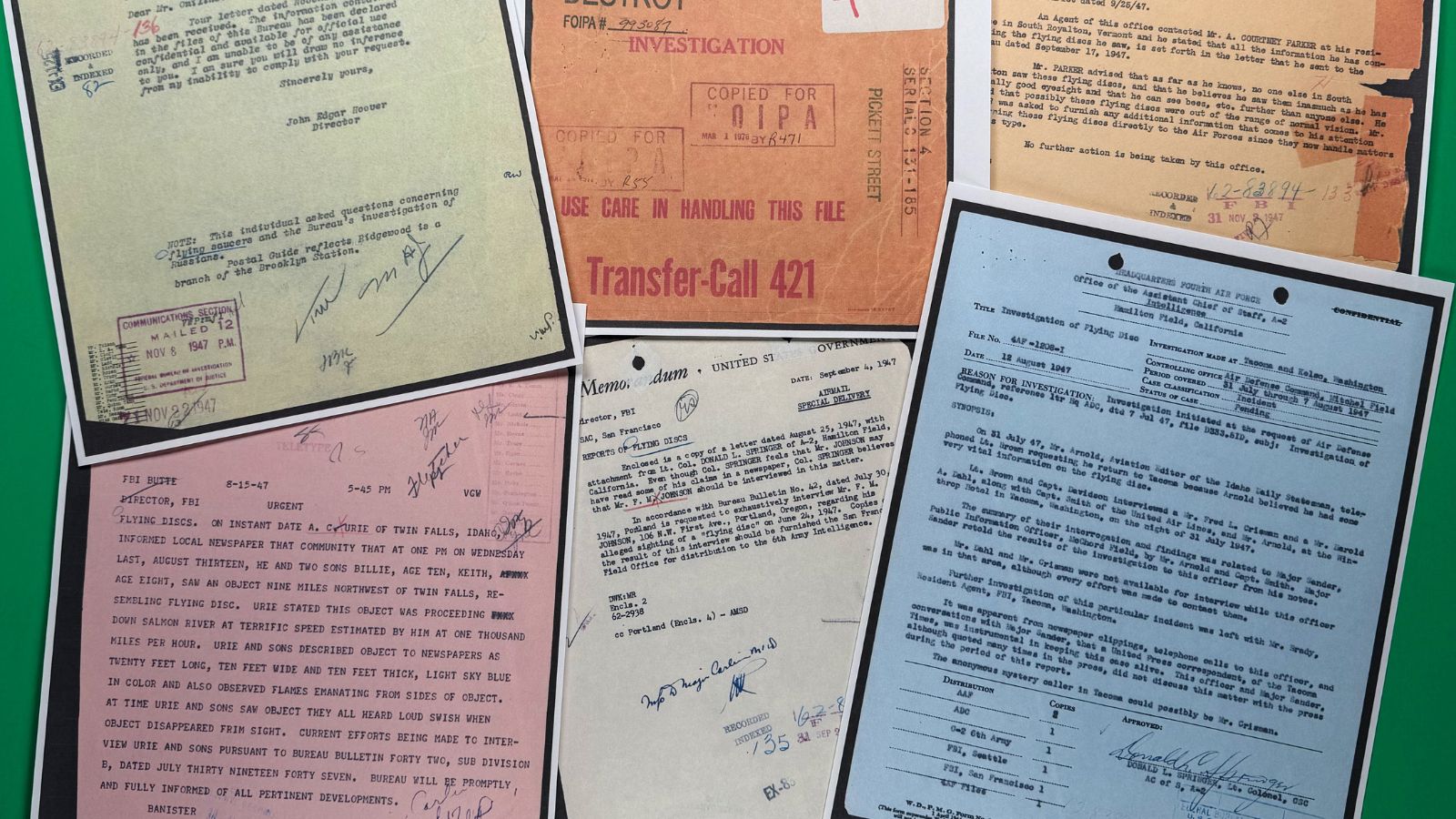
Every time a batch of grainy black-and-white photos or redacted memos from the 1960s hits the public domain, the internet loses its collective mind. The headlines scream about "mysterious" Apollo mission photos and "newly released" alien files. People act as if we are one PDF away from a handshake with a Grey.
It is a lie. If you found value in this piece, you might want to read: this related article.
The obsession with government disclosure is the ultimate distraction. While enthusiasts pore over blurred pixels from a Hasselblad camera used during the lunar missions, they miss the fundamental reality of how information works in the 21st century. If you are waiting for a three-letter agency to hand you the keys to the universe on a silver platter, you have already lost.
The government does not "release" secrets. It curates legacies. What you are seeing is not a leak; it’s a controlled burn of irrelevant data. For another angle on this event, refer to the latest coverage from MIT Technology Review.
The Myth of the Smoking Gun
The common argument suggests that the US government is sitting on a mountain of definitive proof—metal scraps, biological entities, or high-definition footage—and that "declassification" is the process of slowly letting us in on the secret.
This premise is flawed.
I have spent years navigating the bureaucracy of information security. Here is the brutal truth: the most sensitive data is never "declassified" in a way that provides clarity. It is buried under "Glomar" responses—the "neither confirm nor deny" protocol—or it is shielded by Private-Sector Laundering.
If a breakthrough exists, it isn't in a Pentagon basement. It’s in a locked server room at a defense contractor like Lockheed Martin or Northrop Grumman. These entities are not subject to Freedom of Information Act (FOIA) requests. By focusing on the "Alien" files released by the National Archives, you are looking at the trash pile while the valuables are locked in a private vault.
Apollo 10 and the "Music" of the Spheres
Take the recurring "mystery" of the Apollo 10 lunar orbit recordings. Every few years, a news outlet "discovers" that the astronauts heard "outer-space-type music" while on the far side of the moon. The headlines imply a brush with the paranormal.
It wasn't music. It was radio interference between the LM (Lunar Module) and the Command Module’s VHF radios.
The "mystery" was solved by the crew and NASA technicians before the capsule even splashed down. Yet, the media treats the release of these transcripts as a revelation. This is the Declassification Feedback Loop:
- Release decades-old, well-understood data.
- Frame it as "mysterious" to generate clicks.
- Watch the public debate a settled issue while current, relevant sensor data remains classified at the highest levels.
We are being fed the scraps of 1969 while 2026 technology is capturing things we aren't even allowed to imagine.
The Resolution Problem
We are living in an era where civilian satellites can read a license plate from orbit. Yet, every "official" photo of a UAP (Unidentified Aerial Phenomenon) looks like it was captured with a potato in a blender.
Why? Because the "disclosure" people crave would require the government to reveal its Source and Method.
Imagine a scenario where the Air Force releases a crystal-clear image of a craft performing a 90-degree turn at Mach 10. The image is so sharp you can see the rivets. The public would celebrate. The Chinese and Russian intelligence services would celebrate harder. They wouldn't care about the craft; they would care about the sensor that took the photo. They would calculate the diffraction limit, the orbital altitude, and the spectral sensitivity of the lens.
To give you the "UFO," they have to give away the "Spy Satellite." They will never do that. Therefore, any file you are allowed to see is, by definition, useless for scientific proof. It is filtered, degraded, and stripped of context to protect the platform, not the secret.
Stop Asking "Are They Here?"
The "People Also Ask" sections of the web are filled with questions like: Has the US government confirmed aliens? or What is in the secret UFO files?
These are the wrong questions. They assume the government is a monolithic entity with a singular "truth."
The real question is: Who owns the data?
In the past, the state held the monopoly on high-altitude surveillance. That monopoly is dead. Between SpaceX, Planet Labs, and thousands of amateur astronomers with sophisticated CMOS sensors, the "truth" is being democratized.
If there is something in our skies, it will be found by a private citizen using a telescope connected to a neural network, not by a bureaucrat checking a box on a declassification form. The government is not the gatekeeper anymore; they are just the guys with the biggest shredders.
The Cost of the "Aliens" Narrative
The obsession with the extraterrestrial angle actually hurts serious aerospace inquiry. By framing every anomalous radar hit or sensor glitch as "Alien," we allow the government to hide its actual black-budget terrestrial projects.
If I am testing a trans-medium drone that can transition from water to air, I want people to call it a UFO. I want the tabloids to talk about "mysterious files" and "little green men." It provides the perfect cover.
- 1950s: People see the U-2 spy plane. The Air Force calls it "weather research."
- 1980s: People see the F-117 Nighthawk. People call it a "flying saucer."
- 2020s: People see "tic-tacs." We talk about declassifying Apollo photos.
It’s the same shell game, just a different decade.
The Actionable Pivot
Stop waiting for the "Big Reveal." It isn't coming. Instead, apply a cynical filter to every "release" you see:
- Check the Date: If the file is more than 25 years old, it is being released because it no longer has tactical value. It is historical trivia, not news.
- Look for the Private Interest: If a story mentions "mysterious photos" but ignores the private contractors who built the hardware, you are only getting half the story.
- Audit the Sensor: Ask not "what is that object," but "how was this recorded?" If the image quality is poor despite modern tech, the degradation is intentional.
The truth is not hidden in a dusty archive. It is hiding in plain sight, masked by our own desire to believe in a grand reveal. The government isn't keeping a secret from you; they are keeping you busy with a puzzle that has no pieces.
Throw away the transcripts. Ignore the redacted memos. If you want to find something truly "mysterious," stop looking at the sky and start looking at the defense budget.
The most dangerous things aren't coming from another galaxy. They are being built in a suburb of D.C. with your tax dollars, and they don't need "files" to exist. They just need your silence and your distraction.
Go find a better mystery. This one is rigged.