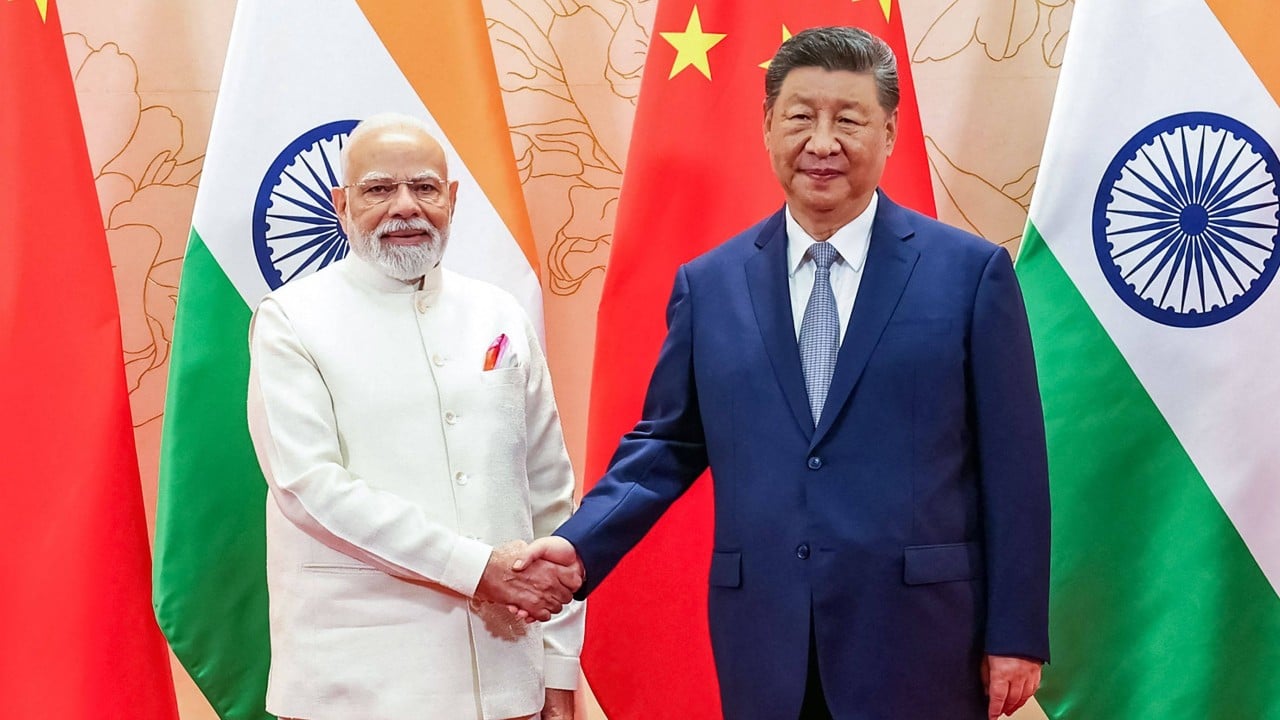
India is quietly dismantling the wall it built around Chinese capital. After four years of systematic exclusion following the 2020 Galwan Valley clash, the Prime Minister’s Office is shifting from a blanket ban to a nuanced, case-by-case screening process. This is not a sudden burst of warmth or a diplomatic olive branch. It is a cold, calculated survival tactic. The Indian government realized that its ambitious goal of becoming a global manufacturing powerhouse is physically impossible without the very Chinese supply chains it tried to sever. By streamlining approvals for Chinese investments—particularly in sectors like electronics and green energy—New Delhi is betting that it can import Chinese expertise without compromising national security.
The shift arrived without a formal press release. Instead, it emerged through the Economic Survey and a series of quiet approvals for Apple’s Chinese suppliers. For years, the official stance was "no border peace, no business." That hardline position served a political purpose, but the economic math stopped adding up. India’s trade deficit with China didn’t shrink during the freeze; it hit record highs. India was buying finished goods from China because it lacked the local capacity to make them, and it lacked that capacity because it had blocked the companies that knew how to build the factories.
The Manufacturing Trap
India wants to be the world’s factory. To do that, it needs to lure global giants like Apple, Tesla, and Samsung to move their entire production ecosystems to the subcontinent. But these giants don't exist in a vacuum. They rely on a sprawling network of specialized component makers, many of whom are Chinese. When India slammed the door on Chinese FDI (Foreign Direct Investment) via Press Note 3 in 2020, it effectively told global brands they could build the "house" in India, but they couldn't bring the "bricks" from China.
The result was a bottleneck. Indian manufacturers found themselves in a strange position where they could assemble a smartphone but couldn't manufacture the high-end display or the complex battery circuitry. They had to import these parts, often at higher costs and with longer lead times.
Local industry captains began a quiet lobbying campaign. They argued that by blocking Chinese engineers and capital, India was inadvertently helping its rivals like Vietnam and Thailand. Those countries were welcoming Chinese firms with open arms, allowing them to set up shop and export to the rest of the world. India was staying pure but staying poor. The government’s recent change of heart is an admission that self-reliance—the celebrated "Atmanirbhar Bharat"—requires a bridge of foreign expertise to get off the ground.
National Security vs Economic Necessity
The tension between the Ministry of External Affairs and the Ministry of Finance is palpable. The security establishment remains deeply suspicious of any Chinese presence in India’s digital or physical infrastructure. They remember the apps that were banned and the telecom gear that was ripped out of the network. These fears are grounded in reality. The Chinese state maintains a level of influence over its private sector that makes "decoupling" a matter of national defense for India.
However, the Finance Ministry is looking at a different set of numbers. India needs to create roughly 8 million jobs every year to keep up with its youth bulge. Services and software cannot carry that weight alone. Manufacturing must grow. To facilitate this, the government is introducing a tiered vetting system.
Under this new framework, investments in non-sensitive sectors—like textiles, leather, or basic electronics assembly—will likely see a faster track. High-tech sectors or those involving data-sensitive components will still face a gauntlet of security clearances. It is a surgical approach designed to replace the previous blunt-force trauma of a total ban.
The Visa Crisis
Capital was only half the problem. The other half was people. Over the last four years, the Indian government made it notoriously difficult for Chinese technicians and engineers to get business visas. This created a bizarre situation on factory floors across the country. Indian firms bought multi-million dollar machinery from China, but when the machines broke down or needed calibration, the experts required to fix them were denied entry.
Production lines sat idle. Projects were delayed by months. In the garment industry and the shoe manufacturing sector, where Chinese machines are the global standard, the lack of technical support became a silent tax on Indian productivity.
The new policy includes a "fast-track" visa process for Chinese technicians specifically tied to projects under the Production Linked Incentive (PLI) schemes. The government is finally acknowledging that you cannot buy the violin and refuse to let the teacher in the room. By allowing these specialists back into the country, India hopes to accelerate the "transfer of technology" that has so far been a slow and painful crawl.
Why the World is Watching
This pivot has implications far beyond the border. As the United States and Europe attempt their own versions of "de-risking" from China, they are looking for alternative hubs. India is the primary candidate. But if India cannot integrate Chinese supply chains into its own borders, it cannot compete on price or scale with China itself.
International investors are watching to see if this "thaw" is permanent or merely a temporary tactical shift. Stability is the currency of big business. If a minor border skirmish can lead to the immediate freezing of assets and the deportation of staff, long-term investment becomes too risky.
New Delhi is trying to project a new image: a confident power that can manage a complex relationship with a rival. It is a high-wire act. The government must convince a domestic audience—still reeling from the 2020 conflict—that doing business with China is not a betrayal of the fallen. Simultaneously, it must convince global markets that India is open for business and capable of pragmatism.
The Battery Bottleneck
Nowhere is the need for Chinese involvement more evident than in the electric vehicle (EV) sector. China currently controls over 70% of the global lithium-ion battery supply chain. For India to meet its ambitious green energy targets, it must either build its own battery ecosystem from scratch—which takes decades—or partner with the leaders in the field.
Initially, India hoped to bypass China by partnering with Japanese or South Korean firms. While those partnerships are growing, the cost structure often remains prohibitive compared to Chinese alternatives. Companies like BYD have already faced significant hurdles trying to expand in India. The loosening of investment rules could pave the way for joint ventures where Indian firms hold the majority stake, but Chinese firms provide the core technology.
This "Joint Venture" model is likely the blueprint for the next decade. India wants to avoid the mistakes of the past where foreign firms dominated the market without sharing any intellectual property. By forcing Chinese companies to partner with local titans like the Tata Group or Reliance, India hopes to build its own internal capabilities while benefiting from Chinese scale.
The Risks of Re-Entry
Allowing Chinese money back into the fold is not a risk-free maneuver. There is the persistent threat of predatory pricing, where Chinese firms use state subsidies to undercut Indian competitors and drive them out of business. There is also the risk of "backdoor" access to Indian consumer data, a concern that led to the original ban on TikTok and dozens of other apps.
The government’s new vetting process must be incredibly sophisticated to catch these nuances. It isn't just about who owns the company; it’s about where the servers are located, who sits on the board, and where the critical components are designed.
The vetting will likely remain opaque. The government wants the flexibility to say "no" without having to explain exactly why, maintaining a level of strategic ambiguity that keeps Beijing on its toes. This lack of transparency might frustrate some investors, but it is the price India pays for its unique geopolitical position.
A New Economic Realism
The "6-year freeze" was an emotional and political necessity at the time, but it has reached the limits of its utility. India has realized that you cannot build a wall against the world’s second-largest economy when your own growth depends on its tools.
This is not a return to the "Hindi-Chini Bhai-Bhai" days of old. The relationship remains deeply adversarial. Military buildup continues on both sides of the Line of Actual Control. Trust is at an all-time low. Yet, the economic reality has forced a moment of clarity.
India is choosing a path of selective engagement. It is a recognition that in the modern world, total isolation is a form of self-harm. The goal now is to use Chinese capital to build the very infrastructure that will eventually allow India to stand on its own two feet. It is a gamble of historic proportions. If it works, India accelerates its journey to becoming a 5-trillion-dollar economy. If it fails, it risks becoming even more dependent on a neighbor it fundamentally distrusts.
The doors are opening, but the guards are not leaving their posts.
Verify the specifics of the new FDI screening process for your industry before committing to large-scale capital imports.