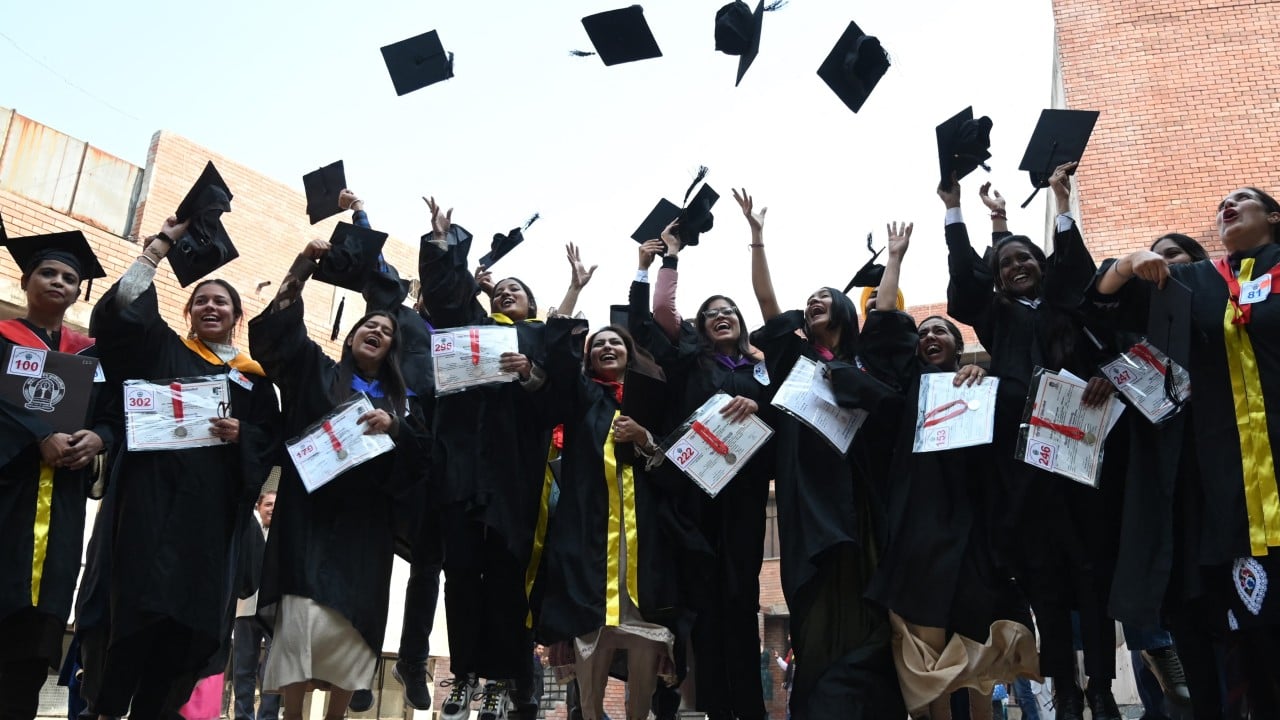
The traditional magnet pulling ambitious South Asian students toward Western universities has lost its charge. For decades, elite hopefuls from New Delhi, Mumbai, Dhaka, and Lahore viewed higher education in the United States, the United Kingdom, Canada, and Australia as the ultimate golden ticket. That consensus has cracked. A combination of aggressive visa restrictions, runaway housing shortages, spiraling tuition costs, and deteriorating post-graduation employment markets has forced thousands of families to reconsider the traditional Western migration pipeline.
Students are no longer asking how to get into a Western institution. They are asking whether the investment makes financial or professional sense anymore. Don't forget to check out our earlier coverage on this related article.
To understand this shift, look past glossy university recruitment brochures and examine the cold mathematics of international study. Tuition fees for international undergraduates at public universities in Canada and the United Kingdom frequently exceed forty thousand dollars annually, before living expenses. In the United Kingdom, the elimination of dependent visas for most master's students transformed an accessible migration route into an expensive, temporary hurdle. In Canada, federal caps on study permits slashed international intake by roughly thirty-five percent, abruptly closing pathways that thousands of international applicants banked on for permanent residency.
The financial burden compounds quickly. When foreign students arrive in Toronto, London, or Melbourne, they encounter severe housing crunches. Affordable rentals are virtually nonexistent. Students find themselves competing in hyper-competitive markets for overpriced basement apartments or shared rooms, stretching budgets to a breaking point. Meanwhile, local political discourse in these host countries increasingly targets international students as the root cause of domestic housing and infrastructure strains, creating a cold, unwelcoming social climate. If you want more about the history of this, Reuters Business provides an excellent breakdown.
Economic realities are shifting on the other side of the globe as well. The economic rise of regional powerhouses means the career return on investment no longer exclusively favors Western degrees. Domestic job markets in India and Southeast Asia are maturing rapidly. Multinational corporations, deep-tech startups, and domestic financial giants in Bangalore and Mumbai now offer compensation packages and career trajectories that rival entry-level positions in Western financial capitals. Returning home with a massive foreign student debt load no longer guarantees a proportional salary advantage.
The Regional Alternative Migration Wave
Education capital is flowing toward new destinations. If traditional Western hubs push students away, regional hubs and emerging international markets pull them in.
Singapore, Hong Kong, and the United Arab Emirates have aggressively positioned themselves as elite educational sanctuaries. Universities in these jurisdictions offer world-class curricula, significant research funding, and geographic proximity to South Asia without the hostile immigration rhetoric currently dominating Western politics. For many families, sending an undergraduate to Dubai or Singapore offers high academic standards, lower travel costs, and safety, paired with dynamic regional job markets.
Continental Europe presents another compelling vector. Germany and the Netherlands offer low or zero tuition fees at public universities, paired with robust industrial ecosystems. While language barriers remain a hurdle, English-taught bachelor's and master's programs have multiplied. Students who once defaulted to expensive English-speaking countries now weigh the value of tuition-free education in Munich against twenty-thousand-dollar annual tuition bills in Manchester.
Japan and South Korea are also entering the race. Facing acute demographic decline and shrinking domestic labor pools, both nations have introduced aggressive national strategies to attract international talent. Simplified work visas, government-sponsored language training, and direct corporate recruitment pipelines offer South Asian engineers and scientists viable long-term residency options that Western nations are currently restricting.
The Structural Breakdown of the Post-Graduation Promise
The foundational pitch of Western international education was simple: pay high tuition, secure a post-graduation work permit, find professional employment, and transition to permanent residency. That contract has broken down.
Post-graduation work permits in Canada and Australia have faced sudden rollbacks in duration and eligibility. In the United Kingdom, the Graduate Route visa faces constant political scrutiny, with periodic threats of restriction or outright abolition. International students graduate into a landscape of profound uncertainty, where corporate employers increasingly hesitate to sponsor visas due to rising administrative fees and stricter labor market testing.
Consider a hypothetical graduate named Aarav, who completed a master's degree in data analytics at a British university. Five years ago, Aarav could reasonably expect dozens of interview callbacks and a straightforward path to corporate sponsorship. Today, Aarav faces an automated applicant tracking system that instantly filters out candidates requiring visa sponsorship, followed by a tightened legal window to secure employment before his visa expires. The risk profile of the investment has fundamentally inverted. What was once a calculated risk with a high probability of success now resembles a high-stakes gamble.
Universities in the West bear significant responsibility for this crisis. For over a decade, institutions treated international student tuition as a financial cushion to offset domestic funding shortfalls and frozen government grants. Recruitment agencies expanded aggressively across South Asia, often selling an idealized picture of permanent residency that bore little resemblance to immigration policy realities.
The Institutional Reckoning Ahead
Western universities now face an uncomfortable reckoning. Enrollment numbers from South Asia are dropping across several key sub-sectors, forcing university administrators to scramble for budget adjustments. Programs heavily reliant on international fees face potential downsizing or restructuring.
The consequences extend beyond lecture halls. Local economies in university towns that depended on international student spending for retail, hospitality, and rental housing are feeling the pinch. More importantly, Western economies risk losing a vital pipeline of high-skilled technical talent at a time when technological competition with emerging global rivals is intensifying.
South Asian students have proven remarkably pragmatic. They are running the numbers, assessing the geopolitical climate, and voting with their feet. The era of unquestioned Western hegemony in international education is ending, replaced by a fragmented, competitive global market where students demand tangible value, legal certainty, and genuine hospitality.
The destination matters less than the return on the human capital invested. As the West tightens its borders and raises its financial walls, ambitious minds from South Asia are simply looking elsewhere.