Everybody is obsessing over the upcoming Greater Manchester mayoral by-election as if swapping out a political figurehead will alter the economic gravity of the North. It will not. Local pundits and Westminster insiders treat the race like a championship football match, asking which personality will inherit the crown left vacant after Andy Burnham moved up to national leadership. This is a lazy framing that completely misses the structural reality of urban governance in Britain.
The lazy consensus says that choosing the right local leader changes everything for transport, housing, and regional growth. Data tells a much colder story. Metro mayors operate within rigid financial shackles dictated entirely by Treasury grants and restrictive statutory powers. Pretending that a local election is a high-stakes battle over regional destiny ignores the truth: metro mayors are chief executives of highly constrained administrative boxes, not sovereign rulers with tax-raising autonomy.
The Myth of Regional Autonomy
Let us define what the role actually is. The Mayor of Greater Manchester chairs a combined authority composed of ten local council leaders who retain veto power over major spatial planning choices. Imagine a scenario where a mayor wants to push through a radical housing overhaul or an aggressive public transport overhaul; they still have to negotiate ten separate local council agendas, each driven by hyper-local, short-term electoral survival.
The office comes with flashy talking points about devolution, but the purse strings remain firmly tethered to Whitehall. I have seen regional policy shops burn millions of pounds on strategic frameworks that look brilliant in glossy brochures yet collapse the moment a national spending review cuts capital budgets.
The current discourse treats the candidates as if they possess an independent magic wand. They do not. When voters head to the polls under the supplementary vote system, they are choosing an administrator to manage managed decline or incremental progress, not an economic messiah.
The Real Power Equation
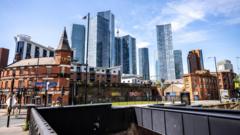
The real engine of Greater Manchester's economy is not municipal politics. It is the private-sector clustering in digital, media, and advanced manufacturing across Salford Quays, Manchester city centre, and Trafford Park. These clusters grew because of cheap commercial real estate relative to London, a massive pipeline of university graduates, and private capital inflows. They did not appear because a mayor cut a ribbon.
When commentators obsess over polling percentages for the upcoming vote, they ignore the institutional friction holding the region back:
- The funding trap: Reliance on competitive bidding pots from central government forces local authorities to waste resources writing endless bureaucratic grant applications instead of executing long-term infrastructure.
- The transport bottleneck: Integrated ticketing systems like the Bee Network are cosmetic upgrades if the underlying rail connectivity across the wider Pennine corridor remains chronically underfunded by national rail budgets.
- The housing delivery gap: Strategic plans fail not from a lack of political vision, but from complex planning laws and viability gaps that local mayors have no legislative power to rewrite.
Stop Voting For Narratives
The obsession with the mayoral race is a masterclass in political displacement activity. It allows Westminster and regional media to pretend local accountability is thriving while structural centralization remains completely untouched.
If you want to understand where Greater Manchester will be in five years, do not look at the ballot box. Look at private venture capital deployment, commercial property absorption rates, and higher education retention metrics. The mayoral contest is theatre designed to make you feel like you control a machine that is actually bolted to the floor. Stop falling for the hype.