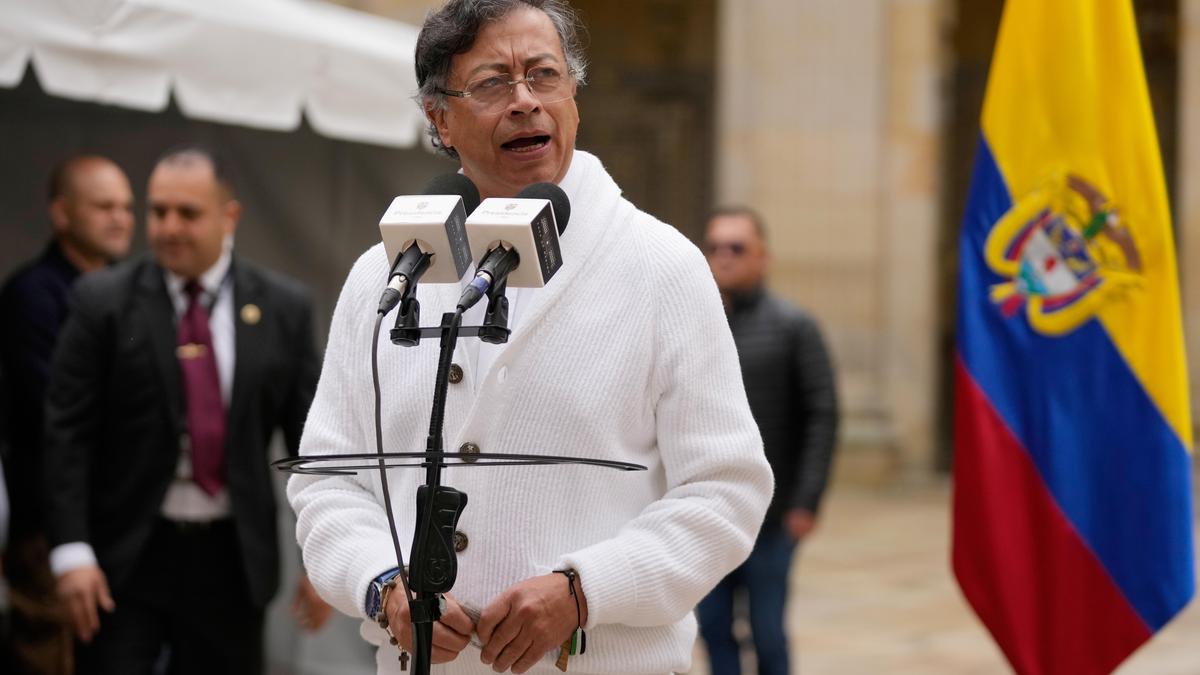
The U.S. Drug Enforcement Administration just threw a political hand grenade into South American diplomacy. For the first time, a sitting Colombian president, Gustavo Petro, finds himself labeled a priority target by the DEA. This isn't just a bureaucratic tag. It’s a designation reserved for the biggest players in the global drug trade—the kind of people whose operations have a "significant impact" on American soil.
U.S. federal prosecutors in New York aren't just looking at minor paperwork errors. They're digging into deep-seated allegations that Petro’s 2022 campaign was greased with money from drug cartels. The investigation is reportedly looking at ties to Mexico’s Sinaloa Cartel and potential bribery schemes involving the non-extradition of major kingpins. If you’ve followed Colombian politics, you know this is a massive shift from the usual "trusted ally" status the country holds.
What it means to be a DEA priority target
When the DEA labels someone a priority target, they’re effectively putting them on a shortlist of the world’s most wanted. It’s a signal that law enforcement across several U.S. districts—including Manhattan and Brooklyn—is actively building a case.
Records seen by investigators suggest that Petro has surfaced in multiple drug-trafficking probes since 2022. These aren't just new hunches. They’re based on interviews with confidential informants and drug traffickers who have turned state's evidence. The scope of these inquiries is startling. We're talking about everything from using law enforcement to smuggle cocaine and fentanyl through Colombian ports to a laundering scheme involving the state-run oil company, Ecopetrol.
The La Picota prison scandal
One of the most damning pieces of the puzzle involves the infamous La Picota jail. Prosecutors are investigating whether representatives of Petro’s government solicited bribes from high-level traffickers held there. The trade was simple: cash in exchange for a promise that they wouldn't be extradited to the United States.
Petro’s own family hasn’t escaped the heat either. His son, Nicolás Petro, was charged back in 2023 for soliciting illegal campaign funds from a convicted trafficker. While the younger Petro has pleaded not guilty and the President claims he knew nothing about the money, the optics are terrible. It’s hard to claim you’re cleaning up the country when the rot is reportedly inside your own house.
The Total Peace plan under fire
Petro’s signature policy is "Total Peace." The idea sounds good on paper: negotiate with guerrilla groups and cartels to end decades of violence. But the DEA and U.S. prosecutors are looking at a darker side of this strategy. They suspect the plan might actually be a cover to provide legal protection to traffickers who supported his rise to power.
Instead of dismantling the cartels, critics argue the policy has given them a chance to consolidate. When you stop aggressively pursuing leaders in favor of "dialogue," you're creating a vacuum. The DEA seems to think that vacuum is being filled by the very people Petro is supposedly trying to reform.
How we got to this point
The relationship between Petro and the U.S. has been a rollercoaster. Late in 2025, the U.S. Treasury Department actually sanctioned Petro for these alleged ties. At the time, Donald Trump—who has called Petro an "illegal drug leader"—was pushing a hard line against the Colombian leader.
But then things got weird. In early 2026, after a White House meeting, Trump suddenly described Petro as "terrific." This flip-flop has left many wondering if the legal pressure is being used as a diplomatic lever. Is the DEA investigation a legitimate pursuit of justice, or is it a political tool to keep a left-leaning leader in line? Honestly, it’s probably a bit of both.
The Ecopetrol laundering allegations
One of the newest and most specific claims involves the laundering of presidential funds. An unnamed source told investigators that Petro used campaign aides and Ecopetrol officials to move money into foreign accounts. The goal? To have a massive nest egg waiting for him once his term ends. Ecopetrol’s president, Ricardo Roa, has called these claims "logic-defying," but the DEA doesn't usually chase ghosts without some level of paper trail.
The impact on the ground
Colombia remains the world’s top producer of cocaine. If the President is truly compromised, the entire "War on Drugs" in South America is effectively dead. Petro has consistently argued that the U.S. should focus on consumption rather than production. He’s not entirely wrong—American demand is the engine—but that doesn't excuse taking cartel money to win an election.
Petro has fired back on X (formerly Twitter), claiming these investigations are a hit job by the Colombian far right. He’s betting that U.S. legal proceedings will eventually fall apart. He might be right. These inquiries are still in their early stages, and being a "target" is a long way from being a "defendant."
If you’re watching this play out, don't expect a resolution anytime soon. These federal probes move at a glacial pace. But the "priority target" label is permanent enough to damage Petro’s international standing for years. It turns every diplomatic meeting into a potential legal minefield.
The next step is to watch for formal indictments. If prosecutors move from questioning traffickers to filing charges against Petro’s inner circle, the pressure will become unsustainable. Keep a close eye on the extradition files coming out of the Eastern District of New York. That's where the real evidence usually hits the light of day.