International tribunals love the theater of accountability. They want the public to believe that locking up a former guerrilla leader for a quarter-century closes the book on a bloody chapter of Balkan history. It is a neat, comforting narrative for diplomats sitting in comfortable European capitals. It is also completely detached from political reality.
When the Kosovo Specialist Chambers in The Hague sentenced Hashim Thaci to twenty-five years in prison for war crimes, the mainstream media framed it as a historic triumph for international justice. They told you it proved that nobody is above the law, that victims finally received closure, and that the rule of law has triumphed over ethnic violence.
Every single word of that consensus is lazy, superficial analysis.
I have watched international tribunals operate for decades, and they rarely solve political crises. More often, they freeze them in amber. By treating Thaci solely through the narrow lens of twentieth-century criminal jurisprudence, the court completely misunderstood the mechanics of power in the Balkans. They did not eliminate a threat to stability; they martyred the very architect of Kosovo statehood, creating a dangerous political vacuum that radical nationalists are already rushing to fill.
Let us look at the actual mechanics of what happened here.
Thaci was not just a commander in the Kosovo Liberation Army. He was the political face of the insurgency, the man who signed the declaration of independence in 2008, and a fixture of Western-backed diplomacy for over twenty years. For the international community, he was a pragmatic partner when they needed stability, even if they knew his past was stained by the brutal realities of asymmetric warfare.
When the political winds shifted and the special court was established under heavy international pressure, Thaci willingly surrendered. He believed his utility to the West and his status as a founding father would shield him from the ultimate reckoning. That was his miscalculation. Bureaucrats in glass buildings do not care about historical debt; they care about indictments and conviction statistics.
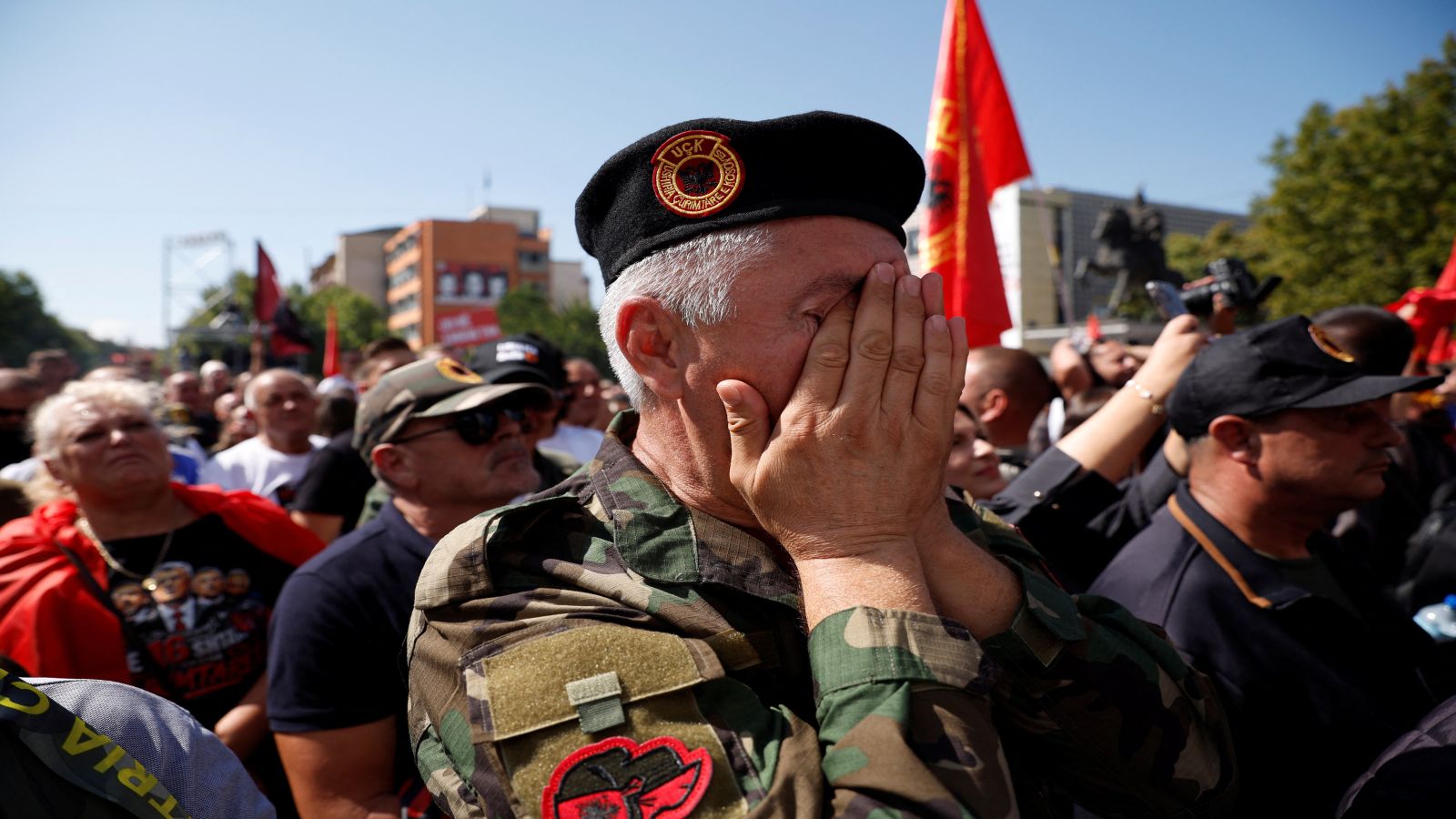
By hitting him with a twenty-five-year sentence, the court has turned a fading, compromise-ridden politician into a permanent symbol of national martyrdom. In the streets of Pristina, the narrative is not about war crimes or command responsibility. It is about a disproportionate assault on the KLA's fight for self-determination.
You cannot separate criminal acts from the political context in which they occur, no matter how much legal purists wish you could. The prosecution argued that Thaci oversaw a campaign of persecution, murder, and torture against political rivals and ethnic minorities during and immediately after the 1998-1999 war. The evidence presented in court was substantial. But focusing entirely on the courtroom misses the systemic failure of the tribunal itself.
International justice operates on a flawed premise: that you can apply domestic criminal law standards to revolutionary movements without accounting for the chaotic nature of state collapse. The KLA was a decentralized, ragtag militia fighting against a brutal state apparatus led by Slobodan Milosevic. To pretend that a clean, Western-style police operation was ever possible under those conditions is historical illiteracy.
The court wanted to show neutrality by balancing indictments across ethnic lines. Yet the overwhelming majority of victims in the breakup of Yugoslavia were targeted by Serbian forces, a fact that makes the heavy focus on KLA leadership feel politically motivated to anyone living in the region. When justice is administered by outsiders who fly home to dinner parties in Vienna or Geneva, it stops looking like justice and starts looking like imposed retribution.
The real danger of Thaci's sentence is not what it does to his legacy; it is what it unlocks on the ground.
Kosovo is a young, fragile democracy grappling with high unemployment, demographic drain, and an unresolved final status with Serbia. For years, the political landscape was dominated by former KLA commanders who controlled the levers of patronage and security. While that system was corrupt and frustrating for a younger generation demanding economic reform, it provided a predictable hierarchy.
With Thaci behind bars and former allies like Kadri Veseli also convicted, that old guard has been effectively decapitated. You might think that is a victory for clean governance. It is not. Nature abhors a political vacuum.
When you remove the dominant figures who fought the war and subsequently negotiated the peace, you do not get a Scandinavian social democracy. You get radicalization. You get populists who never held a rifle and have no memory of the devastation of war, but who are more than willing to stoke ethnic flames for electoral gain. Prime Minister Albin Kurti and his Vetevendosje movement have already disrupted the traditional political class, but the removal of historical figures from the chessboard leaves fewer buffers against extreme nationalist rhetoric on both sides of the border.
Furthermore, this verdict torpedoes any realistic chance of normalization between Kosovo and Serbia in the near term. How can a Kosovar leader make painful compromises—such as establishing an association of Serb-majority municipalities—when any engagement with Belgrade can be retroactively weaponized by prosecutors looking for political scalps? The chilling effect on local governance is absolute. Politicians now know that the safest career move is total intransigence.
The tribunal wanted to draw a line under the past. Instead, they sharpened the pencils for a new chapter of hostility.
We need to stop pretending that international criminal tribunals are neutral arbiters of historical truth. They are political instruments masquerading as courts of law, funded by taxpayers who want to feel good about interventionism without bearing the messy, long-term consequences of state-building.
Hashim Thaci will spend his golden years in a European cell, while the region he helped carve out of the ruins of Yugoslavia drifts further into uncertainty. The judges in The Hague got their conviction. The rest of us get to live with the fallout.