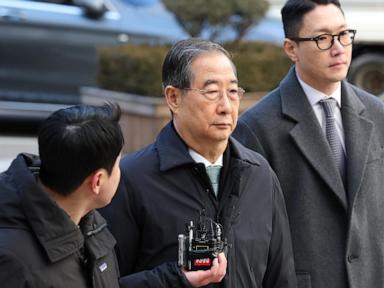
Justice in South Korea doesn't always move in a straight line. Today, the Seoul High Court reminded everyone of that by chopping eight years off the prison sentence for former Prime Minister Han Duck-soo. If you’ve been following the fallout from the 2024 martial law chaos, you know the stakes are massive. We’re talking about a top official who stood by while former President Yoon Suk Yeol tried to flip the script on democracy in a matter of hours.
Han was originally facing 23 years—a sentence that many felt matched the gravity of nearly dragging the country back to its dark, authoritarian days. Now, that number is down to 15. The court still thinks what he did was "extremely grave," but they've found enough wiggle room to soften the blow.
The court's logic for the 15 year term
So, why the change of heart? The appellate court didn't suddenly decide Han was innocent. Far from it. They upheld the core conviction that he played a "key role" in the insurrection. The judges were blunt about his failure to act as a check on the president's power. Basically, as the number two guy in the government, he had a constitutional job to say "no" when things went sideways. Instead, he helped organize the Cabinet meeting that gave the illegal decree a thin veneer of legitimacy.
However, the Seoul High Court pointed out a few things the lower court might have weighed differently.
- Lack of Premeditation: The judges noted there wasn't clear evidence that Han was part of a long-term, systematic conspiracy to overthrow the government. It looked more like he was swept up in Yoon’s sudden, frantic power grab.
- The Rescission Factor: After the National Assembly (South Korea's parliament) bravely voted to block the martial law order, Han was the one who convened the Cabinet meeting to officially take it back. The court gave him some credit for helping end the nightmare he helped start.
- A Lifetime of Service: This is the part that usually riles people up. The court cited Han’s 50 years of public service and previous medals as a reason for leniency.
What Han actually did that night
To understand the 15-year sentence, you have to look at what happened during those six hours of madness in December 2024. Han wasn't just a bystander. He was the one pulling the administrative levers.
He helped push through the endorsement of the martial law decree at a lightning-fast Cabinet meeting. He was also linked to discussions about cutting off water and electricity to media outlets that weren't playing ball. If that sounds like something out of a 1970s military dictatorship, that’s because it is. In fact, the judge specifically called out Han for this, noting that since Han had lived through the coups of 1972 and 1980, he should have known exactly how dangerous this path was.
The court also hammered him for trying to cover his tracks. He was convicted of falsifying the martial law proclamation documents and then ordering them to be shredded once the investigation started. Even in court, his defense was basically "I don't remember because I was in shock," a line the judges found pretty hard to swallow.
Comparing the fallout across the administration
Han's 15-year sentence sits in a weird middle ground when you look at the other players in the Yoon administration.
| official | role | sentence |
|---|---|---|
| Yoon Suk Yeol | Former President | Life in prison |
| Han Duck-soo | Former Prime Minister | 15 years (reduced from 23) |
| Lee Sang-min | Former Interior Minister | 7 years |
| Kim Keon Hee | Former First Lady | 4 years (unrelated corruption) |
The contrast is sharp. Yoon is staying behind bars for life because he was the mastermind. Han, as the loyalist who smoothed the way, gets a decade and a half. It sends a message that "just following orders" or "failing to stop it" carries a heavy price, even if you aren't the one who came up with the plan.
The legal road ahead
Don't expect this to be the end of the story. Han’s legal team has already signaled they’re taking this to the Supreme Court. They’re likely going to lean even harder into the "I was just a secondary player" defense. On the flip side, the special prosecutors aren't thrilled either. They had originally pushed for 15 years in the first trial, but they haven't ruled out their own appeal to get a harsher penalty back on the books.
For the public, this reduction feels like a bit of a letdown. South Korea's democracy is still healing from the 2024 scare, and seeing a high-ranking official get a break—even an eight-year one—rubs a lot of people the wrong way. It feels like the "elite" are still getting a different version of justice than everyone else.
If you're watching this case, keep an eye on the Supreme Court's docket for later this year. That will be the final word on whether Han’s 50 years of service truly outweighs his role in a six-hour insurrection that almost broke the country. For now, the 76-year-old former PM remains in custody, facing a very long road ahead.