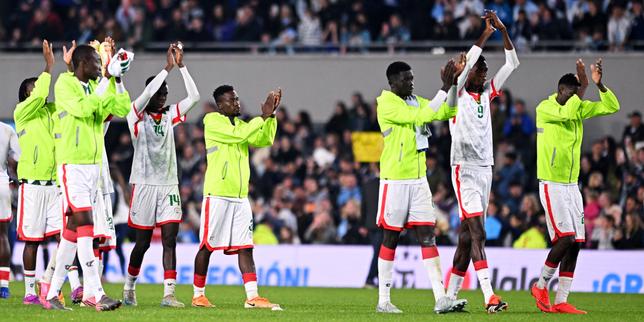
Silence.
That is the first thing you hear in Ouagadougou when the national team falls apart on television, a heavy, suffocating quiet that drops over dusty courtyards where plastic chairs had been dragged out an hour earlier with such noisy optimism.
I have stood in crowds like that when hope turned to ash in ninety minutes. You watch the neighbors' shoulders slump. You smell roasted peanuts and diesel exhaust hanging in the warm evening air. Someone clears their throat, trying to make a joke about the referee or the humidity, and nobody laughs because losing by a wide margin in football never feels like just a scoreline when your country is already carrying so much weight.
In Burkina Faso, where the national squad known as Les Étalons has long served as a rare shared stage for pride, a heavy defeat stings twice. First comes the bruise on the pitch—missed clearances, tired legs in the final quarter-hour, goals slipping past a stretched defense. Then comes the colder ache underneath: the nagging suspicion that talent alone cannot rescue a system that depends too heavily on patches, last-minute call-ups, and external structures rather than deep roots at home.
Out of that sting came a bold political and sporting move from transitional president Captain Ibrahim Traoré: the creation of a "sovereignty league" in football following a lopsided national-team loss.
On paper, a news wire can summarize it in two dry sentences. A leader angry after a blowout defeat launches a new domestic competition framed around sovereignty. Easy to file away. Easy to dismiss as political theater or knee-breath reaction.
Wait.
Look closer at what happens when a government links domestic football directly to the word sovereignty. That word is not accidental. In recent years across the Sahel, sovereignty has become a daily rallying cry—spoken in markets, broadcast on state radio, worn on chests, tied to security, economic self-reliance, and shaking off old dependencies. When you attach sovereignty to a football league right after a humiliating national defeat, you are making a statement about who owns the future of the game, who develops the players, and whether pride can be manufactured from the outside in.
To understand how this plays out on the ground, let me introduce two people. (Note: The following characters and scenes are hypothetical composites built to illustrate real pressures and everyday dynamics surrounding Burkinabè football and national pride.)
First is Moussa, a twenty-six-year-old former youth midfielder from Bobo-Dioulasso who still laces up worn boots at dawn on red laterite dirt before heading to his day job repairing motorbikes. Moussa knows what real conditioning feels like when the sun is already biting at seven in the morning. He also knows the quiet heartbreak of watching promising local players stall out for lack of stable competition, proper travel budgets, or pathways that keep them sharp week after week.
Second is Bintou, a secondary school teacher and lifelong supporter in Ouagadougou who organizes neighborhood watch parties whenever the national team plays. Bintou does not read sports budgets for fun, yet she notices everything—the empty stands during domestic fixtures compared to the roaring energy of international nights, the frustration of young boys whose biggest dream is leaving for a trial anywhere else because local structures feel fragile.
Put Moussa and Bintou in the same room after a crushing national loss, and you immediately feel the tension.
"Why does a loss on the pitch make a president start a league?" Bintou asks in our hypothetical scene, tapping a chipped enamel mug against a wooden table.
Moussa wipes grease from his knuckles with a rag. "Because when the national team gets blown out, everyone looks at the mirror and asks where the real players are coming from. You cannot build a house on borrowed bricks and act surprised when the walls shake."
That analogy gets right to the heart of the matter. Think of national football like a tree. The senior national team is the canopy—the part everyone sees swaying in the wind, catching the sunlight or getting battered by storms. If the canopy gets stripped bare in a single afternoon, people stare at the broken branches. Yet a serious gardener knows you do not fix a storm-damaged canopy merely by yelling at the leaves. You look at the soil, the water, the spacing of the saplings, and the strength of the trunk. A domestic league, when taken seriously, is meant to be that trunk and root system.
Still, let us be honest and admit where things get complicated.
Connecting football to sovereignty is thrilling for some and unsettling for others. Football has its own rhythms, governance rules, financial realities, and competitive standards. When politics steps onto the pitch with grand banners, skeptics naturally ask hard questions: Is this going to raise daily standards of play, refereeing, youth academies, and club stability? Or will it create friction, confusion, or expectations that a league alone cannot carry?
I have seen enough sporting reforms across Africa and beyond to know that declarations never kick a ball into the net. Grass—or hard-packed earth—does not care about speeches. Legs cramp at minute seventy-eight whether a slogan is painted on the advertising boards or not. A league lives or dies by consistency: whether matches kick off on time, whether clubs can pay players fairly without constant crisis, whether young talent gets real minutes against tough opposition, and whether coaching improves month after month.
Consider what happens next if the sovereignty league is treated merely as a symbol.
For a few weeks, people talk. Radio panels debate the name. Supporters argue over whether a heavier defeat triggered a hasty overhaul or exposed a long-overdue reckoning. Then the novelty fades, and the unglamorous work begins: scouting sixteen-year-olds in provincial towns, keeping pitches playable, managing travel logistics across long distances, and holding every match to high technical standards.
And consider what happens if it actually becomes a crucible.
Imagine a midfielder in Ouagadougou or Koudougou playing intense, high-stakes domestic football every weekend against hungry peers, knowing scouts and national selectors are watching closely because homegrown grit actually counts. Imagine local clubs gaining stronger identity and sharper tactical discipline instead of acting as waiting rooms for nowhere. Over three or five years, that kind of steady pressure changes how players sprint, how defenders hold a line under pressure, and how a national squad responds when an opponent scores first.
It will not be magic. It cannot be overnight.
Anyone promising that a single domestic competition will erase years of structural gaps or turn every heavy defeat into a trophy is selling a fairy tale. Football is brutal and unpredictable; even well-funded powerhouses suffer shocking losses. Sometimes the better team on paper simply gets outplayed, out-run, or out-thought on a given night.
Yet there is something deeply human in the refusal to stay numb after a humbling loss.
When a nation has endured insecurity, economic strain, and diplomatic turbulence, losing badly in a sport millions love can feel like salt in an open wound. Turning that frustration into an institutional push—calling it a sovereignty league—is an attempt to convert humiliation into agency. Instead of merely complaining about what went wrong abroad, the impulse says: build something of our own, test our own depth, demand higher standards right here at home.
That impulse is easy to understand, even for someone watching from miles away. Pride is fragile when you feel pushed around; when you feel you have a hand in shaping your own arena, your posture changes.
Still, good intentions need guardrails. If a sovereignty league is going to mean more than a headline after a bad result, three quiet pillars have to hold it up:
First, competitive credibility. Players and fans respect toughness and fairness. If outcomes feel predictable or rules bend for convenience, belief evaporates fast.
Second, youth and coaching pipelines. A league without strong youth development and modern coaching is just recycling the same tired habits with a shinier name. Real sovereignty in sport means developing your own tacticians, fitness trainers, and young stars.
Third, patience through bumps. There will be ugly 0–0 draws, muddy pitches, administrative headaches, and moments when critics say, "See? Nothing changed." Real reform looks messy while it is being built.
Bintou sets her mug down in our hypothetical courtyard and looks toward the street where children are already kicking a taped-up ball against a wall as dusk settles. "If my students see real effort, real structure, and real chances for young players who look like them," she says softly, "then maybe the next time the national team steps onto the pitch, they won't look like they're carrying the whole country alone."
Moussa nods slowly, folding his rag. "Maybe."
That single word carries everything. Not blind certainty. Not cynicism. Just the cautious, stubborn hope of people who know how hard the ground is—and still step onto it anyway.
Out on the street, the ball thuds against the wall again, once, twice, three times, steady as a heartbeat in the gathering dark.