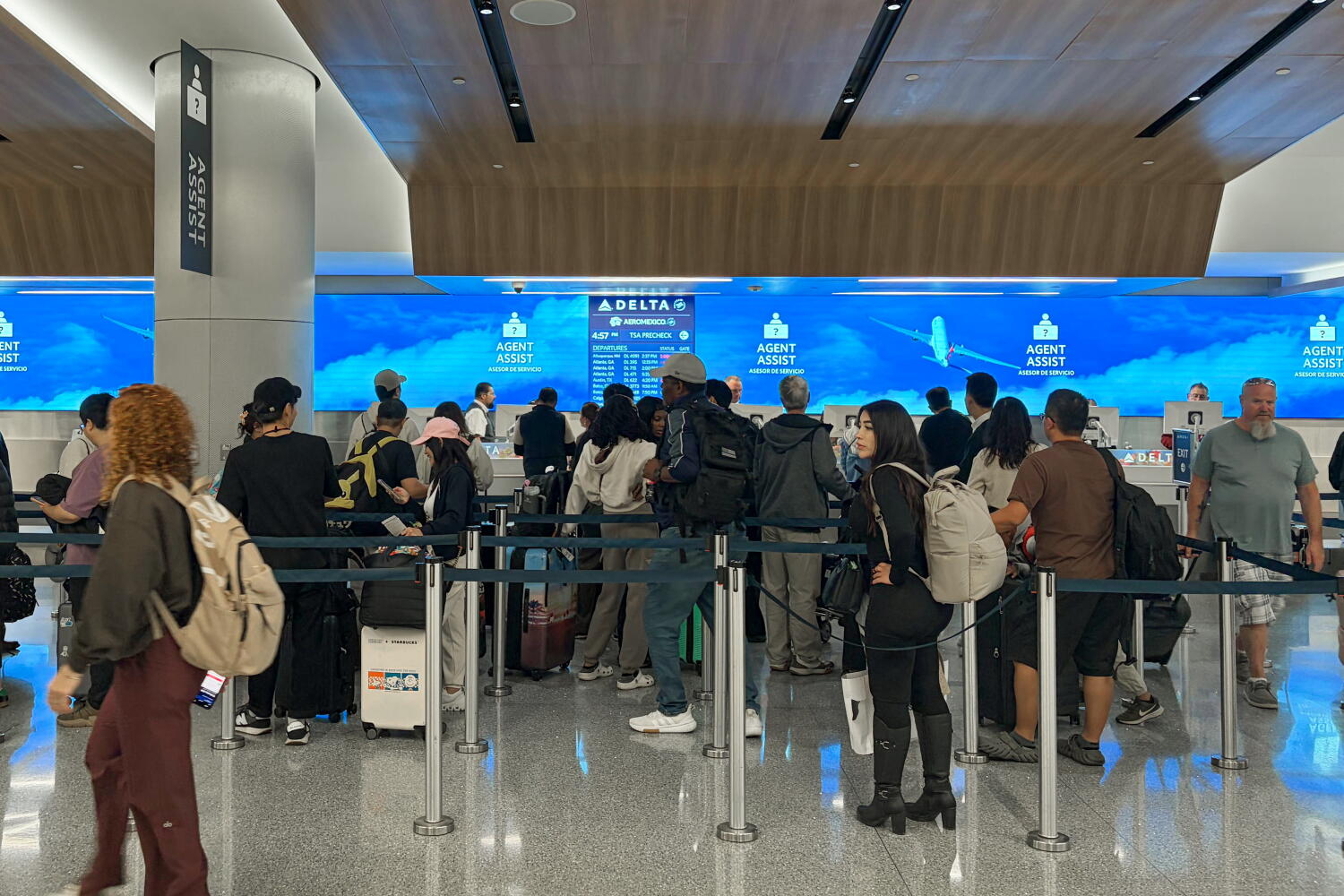
The FAA lifts the nationwide ground stop, the departure boards start flickering green again, and you think you're finally going home. You're probably wrong.
When a nationwide ground stop ends, the real chaos is just getting started. It sounds completely backwards, doesn't it? You assume that once federal regulators clear the airspace and airlines get the green light to push back from the gates, the system simply hits "play" and resumes normal operations. In reality, aviation doesn't work like a light switch. It works like a massive, hyper-fragile set of dominoes spanning thousands of miles, and knocking them all down at once means someone has to painstakingly stand every single one back up. Meanwhile, you can explore similar events here: Thailand Isn't Turning Against Israeli Tourists They Are Just Tired of Bad Guests.
If you're stuck at an airport right now—or staring at a flight status app from your couch—understanding why disruption continues after a ground stop ends is the difference between getting a seat on the next plane out and sleeping on a terminal floor next to a charging station.
Why US Flights Stay Broken After the Ground Stop Lifts
To understand the lingering mess, you have to look at what an FAA ground stop actually does. Whether it's triggered by a critical system outage like the 2023 NOTAM failure, severe weather systems blanketing major hubs, or an air traffic control staffing crisis, a ground stop freezes departures at their origin airports. Planes already in the air are allowed to land safely, while everything on the ground stays put. To explore the bigger picture, we recommend the recent analysis by Lonely Planet.
That freeze creates an immediate, cascading bottleneck.
First, your plane isn't where it's supposed to be. Commercial aircraft fly tightly choreographed loops all day long—often hitting four or five different cities before midnight. If your afternoon flight from Chicago to Dallas is delayed because that specific Boeing 737 spent three hours stuck on a tarmac in Newark during the ground stop, lifting the restriction doesn't magically teleport the aircraft to O'Hare. Airlines have very few spare planes sitting around at hubs waiting to rescue delayed routes. Industry economics demand that aircraft stay in the air generating revenue, leaving zero buffer for system-wide shocks.
Second, flight crews run out of legal working hours. This is the silent killer of airline recovery, and honestly, it's the part most travelers completely miss. Under strict FAA safety regulations—specifically Part 117 for pilots—flight crews have hard limits on how long they can be on duty. Those clocks don't stop ticking just because a plane is parked at the gate waiting for federal clearance. By the time the ground stop ends, hundreds of pilots and flight attendants across the country have "timed out." Even if the skies are clear and the plane is fueled, you aren't going anywhere without a legal crew.
Third, airport gates get gridlocked. When departures freeze, incoming flights that were already airborne still have to land. They roll up to gates occupied by planes that aren't allowed to leave. Soon, arriving aircraft are stuck sitting on taxiways, blocking other planes, and creating a physical traffic jam on the asphalt that takes hours to untangle even after air traffic control starts clearing takeoffs again.
What Airline Rebooking Algorithms Actually Do During Mass Disruptions
Most passengers make a fatal mistake the second they see a cancellation or a multi-hour rolling delay. They get in line at the customer service desk and wait.
Stop doing that. By the time you reach the front of a two-hour line at the gate, every remaining seat on tomorrow's flights is already gone.
Modern airlines rely on automated rebooking engines that immediately start shuffling displaced passengers onto open inventory the moment a flight cancels. The catch is that these algorithms prioritize elite frequent flyers, full-fare business travelers, and passengers with tight international connections first. If you bought a basic economy ticket, the system puts you at the very back of the queue.
You have to bypass the physical line entirely. Pull up the airline's mobile app immediately—not the third-party site you booked through like Expedia or Kayak, which adds a brutal layer of bureaucracy during an emergency. Most major US carriers allow you to swap flights for free inside the app during irregular operations, often showing open seats on alternative routes before gate agents even finish processing the manifest.
While you're tapping through the app, get on the phone. Better yet, call the airline's international customer service line—like their UK, Canadian, or Australian support numbers—using Wi-Fi calling. Those call centers tap into the exact same reservation database as the US desk, except they aren't getting hammered by fifty thousand stranded American flyers at the exact same moment.
Your Actual Passenger Rights Under Department of Transportation Rules
When US flights spiral out of control, airline staff will routinely tell you they don't owe you anything because the disruption was "beyond their control." Sometimes they're telling the truth. Sometimes they're counting on you not knowing the rules.
The US Department of Transportation (DOT) draws a hard, unmistakable line between controllable and uncontrollable delays.
If your flight is canceled for any reason—weather, FAA system failure, air traffic control ground stop, or mechanical breakdown—and you choose not to travel, the airline legally owes you a full refund to your original form of payment. Not a travel voucher. Not airline miles that expire in twelve months. Real cash back on your credit card. Under DOT rules implemented to curb refund runarounds, carriers must issue automatic refunds within seven business days for credit card purchases if you decline their rebooking options.
What about hotels, meals, and Uber rides while you wait? That depends entirely on what caused the initial ground stop and subsequent delay.
- Uncontrollable events (FAA outages, severe weather, ATC ground stops): Airlines are not legally required in the US to pay for your hotel room or dinner if Mother Nature or federal aviation systems shut down the airspace.
- Controllable events (Crew scheduling failures, maintenance issues, IT meltdowns): If the ground stop ends, but your specific airline takes two days longer than everyone else to recover because their internal crew-scheduling software collapsed—think Southwest Airlines during the 2022 holiday meltdown—the DOT classifies that cascading failure as controllable.
You don't have to guess what your carrier promises. Check the DOT's Airline Customer Service Dashboard right on your phone. It lists exact, binding commitments for all major US airlines regarding meal vouchers, hotel accommodations, and rebooking on partner airlines when a controllable delay strands you overnight.
Why Connecting Hubs Become Traps You Should Avoid
If you're trying to salvage a ruined itinerary after a nationwide ground stop, look closely at your routing. Flying through mega-hubs like Atlanta, Dallas-Fort Worth, Denver, or Charlotte during a recovery window is a massive gamble.
Hub-and-spoke networks amplify delays. Because thousands of flights funnel through a single airport in tight "banks" to maximize connections, a 90-minute ripple effect at a major hub means you miss your connecting flight by twenty minutes. Once you miss that connection, you're trapped in a city you never wanted to visit, competing against thousands of other stranded travelers for a handful of hotel rooms near the airport.
Look for point-to-point alternatives or secondary airports instead. If you're trying to get to New York and JFK or Newark are melting down, check flights into Westchester County (HPN), Islip (ISP), or even Philadelphia (PHL) where you can hop on an Amtrak train. Trying to reach the Bay Area? Look at Oakland or San Jose instead of San Francisco, where coastal fog regularly compounds air traffic control flow restrictions.
The Hidden Danger of Rolling Delays
Nothing wastes more time during post-ground-stop recovery than the dreaded "rolling delay." That's when the departure board pushes your takeoff back by 30 minutes, then another 30 minutes, then another 45 minutes, stretching across an entire afternoon.
Airlines use rolling delays to keep passengers near the gate so that if an aircraft and crew suddenly materialize, they can board fast and avoid losing their takeoff slot. The problem is that rolling delays lull you into waiting until it's too late to pivot.
Check incoming aircraft tracking immediately. Open the airline's app and tap "Where is my plane coming from?" If your flight is scheduled to leave in 40 minutes, and the inbound plane hasn't even taken off from another city two hours away, the departure time on the terminal monitor is fiction. Treat that flight as severely delayed right then and start locking down backup options before the airline officially updates the board and triggers a stampede of passengers all grabbing the same backup seats.
How to Protect Yourself Before Your Next Trip
Aviation infrastructure in the United States is running closer to maximum capacity than ever before, while air traffic control facilities in critical regions like the New York TRACON continue battling chronic staffing shortages. Nationwide ground stops and massive flow control programs aren't freak once-in-a-decade anomalies anymore. They're part of flying in America.
Stop booking the last flight of the day. Morning departures—ideally before 8:00 AM—have dramatically higher on-time completion rates because the aircraft is already sitting overnight at your departure airport, and delays haven't had twelve hours to snowball across time zones.
Never check a bag if you're traveling during peak holiday windows or questionable weather patterns. If your flight gets canceled after a ground stop and you pivot to a different airline or rent a car to drive four hours home, a checked suitcase trapped inside an airport baggage basement becomes a logistical nightmare that can take days to recover.
Finally, buy your tickets with a travel credit card that carries primary trip delay insurance. When the FAA halts air traffic and the airline refuses to cover a $350 last-minute airport hotel room because the disruption was outside their control, credit card trip delay coverage steps in—usually after a 6-to-12-hour delay—and reimburses your hotel, meals, and toiletries without you having to argue with a single gate agent. Keep every itemized receipt, screenshot the cancellation notice showing the reason for the delay, and file the claim once you get home.