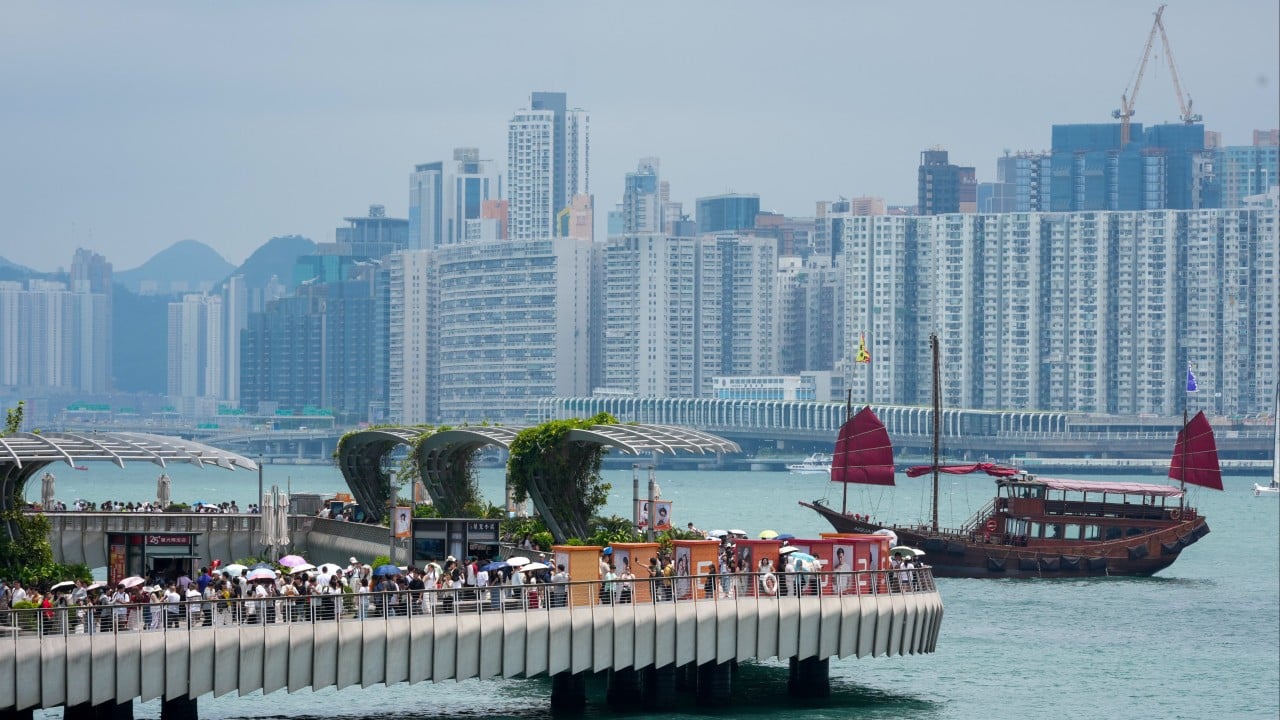
Mr. Chen did not sleep the night before his company went public. He stood by the floor-to-ceiling windows of an office tower in Central, watching the container ships crawl across Victoria Harbour like slow, glowing beetles. Behind him, in Shenzhen, was the factory floor where he had spent twenty years perfecting a proprietary automation sensor. Ahead of him was a terrifying, global void.
To scale up, Chen needed capital from New York, compliance approval from London, and data security infrastructure that could withstand the scrutiny of regulators in Brussels. He was an engineer, not an international diplomat. If he stepped directly from the mainland into the West, the cultural and regulatory whiplash could snap his company in two.
Many entrepreneurs face this exact precipice. They possess brilliant technology and massive domestic success, yet they find themselves stranded at the border.
The international market is not a welcoming playground; it is a complex web of conflicting legal frameworks, geopolitical tensions, and financial gatekeepers. For a mainland enterprise, crossing over is less like crossing a bridge and more like launching a vessel into a storm.
They need an anchor. They need a translator. They need Hong Kong.
The Bilingual Soul of Capital
Consider the sheer mechanics of moving money. On the mainland, the financial system operates under strict capital controls. The renminbi is tightly managed, a necessary strategy for domestic stability but a hurdle for rapid, global expansion. Across the ocean sits the rest of the world, trading in freely convertible currencies, governed by common law traditions that Western investors have trusted for centuries.
Hong Kong exists precisely in the friction between these two worlds.
It is a legal and financial laboratory. Under the One Country, Two Systems framework, the city maintains its own legal system based on English common law. When a foreign investor buys shares in a Chinese tech firm listed on the Hong Kong Stock Exchange, they are not just buying a piece of future cash flow. They are buying peace of mind. They know that if a contract is breached, the dispute will be settled in a court system they recognize, utilizing precedents they understand.
This is not a theoretical benefit. Look at the numbers. Year after year, Hong Kong handles around three-quarters of all offshore renminbi payments. It is the primary artery through which global capital flows into China, and more importantly today, the launchpad through which Chinese innovation flows outward.
For Chen, listing his company here meant he could raise US dollars and Euros from global funds while keeping his manufacturing base just a short drive away across the Shenzhen River. It allowed him to speak two financial languages simultaneously without altering his native tongue.
The Shield Against Geopolitical Weather
The global climate has grown chilly. A decade ago, a promising Chinese tech company could simply pack its bags and list on the Nasdaq with minimal friction. Today, that path is fraught with political landmines, audit disputes, and national security investigations.
When the wind shifts overnight, businesses need a sanctuary that understands both sides of the divide.
Hong Kong acts as a political shock absorber. Because the city complies with international data protection standards and maintains a distinct regulatory identity, it offers Chinese firms a way to structure their global operations with a layer of insulation. It is a place to establish international headquarters, manage intellectual property, and hold global patents away from the immediate crossfire of trade disputes.
Imagine trying to build a house on shifting sand. That is what navigating international compliance feels like right now. By establishing a treasury center or a data hub in Hong Kong, a company builds its foundation on bedrock. The city’s regulators are notoriously strict, but that strictness is a gift. Passing the test in Hong Kong is a badge of credibility that unlocks doors in Singapore, Frankfurt, and Tokyo.
The Human Infrastructure
We often talk about cities in terms of skyscrapers and capitalization tables. We forget about the people who sit inside them.
The true magic of this harbor city is its human density. Within a few square blocks in Central, you can find a lawyer who went to Oxford, an accountant who trained in Shanghai, and a compliance officer who spent a decade in Wall Street. This is an ecosystem of intermediaries who have spent their entire lives translating Eastern operational realities into Western institutional language.
They know how to explain a Chinese founder’s vision to a skeptical European pension fund. They know how to audit a labyrinthine supply chain in Zhejiang so that it satisfies the ESG requirements of a sovereign wealth fund in Scandinavia.
This human infrastructure cannot be duplicated overnight by a new tech park or a tax incentive scheme elsewhere. It is the result of a century spent sitting at the crossroads of global trade. It is a culture of deal-making written into the very DNA of the city.
Moving Past the Horizon
The sun began to rise over the harbor, turning the water from a deep, bruised purple to a bright, reflective gold. Chen watched the city wake up. Below him, the ferries were already cutting white lines across the water, moving people between Kowloon and Hong Kong Island with quiet, rhythmic efficiency.
His company would price its shares in a few hours. The order book was already oversubscribed, filled with names of institutional investors from four different continents.
Chen realized his fear from the night before was misplaced. He had thought he was leaving home behind to venture into an alien world. Instead, he had found a place that belonged to both, a city that did not ask him to choose between his roots and his ambition.
The water in the harbor is never still. It pulls from the rivers of the mainland and pushes out into the vast, unpredictable Pacific. For any enterprise standing on the shore, looking out at the global expanse with a mixture of hope and vertigo, the path forward is clear. You do not leap blindly into the ocean. You drop your anchor in the deep, steady waters of the harbor first, and then you set sail.