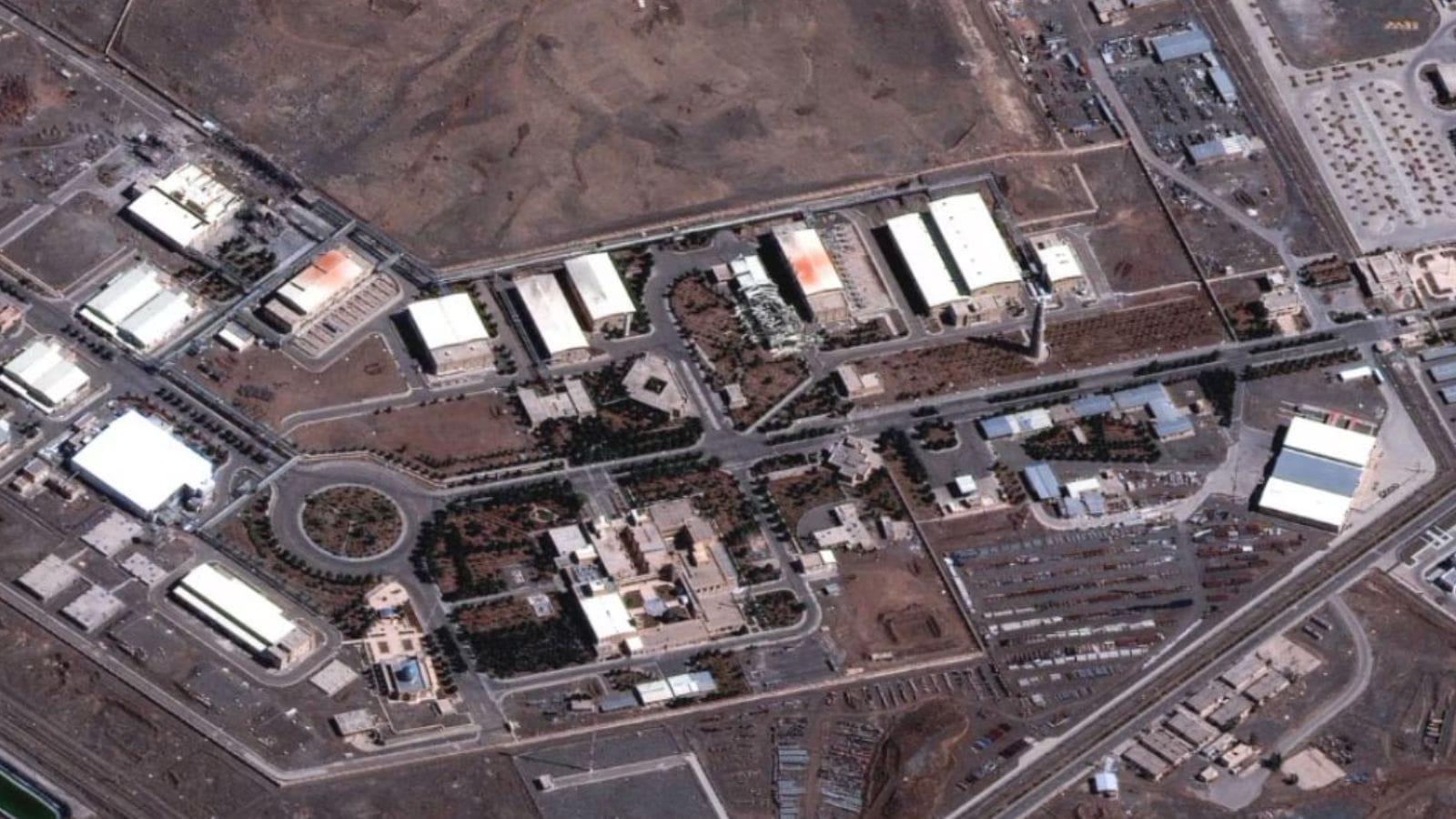
The physical depth of a nuclear facility is not merely a defensive measure; it is a mathematical statement on the limits of conventional kinetic intervention. Iran’s construction of a deep-subsurface facility near Natanz, situated beneath the Zagros Mountains, represents a shift from tactical concealment to strategic invulnerability. By utilizing the specific geology of the Pickaxe Mountain region, Tehran is effectively neutralizing the current global inventory of non-nuclear bunker busters. This transition forces a binary choice upon international actors: accept a permanent Iranian breakout capability or escalate to catastrophic military thresholds.
The Triple Barrier Framework
To understand the significance of the new Natanz site, one must analyze it through the lens of the Triple Barrier Framework. This model evaluates the survivability of a hardened target based on three distinct physical variables.
- Overburden Composition: The specific geological density of the mountain. Granitic and limestone layers provide a natural shield that dissipates the kinetic energy of penetrator munitions.
- Vertical Separation: The distance between the facility floor and the surface. Reports suggest depths between 80 and 100 meters. This exceeds the tested operational limits of the GBU-57A/B Massive Ordnance Penetrator (MOP).
- Horizontal Dispersion: The internal layout of tunnels. Linear strikes are ineffective against modular, interconnected chambers designed to isolate the impact of a single breach.
The intersection of these variables creates a "Zone of Immunity." Within this zone, the probability of a single-sortie mission achieving total facility neutralization drops to near zero.
The Physics of Kinetic Failure
The primary tool in the United States' conventional arsenal for such targets is the GBU-57 MOP, a 30,000-pound GPS-guided behemoth. However, the MOP’s effectiveness is governed by the laws of soil mechanics and impact dynamics. To reach a depth of 100 meters through rock, a penetrator must overcome the compressive strength of the mountain itself.
Kinetic energy ($E_k$) is defined as:
$$E_k = \frac{1}{2}mv^2$$
While increasing the mass ($m$) or velocity ($v$) of the weapon enhances penetration, there is a physical ceiling. At ultra-high impact velocities, the projectile's casing undergoes material fatigue and deforms or shatters before it can deliver its payload. Iran’s choice of the Zagros range leverages this physical limit. If the facility is buried deeper than the structural integrity of the best available steel allows a bomb to travel, the target becomes functionally invincible to conventional fire.
The Economic Logic of Underground Centrifuge Displacement
Moving enrichment capabilities underground is a capital-intensive endeavor that follows a specific cost-benefit curve. Tehran’s investment in deep-tunneling equipment and reinforced infrastructure serves two strategic functions.
Survivability as Diplomatic Leverage
An invulnerable facility changes the "Price of Compliance" in negotiations. If the United States or Israel cannot credibly threaten the destruction of the enrichment halls, Iran’s baseline for concessions rises. The facility acts as a physical hedge against the failure of the Joint Comprehensive Plan of Action (JCPOA) or its successors.
The Decoupling of Monitoring and Control
Deep-site architecture complicates International Atomic Energy Agency (IAEA) verification. The volume of rock and the complexity of ingress/egress points allow for the potential masking of "hidden" enrichment cascades. Even if cameras are present, the structural complexity of a mountain facility makes it easier to divert materials or house undeclared technologies in auxiliary tunnels that are not part of the official footprint.
The Strategic Bottleneck of the Centrifuge Hall
The core of the Natanz expansion is not the tunnel itself, but the capacity of the centrifuge halls. Analysis of the excavation debris—the "tailings"—reveals the estimated volume of the interior space. By calculating the ratio of excavated rock to the footprint required for IR-2m or IR-6 centrifuges, we can estimate the potential output capacity ($SWU$ or Separative Work Units).
The bottleneck for Iran is not the space, but the mass production of advanced centrifuges. However, placing these machines in a deep-mountain environment creates a "Hardened Breakout" scenario. In this model, Iran could theoretically initiate a sprint to 90% enrichment (weapons-grade) with the knowledge that the machines performing the work cannot be stopped by a standard air strike. The only way to halt the process would be a sustained ground invasion or a tactical nuclear strike, both of which carry geopolitical costs that most adversaries are unwilling to pay.
Limitations of the Deep-Site Strategy
Despite the formidable nature of the Pickaxe Mountain site, it is not a perfect shield. Structural vulnerabilities remain, categorized into three distinct failure points.
- Portal Fragility: While the halls are safe, the entrance and exit portals are surface-level vulnerabilities. "Capping" these tunnels via precision strikes can trap personnel and equipment, effectively neutralizing the facility without destroying it.
- Support Infrastructure Dependency: A nuclear facility requires massive amounts of electricity, cooling water, and ventilation. These systems are typically housed in less-protected auxiliary buildings or rely on external grids. Severing these lifelines renders the centrifuges useless.
- The Cyber-Kinetic Loop: Digital sabotage, similar to the Stuxnet incident, bypasses physical depth entirely. An air-gapped system inside a mountain is still vulnerable to supply chain interdiction or insider threats.
Mapping the Escalation Ladder
The development of the new Natanz site forces an evolution in regional military doctrine. We are moving from an era of "Preventative Strike" to an era of "Containment through Cyber and Logistics Interdiction."
The primary risk is no longer a sudden strike, but the normalization of a deep-buried nuclear infrastructure. This normalization creates a "Sunk Cost" for international diplomacy. If the site becomes fully operational and stocked with thousands of advanced centrifuges, the window for a low-cost diplomatic solution closes permanently.
The strategic play for Western powers is shifting toward the "Portal and Power" strategy. Instead of attempting to penetrate 100 meters of rock, the focus must move toward the precision destruction of the facility's external environment. This involves mapping the specific electrical substations, water intake valves, and ventilation shafts that sustain the underground ecosystem. By holding these external nodes hostage, adversaries maintain a "soft-kill" capability that avoids the escalatory risks of a deep-earth breach while still providing a credible deterrent against breakout enrichment.
The race is now between the completion of the internal reinforcement and the perfection of external isolation techniques. The mountain provides a shield, but it also creates a tomb; the actor who controls the access points ultimately controls the facility.