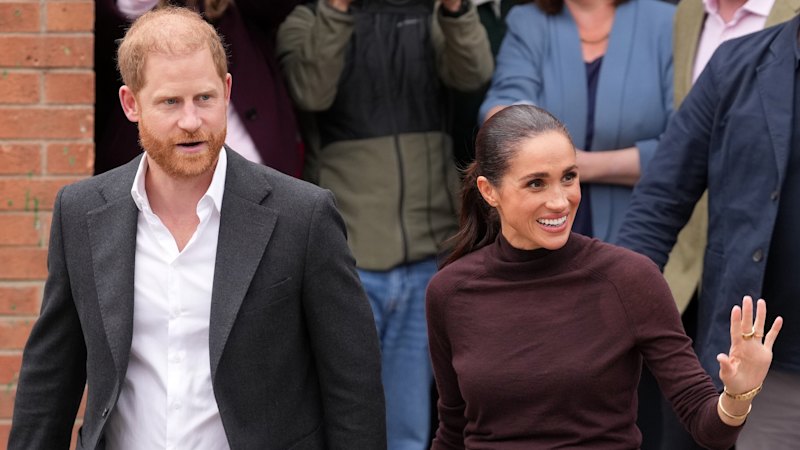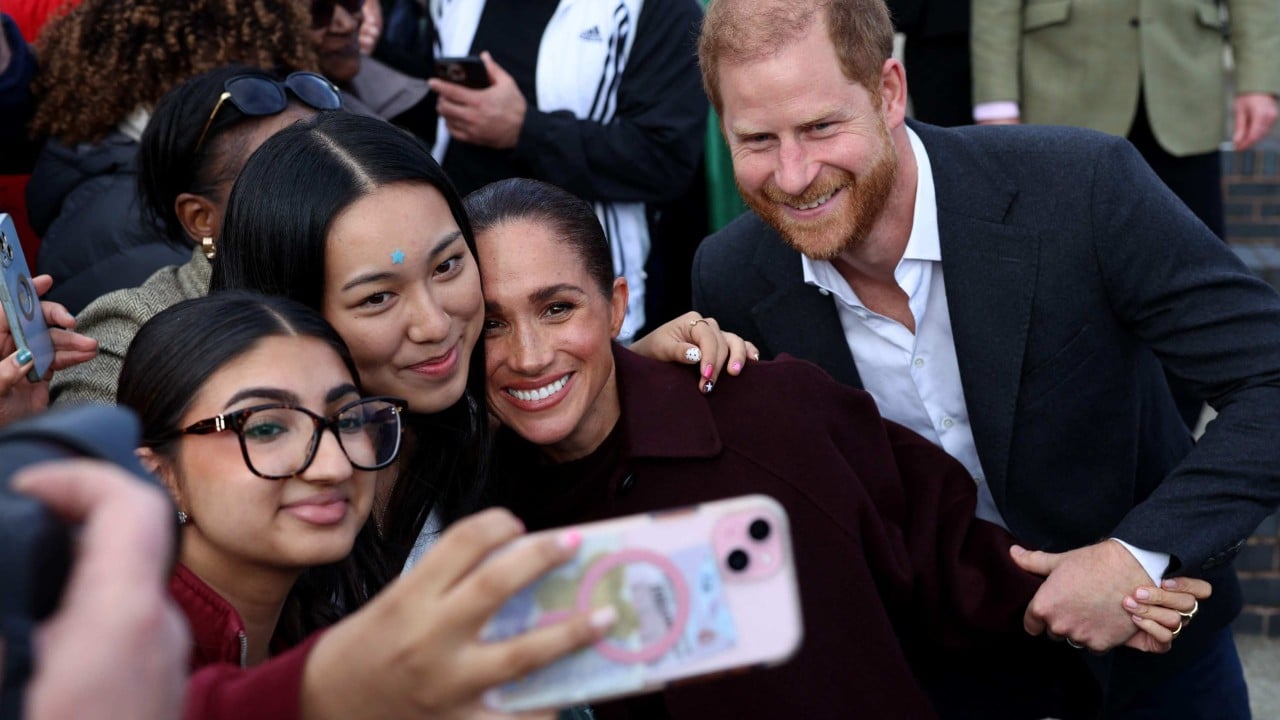
"Great to be back!" Four words. A camera flash. And instantly, half the entertainment press starts typing like a prodigal son just walked through the gates of Windsor with an olive branch in his teeth.
Spare me.
Whenever Prince Harry and Meghan Markle step onto British soil together, the coverage follows a script so predictable you could set your watch by it. Warm smiles. Hand-holding. Crowd waves. Then comes the lazy consensus: The thaw has begun. The feud is cracking. Maybe, just maybe, they’re coming home.
They aren’t coming home. They don’t want to come home. And treating a joint UK appearance as an emotional reconciliation misreads the entire business model operating in front of everyone’s eyes.
I have spent years watching high-net-worth public figures, media brands, and crisis PR teams manage narratives under maximum scrutiny. I have seen brands burn millions chasing "authenticity" while quietly executing cold, disciplined commercial plays. Royal-adjacent celebrity coverage is no different. When a couple whose entire post-institution brand rests on transatlantic contrast—independence versus tradition, California sunshine versus London rain, personal agency versus palace protocol—shows up together in the UK, the point isn’t nostalgia. The point is contrast and currency.
A joint outing in Britain is high-friction, high-yield media oxygen. Nothing travels faster across global feeds than Harry and Meghan in a place that still treats their every move like a constitutional tremor.
Why Everyone Asks the Wrong Question About a UK Return
When people search for news about Harry and Meghan returning to the UK for a joint outing, they usually ask a variation of the same question: Does this mean they are making amends with the royal family?
That is the wrong question. Worse, it assumes that public warmth in a controlled setting equals private reconciliation.
In public relations and media strategy, there is a sharp distinction between proximity and alignment. Proximity means sharing a zip code or an event calendar. Alignment means sharing incentives, boundaries, and governance. The Duke and Duchess of Sussex stepped back from senior working royal duties years ago precisely because proximity without alignment cost them control over their schedule, security, and commercial identity.
A joint appearance on British soil creates proximity to the cultural stage that made Harry famous and infamous. It does not magically restore alignment with an institution built on silence, hierarchy, and long-term continuity.
Consider how legacy outlets frame these moments. Traditional court and celebrity commentators—figures like Robert Hardman or Tina Brown, who have spent decades dissecting British monarchy dynamics—understand that the House of Windsor operates on decades-long institutional timelines, while modern celebrity media runs on twenty-four-hour attention cycles. When a joint outing happens, both sides get fed. Tabloids get body-language forensics and speculative headlines. The couple gets global visibility without surrendering their independent positioning.
Assume reconciliation from a polite wave and you will be wrong nine times out of ten. Look at who controls the framing, who owns the narrative momentum afterward, and what commercial or philanthropic vehicle sits behind the trip, and the picture sharpens fast.
The Mechanics of a High-Stakes Joint Appearance
A solo appearance by Harry has one tone. A solo appearance by Meghan has another. Put them together on British ground, and the media chemistry shifts immediately.
Why? Because together they represent a complete story arc. Individually, each can be slotted into a narrower lane—charity patron, lifestyle founder, veteran advocate, cultural lightning rod. Together, they force the observer to reckon with the whole rupture.
1. Scarcity Drives Valuation
In media economics, rare inventory commands higher attention than constant availability. If a couple lived full-time in London attending five routine engagements a week, each outing would carry incremental weight—some dull, some routine, some forgettable.
When joint appearances in the UK are infrequent and deliberate, every single one carries built-in scarcity. Photographers line up earlier. Editors clear homepage real estate. Social feeds dissect every coat, every speech line, every arrival time. Scarcity does half the promotional heavy lifting before a single word is spoken.
2. Controlled Exposure Beats Speculative Vacuum
When Harry and Meghan stay away for long stretches, the vacuum fills up with rumor, anonymous "sources," and recycled archive footage. Stepping out together in Britain—and saying something breezy and upbeat like "great to be back!"—punctures the gloom with a crisp, controllable soundbite.
Notice the phrasing itself. "Great to be back!" It is warm, disarming, and deliberately ambiguous. It gives friendly coverage a quote to celebrate while giving critics almost nothing concrete to litigate beyond tone. That is media discipline, not accidental charm.
3. The Two-Audience Trap
Here is the trap that trips up amateur commentators every time: judging a UK outing solely through a British lens.
British media culture loves drama, grievance, and zero-sum scorekeeping. Global streaming, philanthropic, and lifestyle audiences care far more about polish, cause visibility, and forward momentum. A joint appearance can look tense or calculated to a cynical London column while reading sleek, poised, and purposeful to an international audience scrolling on a phone in Los Angeles, Toronto, or Sydney.
Thought Experiment: Imagine a scenario where Harry and Meghan spent six quiet months in the UK doing low-key local visits with zero media fanfare and zero commercial or patron milestones attached. After week three, British tabloids would pivot from outrage to boredom, global entertainment outlets would move on to fresher stars, and the scarcity premium of a "return" would evaporate. The value of the return depends on contrast against absence—not on becoming permanent fixtures again.
Dismantling the "People Also Ask" Myths
Scroll down any search results page after a joint UK outing, and the same questions pop up like clockwork. Most of them rest on shaky premises. Let’s strip them down.
"Are Harry and Meghan moving back to the UK?"
No—and asking this every time they land at Heathrow shows a refusal to look at basic incentives. Moving back would mean rebuilding life, schooling, security arrangements, and social infrastructure inside a media environment that treats their existence as an ongoing referendum. A visit is an event. Relocation is a lifestyle and operational overhaul. Confusing the two is lazy analysis.
"Why do they keep coming back if the UK press is so harsh?"
Because harshness and attention are Siamese twins in modern celebrity media. Indifference is the real enemy of a public brand, not criticism. As long as an appearance generates headlines, debate, and global reach, the trip serves a strategic purpose. You don’t step into a loud room expecting applause; you step in because the room has microphones.
"Does a joint outing mean the royal rift is healing?"
A joint outing between Harry and Meghan tells you about their partnership and their public posture. It tells you very little about private family dynamics behind closed doors. Treating a public appearance as proof of a palace ceasefire confuses theater with diplomacy. Family estrangements—especially public ones involving institutions—rarely resolve in a single trip or a cheerful soundbite.
"Is this good for their brand or bad for their brand?"
That depends entirely on execution. If the appearance looks purposeful, grounded, and tied to clear work, it reinforces relevance and poise. If it feels over-choreographed or detached from the moment, critics feast on the optics. There is no automatic win or automatic loss; there is only execution under a magnifying glass.
Where This Contrarian View Can Go Wrong
Intellectual honesty requires admitting blind spots. Calling a joint UK appearance a calculated media play is sharp, realistic, and grounded in how modern celebrity ecosystems work—but it can easily tip into over-cynicism.
Not every human emotion is a press release. Even people with sharp PR teams and high public profiles feel real nostalgia, real relief, or real affection when revisiting places tied to their past. Saying "great to be back" can be both strategically smart and genuinely meant in the moment. Treating every smile as pure chess moves makes you sound clever at parties, yet blind to basic human complexity.
There is also a timing risk. Sometimes a public appearance does precede a quieter shift behind the scenes—a private meeting, a softened boundary, or a gradual change in posture that only becomes visible months later. If you lock yourself into a rigid "nothing ever changes" stance, you miss real inflection points when they actually arrive.
How to Read the Next UK Appearance Like an Insider
If you want to understand what a joint Harry and Meghan outing actually means—without getting swept up in breathless speculation or reflex outrage—stop reading the headline and start auditing the mechanics.
| Signal to Watch | Lazy Take | Sharp Insider Read |
|---|---|---|
| The Soundbite ("Great to be back!") | Proof of a sudden change of heart | A clean, low-risk quote built to neutralize tension |
| Joint vs. Solo Timing | Random scheduling | Deliberate pairing to maximize contrast and media weight |
| Follow-Through | The trip itself is the whole story | Watch what launches, partners, or shifts in the 30 days after |
| Tone of Coverage | A measure of public reality | A reflection of each outlet’s existing commercial incentive |
Follow the incentives, watch the follow-through, and ignore anyone declaring a permanent turning point after twenty-four hours of cameras.
The cameras click, the headlines spin, and the crowd cheers for a second—then everyone goes back to living in the real world they actually built.