The heather smells like honey and wet iron when the rain hits the hillside. If you stand on the high ridge of the Inverinate estate in Wester Ross, the Scottish Highlands open up before you in a symphony of bruised purples and deep, oceanic greens. It is a landscape that demands your presence. It requires heavy boots, damp wool, and a willingness to be humbled by a wind that has traveled three thousand miles across the Atlantic just to sting your cheeks.
Yet, for the vast majority of the last two decades, the only witness to this majesty has been the silence. Meanwhile, you can explore similar developments here: Anatomy of a Maritime Failure Analysis of the Hoi An Speedboat Disaster.
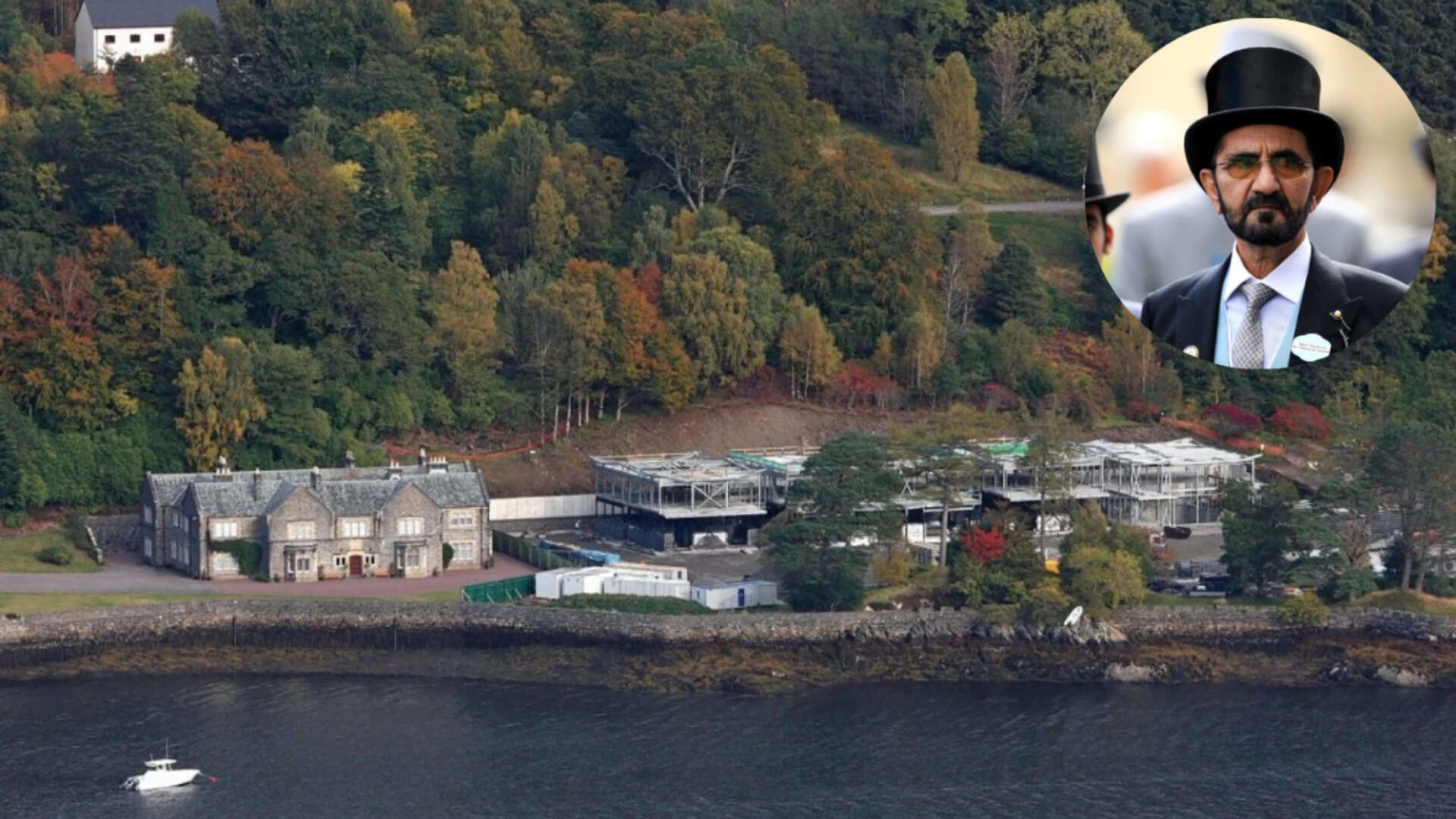
This is the contradiction of modern land ownership. Sheikh Mohammed bin Rashid Al Maktoum, the billionaire Emir of Dubai and Vice President of the United Arab Emirates, owns this vast expanse of breathtaking Scottish wilderness. Sixty-three thousand acres. To put that in perspective, it is a footprint larger than the entire city of Edinburgh, spanning across rugged mountains, pristine lochs, and sweeping glens.
He has visited it precisely five times in the last twenty years. To see the full picture, check out the excellent article by Lonely Planet.
To the local crofters and the hillwalkers who pass through these lands under Scotland’s right-to-roam laws, the estate is a ghost kingdom. It is a place where magnificent lodges sit fully staffed, their hearths unlit, waiting for a master who operates in a completely different velocity of time. Why does a man who commands the glittering, vertical empire of Dubai—a city built on glass, steel, and relentless sun—hang onto a massive, rain-swept desert of rock and peat on the other side of the world?
The answer is not found in property portfolios or asset diversification. It is found in the human psychology of escape.
The Architecture of Anticipation
Consider a hypothetical traveler named David. David spends his life in a hyper-dense urban center, where every square foot is monetized and every minute is scheduled. He buys a small, dilapidated cottage in the countryside. He promises himself he will spend every weekend there, fixing the roof, planting a garden, breathing clean air. Years pass. The cottage remains empty. David grows older, richer, and busier. He never visits, yet he refuses to sell it.
Why? Because selling the cottage means admitting that the dream of escape is dead.
For the Emir of Dubai, Inverinate is that cottage, magnified to a staggering global scale. The estate is not just land; it is an alternate reality. Over the years, the Sheikh has expanded the property significantly. The local planning councils have received proposal after proposal for grand extensions. A new 28-bedroom lodge. A 17-bedroom holiday home. Swimming pools. Gyms. Staff quarters. When you look at the architectural blueprints filed with the Highland Council, you do not see the greed of a landlord. You see the frantic preparation of a man who desperately wants to believe he will one day have the time to rest.
Every brick laid in Wester Ross is a monument to an expected future. The staff keep the brass polished. The kitchens are capable of turning out banquets at a moment's notice. The helipads sit ready, concrete circles painted against the green moss, waiting for the thrum of rotor blades that rarely come.
The tragedy of extreme wealth is that it can buy infinite space, but it cannot buy a single extra second of time.
Geopolitics, corporate governance, and the immense responsibility of steering a global financial hub keep the Sheikh anchored to the desert. Dubai is an engine that never stops purring, and its architect is bound to the throttle. The Highlands offer a profound stillness, but that stillness is terrifying to a man whose life is defined by momentum. To step into the quiet of Wester Ross is to step out of the current of history. Five times in twenty years, the pressure became too much, and the helicopter landed. Five times, the damp air of the Atlantic filled the lungs of the desert king. And five times, the engine of the world pulled him back.
The Local Echo of an Absent Crown
Walk down into the small communities that border the estate, and you will find a complicated relationship with the invisible neighbor. In many parts of the Highlands, large-scale community buyouts are changing the face of land ownership. Locals are reclaiming the earth their ancestors were cleared from, turning old estates into community-led trusts.
But Inverinate exists in a strange sort of stasis.
The Emir is not a cruel landlord. In fact, he is widely regarded as a generous one. He employs local stalkers, gamekeepers, and maintenance crews. He funds local initiatives. When he built a massive, modern garage to house his fleet of custom vehicles, it provided work for local contractors. The money from Dubai flows into the local economy like a steady, artificial river, keeping families in the glen who might otherwise have been forced to migrate to Inverness or Glasgow.
Yet, there is an undeniable emotional weight to living in the shadow of an empty palace.
Imagine working every day to maintain a garden that no one walks through. Imagine dusting rooms where no one sleeps, or cooking meals that are meant to show readiness rather than satisfy hunger. The human mind craves feedback. We want to see our efforts enjoyed. For the workers on the estate, their labor is a form of performance art, enacted for an audience of one who is thousands of miles away, looking at photos on a smartphone between state dinners.
The Highland landscape is accustomed to absence. The ruins of old crofts pepper the hillsides, stone skeletons left behind by the Highland Clearances of the eighteenth and nineteenth centuries. In those days, people were driven off the land to make way for sheep. Today, the land is cleared of its owners by the sheer velocity of modern capital. The mountains do not care. They have watched clans rise and fall; they have watched the sheep come and go; and now they watch the silent, immaculate lodges of the Maktoum family wait out the seasons.
The Mirage of the Green Desert
There is a profound irony in the geography of this arrangement. The United Arab Emirates has spent billions trying to turn the desert green. They build indoor ski slopes, lush golf courses, and massive irrigated parks in the middle of the Arabian sands. They fight nature every single day to introduce moisture and verdancy to a landscape defined by drought.
Then, they buy Scotland.
Scotland is the ultimate antidote to the desert. It is a place where water is aggressive, falling from the sky, rushing through the burns, pooling in the peat bogs. It requires no effort to keep it green; it requires effort to keep the green from swallowing everything you build.
For a ruler of Dubai, Inverinate represents the ultimate luxury: a place where nature wins without a fight. It is the antithesis of the engineered perfection of the Gulf. Here, the weather cannot be controlled by cloud seeding. The midges cannot be banished by municipal decree. The mist rolls off the Atlantic when it wants to, blinding the cameras and grounding the private jets.
That unpredictability is precisely the draw.
When you possess the power to alter the skyline of a nation with the stroke of a pen, there is a deep, psychological relief in encountering something you cannot change. The ancient mountains of Wester Ross cannot be bought, even if the deeds say otherwise. You can own the soil, you can own the lodges, you can own the stalking rights to the deer. But you cannot own the mist. You cannot own the way the light fractures across the water of Loch Duich at three o'clock on a rainy November afternoon.
The Final Chord
As the sun sets over the ridge, the light turns the color of old pewter. The great house at Inverinate stands dark against the encroaching night, its windows reflecting the cold gleam of the water. Inside, the heating is on. The linen is crisp. The security details are alert.
The estate is perfectly prepared for a guest who will likely not arrive this year, or the next.
We live in an era where we believe everything can be consumed if we just have enough resources. We track our steps, we maximize our vacations, we monetize our hobbies. We treat space as something to be conquered and used. But the 63,000 acres of Inverinate tell a different story about the human condition.
They remind us that sometimes, the things we own are not meant to be experienced. They are meant to be dreamt about. The Emir of Dubai does not need the venison from the hills, nor does he need the shelter of the stone lodges. He needs the idea of Scotland. He needs to know that somewhere on this crowded, chaotic planet, there is a rainy hillside that belongs to him, where the world is quiet, where the air is cold, and where the pressure of history briefly stops.
The tragedy is that the closer you get to the dream, the faster it vanishes. And so, the helicopters stay in their hangars in the sun, and the heather continues to bloom in the rain, entirely alone.