The rain in Manchester does not fall; it hangs. It drifts sideways under the stadium floodlights, sticking to the synthetic fabric of a bench-warmer’s track jacket and misting over the pristine, million-dollar turf. From the high press box, the pitch looks like a green velvet stage. From the touchline, it smells like crushed grass, damp clay, and the heavy, metallic tang of deep heat rub.
Every weekend, millions of people tune in to watch three young men perform miracles. We look at Lionel Messi, Erling Haaland, and Kylian Mbappé and we see gods of modern athletic theater. We count their goals. We calculate their weekly wages. We track their transfer valuations on spreadsheets as if they were tech stocks rather than human beings. For a more detailed analysis into this area, we recommend: this related article.
But if you sit close enough to the tunnel—close enough to hear the studs clacking on concrete and the ragged, desperate gasps for oxygen after a ninety-minute press—you realize something else entirely.
They are running out of sky. For further details on this topic, comprehensive analysis can be read at Bleacher Report.
When an athlete reaches the absolute summit of global sport, the world stops asking them to be good. The world demands that they remain perfect. It is a psychological trap wrapped in a gold-plated contract. Once you have scored fifty-two goals in a single European season, or lifted the World Cup trophy before your twenty-fourth birthday, the future ceases to be a promise. It becomes a debt that must be paid every single Saturday.
The question is not what they will do for an encore. The question is how they survive the weight of it.
The Ghost in the Pink Jersey
Consider the twilight of the god.
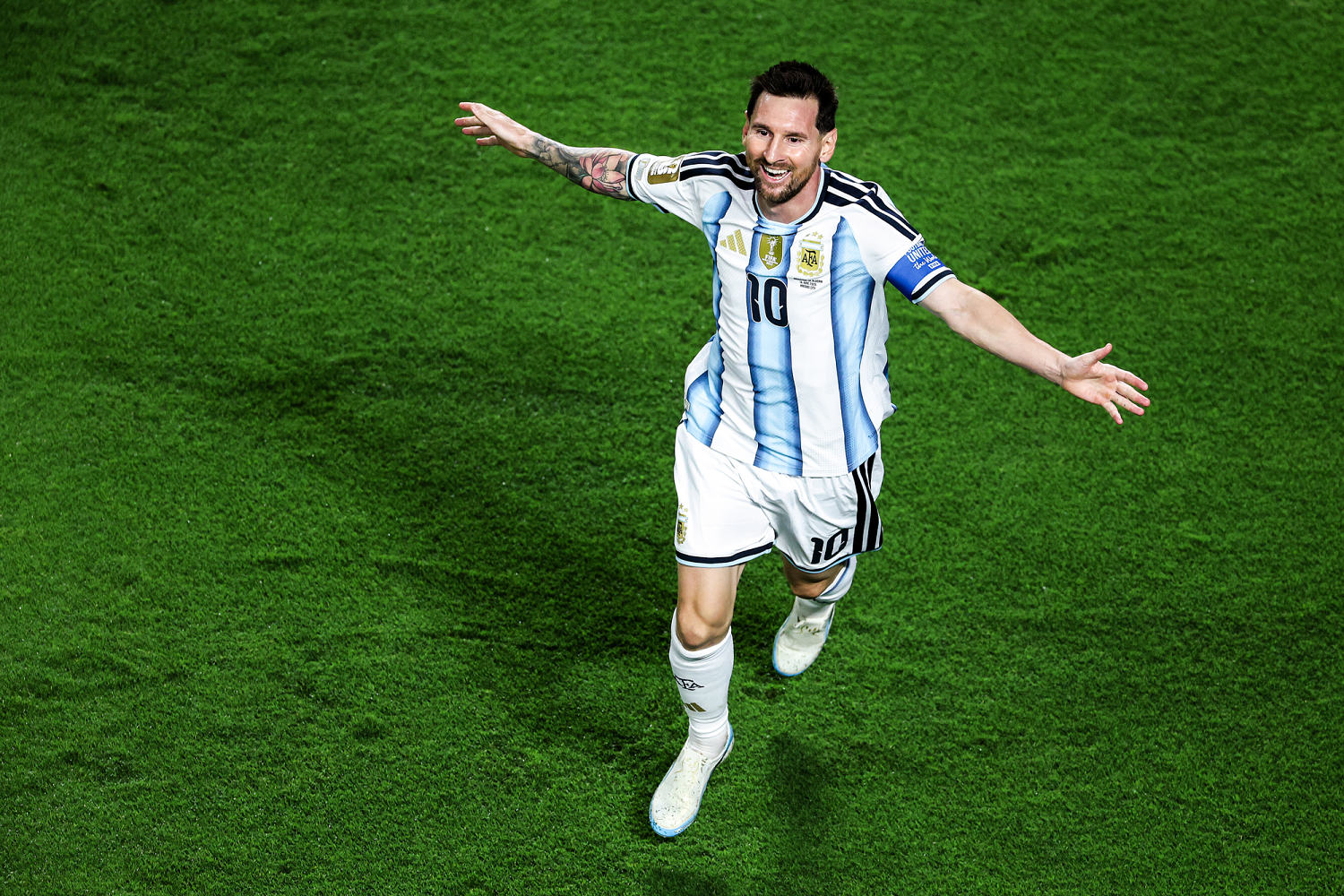
In Miami, the sun hits the pink nylon of Lionel Messi’s jersey with a humid intensity that feels worlds away from the cold nights in Barcelona where his legend was forged. To the casual observer, this looks like a victory lap. He won the World Cup in Qatar, ticking the final, elusive box on a resume that spans two decades. He broke football.
Yet, watch him during a standard mid-week fixture. He walks.
He does not jog; he does not track back to help his defenders. He drifts through the half-spaces like a ghost inhabiting a house he no longer cares to haunt. This is not laziness. It is the hyper-calculated conservation of a thirty-eight-year-old body that has been kicked, hacked, and sprinted into deep mileage since he was a teenager.
The human cost of sustained greatness is a form of physical bankruptcy. Every time Messi drops his shoulder, his left knee—the one that has absorbed thousands of impacts—must hold the torque of a nation's expectations. The narrative surrounding him has shifted from what will he win next to how long can we keep the lights on.
We are witnessing the final act of an era, and the emotional core of his current journey is not triumph, but preservation. The fans who pay thousands of dollars for a seat in Fort Lauderdale are not buying a football match. They are buying a glimpse of a fading sunset, praying the clouds don’t roll in before the whistle blows.
The Cyborg's Anatomy
Sixteen hundred miles to the northeast, across the Atlantic, stands the antithesis of Messi’s cinematic drift.
Erling Haaland does not walk. He storms. He looks less like a traditional footballer and more like a creature built in a Scandinavian laboratory specifically designed to terrify center-backs. At Manchester City, he turned the most competitive league on earth into a personal playground, scoring goals at a rate that felt almost offensive to the history of the sport.
But perfection creates a strange kind of numbness.
When Haaland scores a hat-trick, the reaction is no longer shock. It is an expectation fulfilled. The spreadsheet has been updated. The algorithm is satisfied.
The hidden stake for Haaland is the erasure of his own humanity. When you are labeled a cyborg, people forget that your hamstrings are made of muscle fiber, not carbon fiber. During his quiet spells—those rare games where he touches the ball only eight times and fails to find the net—the critique is brutal. The football world handles excellence the way a spoiled child handles toys: the moment it stops surprising them, they call it broken.
The pressure on Haaland is the pressure of the machine. He must constantly engineer new ways to shock an audience that has already seen him score five goals in a single Champions League knockout game. Every match is a battle against the law of diminishing returns.
The Prince and His Kingdom
Then there is Paris, or more accurately, the shadow Paris left behind.
Kylian Mbappé carries himself with the posture of a man who knows the cameras are tracking his every blink. His greatness is cinematic, defined by explosive bursts of speed that leave defenders looking like they are running through wet cement. He has already tasted the ultimate glory, and he has stared into the abyss of a lost World Cup final despite scoring three goals himself.
Mbappé’s encore is different from the others. His is a narrative of legacy and liberation. For years, he was trapped in the golden cage of Paris Saint-Germain, a hometown hero tasked with carrying a flawed, synthetic project on his shoulders. Every goal he scored felt less like a joy and more like a temporary stay of execution for his club’s wealthy owners.
His journey now is about finding out who he is when the safety net of his home country is removed. The stakes for him are entirely psychological. Can a man who was treated like a sovereign state function as part of a collective machine elsewhere?
The burden of being the chosen one means you are never allowed to have an off-day, because an off-day is interpreted as a political statement, a contract dispute, or a sign of psychological rot.
The View from the Touchline
It is easy to look at these lives and feel zero sympathy. They fly in private jets. They own watches that cost more than suburban houses.
But wealth cannot buy back the anonymity of a mistake. If you screw up an assignment at your desk job, a few colleagues might notice. If Mbappé misjudges a bounce, ten million people instantly create looping videos of the error, set it to mocking music, and broadcast it to every screen on the planet before he has even finished walking to the changing room.
The psychological toll of this existence is something few modern athletes talk about until they retire, broken and exhausted. The constant adrenaline, the lack of privacy, the realization that you are valued solely for your output—it turns the game into a high-yield corporate operation.
We, the audience, are complicit in this. We demand the encore because we are addicted to the spectacle. We want the goals to get prettier, the speeds to get faster, and the storylines to get more dramatic. We treat their careers like a television series, furious if the writers deliver a boring episode.
But football is not written. It is lived.
The rain continues to fall in Manchester, and across the world, three men are tying their laces for another training session, another flight, another ninety minutes under the lights. They will run, they will score, and they will give us exactly what we asked for.
We will cheer, but we should also watch their faces when the stadium goes dark and the roar fades into the night. That is where the real story lives, in the quiet, exhausted seconds before the machine starts up again.