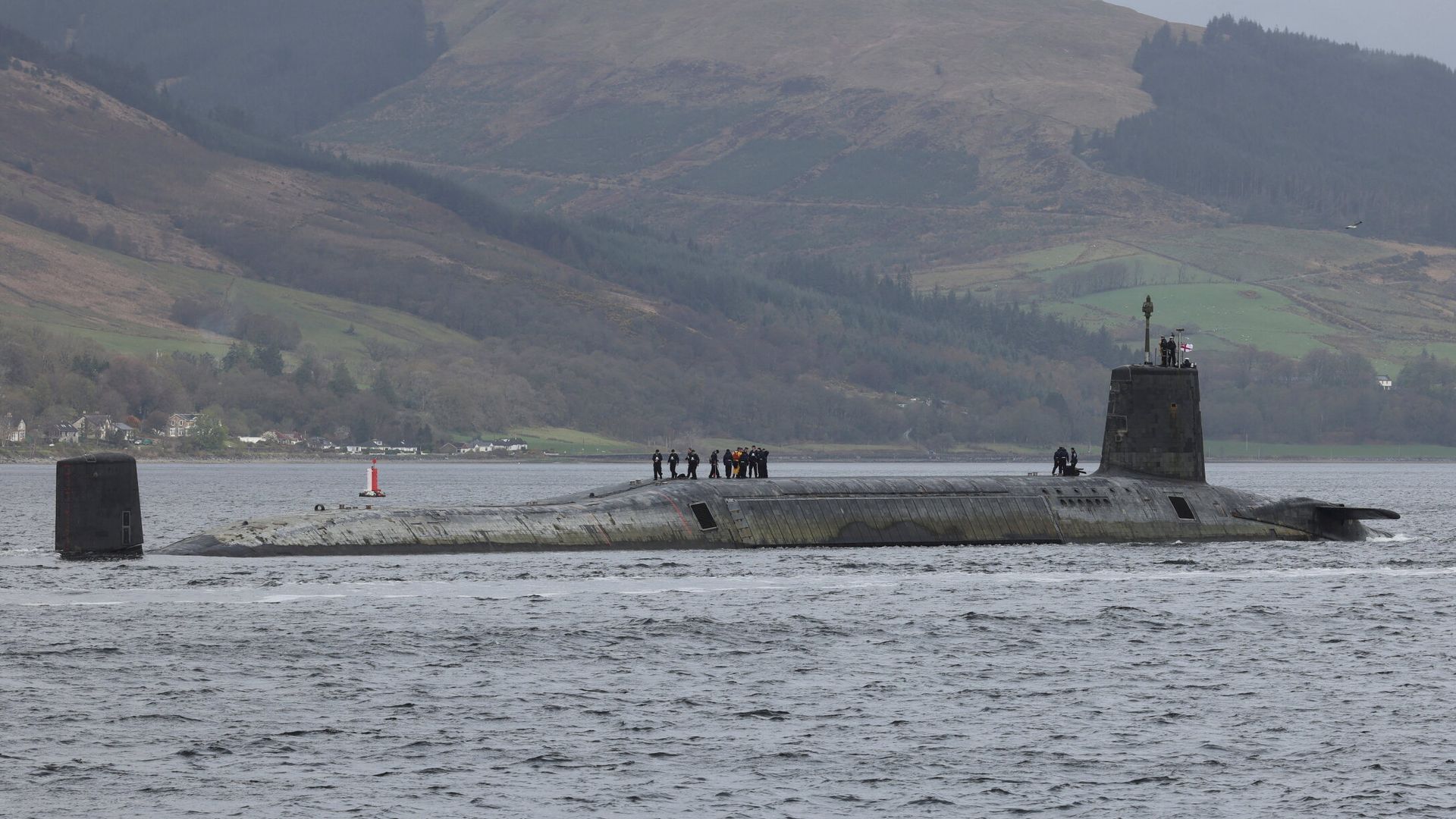
Most defense headlines treat naval movements like routine traffic updates, yet seeing three of the UK's four nuclear submarines out at sea at the exact same time is anything but ordinary. Under normal operating conditions, the Royal Navy relies on a strict rotation to maintain its Continuous at Sea Deterrent, meaning only one Vanguard-class boat patrols the deep ocean while the others undergo maintenance, refits, or crew training in Faslane. When satellite imagery and open-source intelligence spot three of these massive vessels deployed simultaneously, military analysts pay close attention because it signals a rare surge in operational readiness.
You don't just accidentally send three ballistic missile submarines out of HMNB Clyde. Each Vanguard-class boat carries Trident II D5 missiles capable of delivering nuclear warheads thousands of miles away, and getting them ready for sea takes months of meticulous planning, reactor checks, and logistical coordination. Having three out at once means the UK has temporarily pushed its strategic deterrent capacity near its absolute maximum, leaving only a single submarine back at base in Scotland.
How the Continuous at Sea Deterrent Usually Works
To understand why a three-boat deployment turns heads, you have to look at the math behind a four-submarine fleet. Since April 1969, the Royal Navy has kept at least one ballistic missile submarine hidden beneath the waves every single minute of every single day. That policy, known as Operation Relentless, is the longest-running military operation in British history.
With only four Vanguard-class submarines in service—HMS Vanguard, HMS Victorious, HMS Vigilant, and HMS Vengeance—the schedule leaves almost zero wiggle room. In a typical cycle, one submarine is on active deterrent patrol, invisible and completely silent somewhere in the North Atlantic. A second boat is usually working up, running sea trials, or conducting training exercises off the Scottish coast so it's ready to relieve the patrol boat. The third sits alongside at Faslane undergoing routine maintenance and weapons loading, while the fourth is often locked in a dry dock for a multi-year deep overhaul.
That's why the maintenance bottleneck has been such a massive headache for the Ministry of Defence over the past decade. When HMS Vanguard spent over seven years in refit at Devonport—finally returning to service in 2023—the remaining three boats had to shoulder the entire burden of Britain's nuclear deterrent. Patrol lengths stretched past six months, putting immense strain on both the crews and the aging hulls built in the 1990s.
Why Three Boats at Sea Breaks the Mold
Because one boat is almost always torn apart in dry dock, having three out at sea simultaneously requires nearly every available hull to be fully certified, crewed, and operational at the exact same moment. It doesn't happen by coincidence.
Sometimes, the overlap comes down to scheduling handovers. One submarine returns from a long deployment while its replacement heads out, and a third boat leaves port for essential sea trials or certification exercises before entering a maintenance window. Other times, it's deliberate signaling. Naval powers know full well that commercial satellites and submarine spotters watch the Gare Loch like hawks. Pushing three Vanguard submarines into open water sends an unmistakable message to adversaries like Moscow that Britain's nuclear posture isn't crippled by dockyard delays.
Inside the Vanguard Class Capabilities
People often confuse nuclear-powered submarines with nuclear-armed submarines, and honestly, the distinction matters a lot here. The Royal Navy operates Astute-class attack submarines, which run on nuclear reactors but carry conventional Tomahawk cruise missiles and Spearfish torpedoes. The Vanguard class is an entirely different beast.
Displacing nearly 16,000 tons submerged and stretching roughly 150 meters long, these boats are built for one primary mission: hiding in the dark and staying ready to launch ballistic missiles if the worst ever happens. Each submarine has 16 missile tubes designed for the Lockheed Martin Trident II D5, though under the UK's posture limits, they don't sail with all tubes fully loaded.
Here's what makes them so hard to track once they dive past the continental shelf:
- Acoustic stealth: The hulls are covered in thousands of anechoic rubber tiles designed to absorb active sonar pings and dampen internal machinery noise.
- Pump-jet propulsion: Instead of a traditional exposed propeller that creates noisy cavitation bubbles, the Vanguard class uses a shrouded pump-jet propulsor that lets the boat glide quietly at tactical speeds.
- Total endurance: Their Rolls-Royce PWR2 nuclear reactors never need refueling during a patrol, meaning the only limit on how long they stay underwater is how much food they can cram into the storage lockers and how much stress the 135-person crew can handle.
Once a Vanguard boat submerges in deep water, nobody—not even the Prime Minister—knows its exact coordinates. Communication flows one way via extremely low-frequency radio transmissions that penetrate seawater, allowing the submarine to receive orders without ever rising to periscope depth or giving away its position.
Geopolitical Reality Behind the Surge
You can't separate naval deployments from the broader security climate in Europe and the North Atlantic. Over the past few years, Russian submarine activity in the Greenland-Iceland-UK gap—known in naval circles as the GIUK gap—has climbed back to levels unseen since the Cold War. Moscow's Northern Fleet routinely tests NATO anti-submarine defenses, probing undersea internet cables and monitoring British waters.
When three of the UK's four nuclear submarines are out at sea, it complicates every calculation made by Russian naval planners. Tracking one ballistic missile submarine is already a needle-in-a-haystack nightmare across millions of square miles of ocean. Tracking three separate boats operating independently stretches adversary anti-submarine warfare assets thin.
It also pushes back against narratives that the Royal Navy is in terminal decline. Critics have spent years pointing at surface fleet shortages, delayed frigate builds, and high-profile Trident test misfires—like the February 2024 test launch off Florida where a missile's first-stage boosters failed to ignite, dropping the dummy warhead harmlessly near HMS Vanguard. Putting three Vanguard boats to sea at once proves the core fleet is still capable of generating serious mass when required.
The Human Cost of Extended Operations
Behind the geopolitical chess game sits a very real human toll. Submariners don't get sunlight, fresh air, or phone calls home. During extended deployments that routinely cross the 180-day mark, crews live in cramped quarters, sharing bunks in a practice called "hot bunking" and breathing recycled air.
When three boats deploy simultaneously, the Royal Navy has to pull together enough qualified nuclear engineers, sonar operators, and weapons specialists to staff all three crews simultaneously. Retaining experienced submariners has been one of the Navy's toughest personnel battles, especially when private-sector engineering firms offer higher pay without six-month stretches away from family. Keeping three boats running at sea is a massive testament to the current crew pool, even if it's not a pace the Navy can sustain indefinitely.
Transitioning to the Dreadnought Class
All of this is happening while the UK builds the replacements for the Vanguard fleet. The Dreadnought-class submarines, currently under construction at BAE Systems in Barrow-in-Furness, are slated to begin entering service in the early 2030s.
Until the first Dreadnought boat—HMS Dreadnought—actually goes on patrol, the four Vanguard submarines have to hold the line. They were originally designed for a 25-year service life, which means they are already operating well past their intended retirement dates. Every year they spend at sea requires more intensive hull inspections, reactor monitoring, and component replacements.
That aging factor is precisely why seeing three out of four boats operational at the same time is so striking. Older submarines break down more often. Valves wear out, piping corrodes, and software systems need constant patching. Getting three aging nuclear boats through their pre-deployment safety checks and out into the Atlantic at the same moment takes an extraordinary effort from the civilian engineers at Babcock and the naval staff at Clyde.
How to Follow Naval Deployments Accurately
If you want to track British naval movements without falling for sensationalized social media rumors, stick to verified open-source intelligence and official channels. Submarine movements are classified for obvious reasons, so you won't find Vanguard boats broadcasting their locations on standard marine AIS transponders.
Instead, pay attention to three reliable indicators:
- Local shipping notices: The King's Harbour Master at Clyde issues routine Notices to Mariners whenever large vessels restrict movement in the Gare Loch and Firth of Clyde.
- Commercial satellite imagery: Analysts regularly review passes from Planet Labs and Sentinel-2 over Faslane to count how many Vanguard hulls are visibly tied up at the jetties or inside the shiplift.
- Allied maritime patrol flights: Spikes in Boeing P-8A Poseidon flights out of RAF Lossiemouth often coincide with submarine transit windows, as patrol aircraft clear the waters around Scotland to prevent foreign submarines from shadowing British boats as they leave port.
Watching those pieces come together gives you a much clearer picture of what's actually happening beneath the surface than any viral headline ever will.