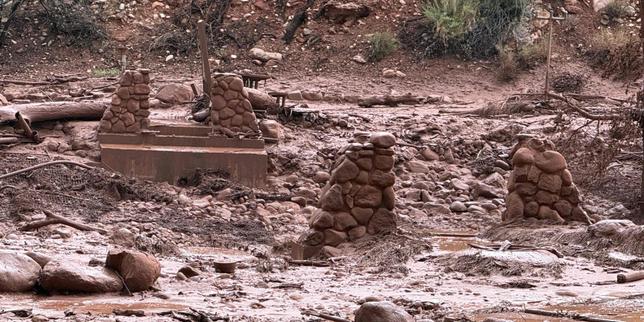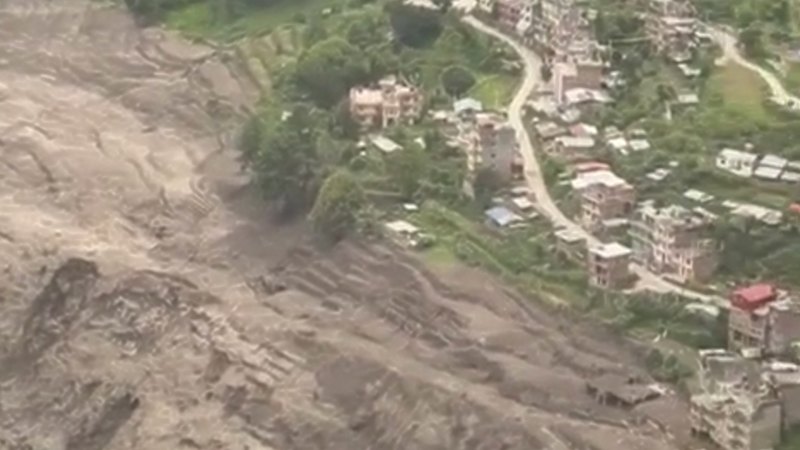
Every monsoon season, the media reaches for the same tired visual narcotic. A chopper banks low over a brown, churning river in Nepal. The camera lens tracks a jagged slice through a mountainside where a village used to stand. The anchor’s voice drops an octave into professional mourning. The public gasps at the scale of destruction.
Everyone nods along with the standard narrative. Climate change is obliterating the Himalayas. Poor infrastructure is sealing the fate of isolated mountain settlements. The solution is always more emergency aid, more foreign intervention, and more aerial surveillance to document the misery.
It is a comfortable consensus. It is also completely backwards.
I have spent two decades walking the trails of the Annapurna and Langtang regions, long after the TV crews packed up their zoom lenses and flew back to Kathmandu. I have watched billions of dollars in international disaster relief vanish into bureaucratic black holes while the actual people living on those slopes adapted, rebuilt, and largely ignored the panic coming through the screen.
Helicopter footage does not capture reality. It flattens a complex socioeconomic ecosystem into a tragedy porn loop. It turns dynamic mountain communities into helpless victims waiting for a savior with a winch.
Stop looking at the wreckage from three thousand feet. Look at what happens on the ground.
The Myth of the Fragile Mountain
The lazy consensus treats the geography of Nepal as inherently unstable, a victim of modern climatic sins. Geologists will tell you a different story over a cup of black tea in Pokhara. The Himalayas are the youngest, most aggressive mountain range on the planet. They are still growing. They are designed by nature to fall apart.
Landslides are not anomalies in this landscape. They are the primary geological mechanism by which the mountains shed weight. When a slope lets go during the monsoon, it is doing what it has done for ten million years.
Yet every time a news outlet airs aerial B-roll of a washed-out settlement, the narrative frames it as an unnatural disaster engineered exclusively by twenty-first-century carbon emissions. This framing serves a specific institutional purpose. It shifts accountability away from poor local municipal planning and toward abstract global phenomena that no single government can fix.
When you convince people that the sky is falling because of atmospheric physics, you absolve local politicians of the responsibility to maintain basic drainage ditches, enforce zoning laws, or stop building concrete hotels directly on top of ancient alluvial fans.
I watched a municipality in the mid-hills spend an entire international grant on a glossy climate vulnerability study while the main mule track into their valley washed out for the third consecutive year because nobody bothered to clear fifty dollars worth of gravel from a culvert. The chopper came anyway. The footage looked great on the evening news. The town stayed cut off for two months.
Who Actually Pays for the Chopper
Let us talk about the economics of disaster voyeurism.
An MI-17 or a chartered Eurocopter does not hover over a disaster zone out of pure journalistic duty. Every hour in the air costs thousands of dollars in fuel, pilot fees, and insurance. That money comes from donor funds, government emergency reserves, or media budgets that could otherwise finance three years of local road maintenance or micro-hydro repairs.
When disaster strikes a remote Nepali town, the first responders are rarely the state or the international NGOs with their cameras rolling. They are the neighbors. They are the guys with shovels, clearing the path to the next hamlet over because they want to buy salt and sell cardamom.
The media arrives after the sweat has dried. They capture the aftermath when it looks cinematic enough to hold the attention of a TikTok scroll.
Imagine a scenario where every news agency decided to spend the budget of a single aerial documentary crew on local labor instead. You could hire every able-bodied person in a devastated ward for a month to terrace the hillsides, plant vetiver grass, and reinforce retaining walls using traditional dry-stone masonry. That masonry has stood up to monsoons for centuries. But dry stone does not pop on high-definition television. Concrete poured haphazardly by a contractor with political connections looks modern, fails spectacularly during the first major tremor or cloudburst, and provides fantastic wreckage for the next helicopter sweep.
The Architecture of Resilience
To understand why traditional mountain settlements survive, you have to look at how they were built before urban planners from the capital got involved.
Old Sherpa, Gurung, and Tamang villages were rarely placed on the valley floors. Valley floors are deposition zones. They are where rivers dump everything they tear off the peaks above during a flood. Our ancestors understood this. They built on spurs, on the rocky shoulders of ridges, above the high-water mark of historical memory.
Modern development has ignored these ancestral constraints. Tourism brought cash. Cash brought the desire for road access. Roads require cutting into the toes of slopes, destabilizing the entire mountain above them.
When a monsoon triggers a catastrophic slide that buries a roadside village, the media blames the rain. They should be blaming the civil engineer who cut a vertical cliff into weak schist to save money on heavy machinery.
The real story of destruction in Nepal is not climate change or natural fury. It is the friction between ancient geological realities and modern engineering hubris. We try to force flat-land infrastructure into a vertical world that refuses to stay still.
When you watch a helicopter sweep over the ruins of a newly paved link road, you are looking at a monument to human arrogance, not a tragedy of fate.
What the Coverage Misses
If you want to know what happens to a Nepali town after the cameras leave, look at the resilience index that never makes the broadcast.
Within forty-eight hours of a major slide, local cooperative banks mobilize emergency credit lines. Porters find alternative trails across the ridges, bypassing the blocked gorges. Families double up under tin roofs while rebuilding begins before the government even finishes printing its preliminary assessment forms.
This is not because they are romantic, noble savages living in harmony with nature. It is because they know no one is coming to save them. The state apparatus in Kathmandu moves at the speed of glacial drift. The international aid machine spends eighty percent of its donations on administrative overhead and baseline assessments.
The people who survive the monsoon do so because they operate on radical self-reliance. They do not wait for a helicopter to tell them their town is destroyed. They already know. They were standing in the mud when it happened.
The next time you see a dramatic aerial shot of a broken mountain town, turn off the sound. Ignore the anchor's voice telling you how to feel about the tragedy unfolding below.
Recognize the footage for what it is. It is a distraction from the structural incompetence, the corrupt municipal contracting, and the refusal to respect the physics of the earth's most volatile terrain.
The mountain is doing what the mountain has always done. The only thing that changed is our willingness to monetize the wreckage.