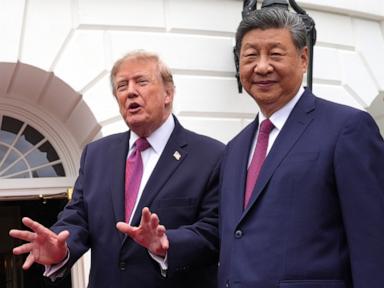
Diplomacy rarely unfolds across mahogany tables under the sterile glare of chandeliers. More often, it happens where prestige meets raw engineering, far from the press pool. When high-level state visits occur, the choreography of power extends well beyond traditional bilateral talks into carefully engineered environments designed to project dominance, industrial prowess, and unyielding national authority.
Consider the staging of modern diplomatic site visits. Leaders do not merely exchange pleasantries in drawing rooms. They inspect state-of-the-art military hardware, tour private infrastructure projects, and walk across freshly paved concrete intended to symbolize permanence and operational readiness. Aviation assets like Marine One serve as floating diplomatic platforms. They embody billions of dollars in aerospace research, specialized engineering, and absolute security infrastructure. Showing off a newly constructed White House helipad alongside the presidential helicopter fleet is not a casual gesture of hospitality. It is a calculated demonstration of modern executive capability.
The Architecture of State-Level Display
Optics dictate modern international relations. Every square foot of executive real estate is scrutinized for strategic signaling. When a foreign head of state is invited to inspect the newest domestic aviation investments, the host is engaging in a time-tested ritual of deterrence and seduction.
Industrial muscle speaks louder than policy communiques. By walking a visiting counterpart through advanced transport facilities, an administration highlights domestic manufacturing capacity and technological supremacy. Aviation enthusiasts and defense analysts recognize that Marine One is not just a helicopter. It is a secure, flying command center packed with classified countermeasures, encrypted communication suites, and composite armor that withstands the most rigorous threat matrices. Displaying such equipment to a primary geopolitical competitor communicates a clear message regarding technological readiness.
The construction of dedicated transport infrastructure on executive grounds reinforces this dynamic. A newly minted helipad represents more than a logistical upgrade for presidential transit. It stands as a physical manifestation of long-term planning, security modernization, and executive permanence. When foreign delegations are given front-row access to these restricted zones, the boundary between official state business and industrial showroom blurs deliberately.
Industrial Competition Disguised as Hospitality
International commerce and security remain inextricably linked. Every major aerospace innovation functions simultaneously as a domestic economic engine and a strategic asset. While formal trade negotiations happen behind closed doors, the physical tour of advanced transport machinery acts as a silent negotiation tactic.
Strategic industries thrive on perception. Showcasing elite hardware reminds international partners of the vast gulf separating basic manufacturing from advanced aerospace engineering. This dynamic sets a specific psychological baseline for subsequent talks. When one side controls the entire supply chain of advanced vertical-lift aircraft, communication frequencies, and tactical flight control systems, the balance of power during bilateral discussions shifts subtly in favor of the host.
Critics often dismiss these events as mere photo opportunities for domestic consumption. That view misses the intricate layers of modern statecraft. Foreign ministries analyze every second of footage from these site visits. They look for wear patterns, assess the capability of surrounding security details, and measure the comfort level of the host leader around complex machinery. Every gesture, from a casual hand placement on a fuselage to a specific walkthrough path across a flight deck, is parsed by intelligence agencies worldwide.
The Reality Behind the Rotor Blades
Beneath the polished veneer of high-end diplomacy lies the grinding reality of defense budgets, logistical upkeep, and geopolitical friction. Maintaining a fleet of presidential transport helicopters requires an immense support apparatus. Thousands of aerospace technicians, specialized parts manufacturers, and secure supply chains must operate without interruption to keep these airframes operational.
When an administration invites international counterparts to view these assets up close, they are showcasing the resilience of their entire industrial base. It takes decades of sustained investment, specialized metallurgy, and rigorous pilot training to field an aircraft capable of safe executive transport under adverse conditions.
Diplomacy requires constant calibration between cooperation and competition. Leaders must find ways to negotiate trade agreements and security frameworks while maintaining clear boundaries regarding national sovereignty and industrial advantage. The modern executive helipad, surrounded by elite security teams and multi-million-dollar transport systems, serves as the ultimate stage for this high-stakes theater. As global supply chains face increasing strain and defense technologies advance at an exponential rate, the physical exhibition of state power will only grow more pronounced, turning every aviation tour into a vital chapter in modern geopolitical strategy.