The neon glow of Hong Kong’s Mong Kok district always feels a little brighter during the World Cup. Walk down the narrow, humid alleyways, and you can hear the collective gasp of a crowded bar watching a near-miss on a flat-screen TV. You smell the roasted meats, the stale beer, the cheap plastic.
For a month every four years, football isn’t just a sport. It is a secular religion. Everyone wants a piece of it. Everyone wants to wear the colors, to feel like they belong to something bigger than their daily grind.
But if you look closely at the edges of the celebration, away from the official fan zones, a different kind of game plays out. It is a shadow tournament where the stakes are measured not in goals, but in millions of dollars of illicit cash, high-stakes raids, and ruined lives.
The Perfect Stitch
Imagine a young father. We will call him David. David works a grueling twelve-hour shift in a logistics warehouse near the container terminals. His ten-year-old daughter is obsessed with the sport, staying up past her bedtime to watch the group stages. She wants the jersey. The authentic one. The one the players wear on the pitch, with the crisp federation crest and the moisture-wicking fabric that catches the stadium lights.
David goes online. He looks at the official retail prices. A single jersey costs nearly a full day's wages after tax. It is a gut punch.
Then, a targeted social media ad pops up. A replica. The photos look immaculate. The tags look real. The price is a quarter of the retail cost. David clicks buy, feeling a wave of relief. He thinks he is beating a greedy system. He thinks he is just making his daughter happy.
What David does not see is the vast, industrial machinery behind that single transaction.
He does not see the container ships cutting through the South China Sea, packed to the brim with boxes falsely labeled as "plastics" or "garments." He does not see the windowless industrial units in the New Territories where teams of workers unpack, sort, and distribute millions of items under the cover of darkness.
It feels like a victimless crime. It isn't.
The HK$159 Million Illusion
Customs officials in Hong Kong recently pulled back the curtain on this shadow industry. The sheer scale of the operation defies the imagination.
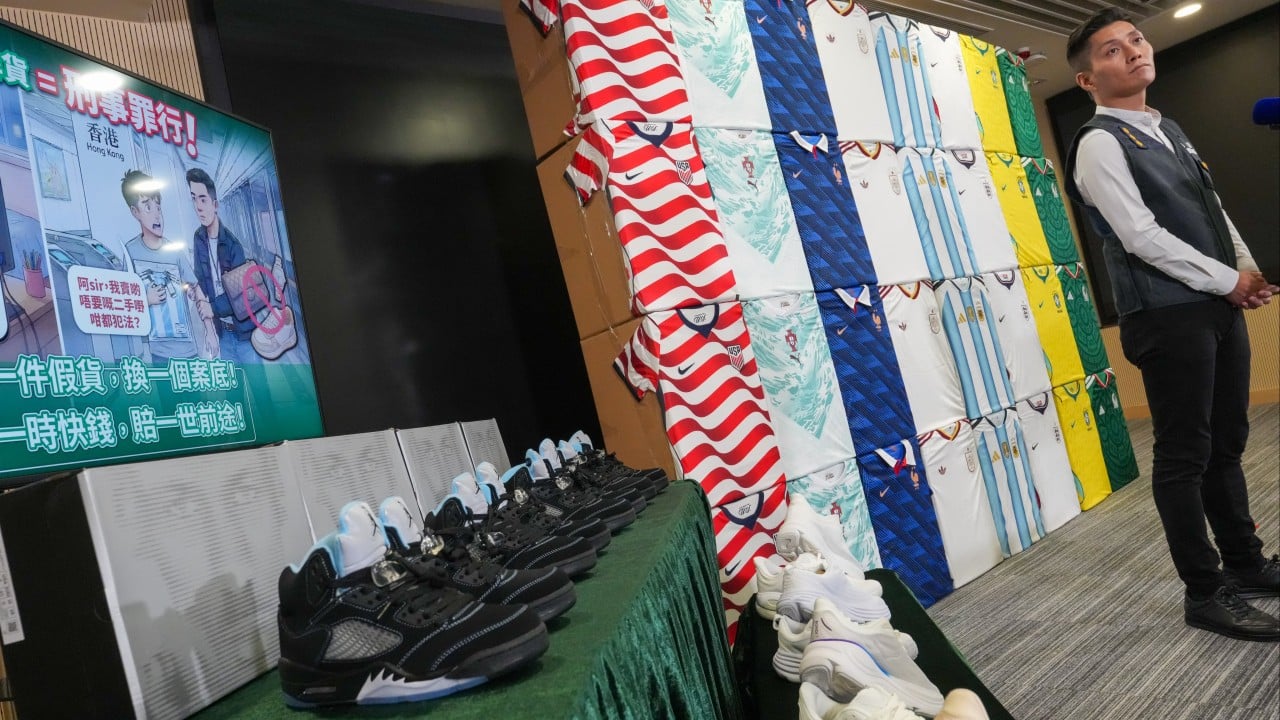
Law enforcement officers launched a massive, coordinated crackdown spanning several weeks as the World Cup fever peaked. They targeted syndicates operating out of logistics hubs, retail hotspots, and online marketplaces. By the time the dust settled, authorities had arrested 13 individuals—men and women ranging from their early twenties to their late fifties.
They seized over 100,000 items of counterfeit sports merchandise. The total estimated market value of the haul? A staggering HK$159 million.
To put that number in perspective, it is not just a few boxes of cheap shirts sold out of a duffel bag on a street corner. This was a sophisticated, highly organized supply chain. The seized goods included not only replica jerseys from major football nations but also counterfeit boots, branded balls, and commemorative accessories.
The syndicates used high-end printing equipment to replicate security holograms and official tags. To the untrained eye of a parent trying to surprise their kid, the fakes were indistinguishable from the real thing.
The Anatomy of the Raid
The tension inside a customs operation is palpable. It begins long before the doors are kicked in. It starts with data. Officers spend months tracking shipping manifests, analyzing anomalies in trade routes, and monitoring suspicious online storefronts that suddenly appear just before a major tournament begins.
When the raid happens, it is fast. Loud. Methodical.
Step inside one of the raided warehouses in Yuen Long. The air smells of chemical dyes and cheap synthetic polyester. Cardboard boxes are stacked to the ceiling, blocking the fluorescent lights. On the tables sit thousands of unattached brand logos, waiting to be heat-pressed onto generic shirts.
The people caught in these spaces are rarely the criminal masterminds. They are the couriers, the warehouse managers, the low-level digital marketers. They are people who needed a quick paycheck and looked the other way. Now, they face severe financial penalties and prison sentences under the Trade Descriptions Ordinance.
The tragedy is that the demand never truly goes away. As long as the emotional connection to sports remains high, and the price of official merchandise stays out of reach for the working class, the shadow market will thrive.
Why the Counterfeit Machine Matters
It is easy to defend the buyers. Why should anyone care if a multi-billion-dollar sports federation or a massive sportswear conglomerate loses a fraction of a percent of their merchandise revenue? They have plenty of money.
But the reality of counterfeiting is far darker than corporate profit margins.
First, consider the environment. Official manufacturers are held to strict environmental standards regarding the dyes, chemicals, and plastics they use. The syndicates making fake jerseys operate with zero oversight. The cheap materials are often treated with toxic chemicals to keep them looking crisp during transport. These chemicals rub off on the skin of the fans wearing them. They wash into the water supply.
Second, consider where the money goes.
Counterfeiting is rarely an isolated business. The syndicates that move HK$159 million worth of fake sportswear do not keep their profits in a separate, clean bank account. The money generated from these operations routinely funds human trafficking, drug distribution, and underground gambling rings. When a consumer buys a fake jersey to save a few dollars, they are unknowingly injecting liquidity into a global criminal ecosystem.
The scale of this recent bust proves that this is no longer a cottage industry. It is an organized economic force that exploits our love for the game.
The Empty Seat at the Table
Think back to the warehouses, the quiet apartments where the packages were wrapped, the delivery drivers who thought they were just moving boxes of clothes. The real cost of the HK$159 million bust is measured in the human lives disrupted by the promise of easy money.
A parent sits in a police station, realizing a criminal record will now follow them forever. A young entrepreneur who thought running a sketchy online shop was just a "hustle" faces the reality of a jail cell.
Outside, the tournament continues. A striker scores a brilliant goal in the ninety-second minute. The crowd roars in the Hong Kong bars, spilling their drinks, hugging strangers, united by a flash of pure human drama. The joy is real. The passion is authentic. But somewhere in a quiet evidence locker, stacked in the dark, a hundred thousand fake jerseys sit in silence—a stark reminder of the lengths to which people will go to catch a fleeting piece of the magic.