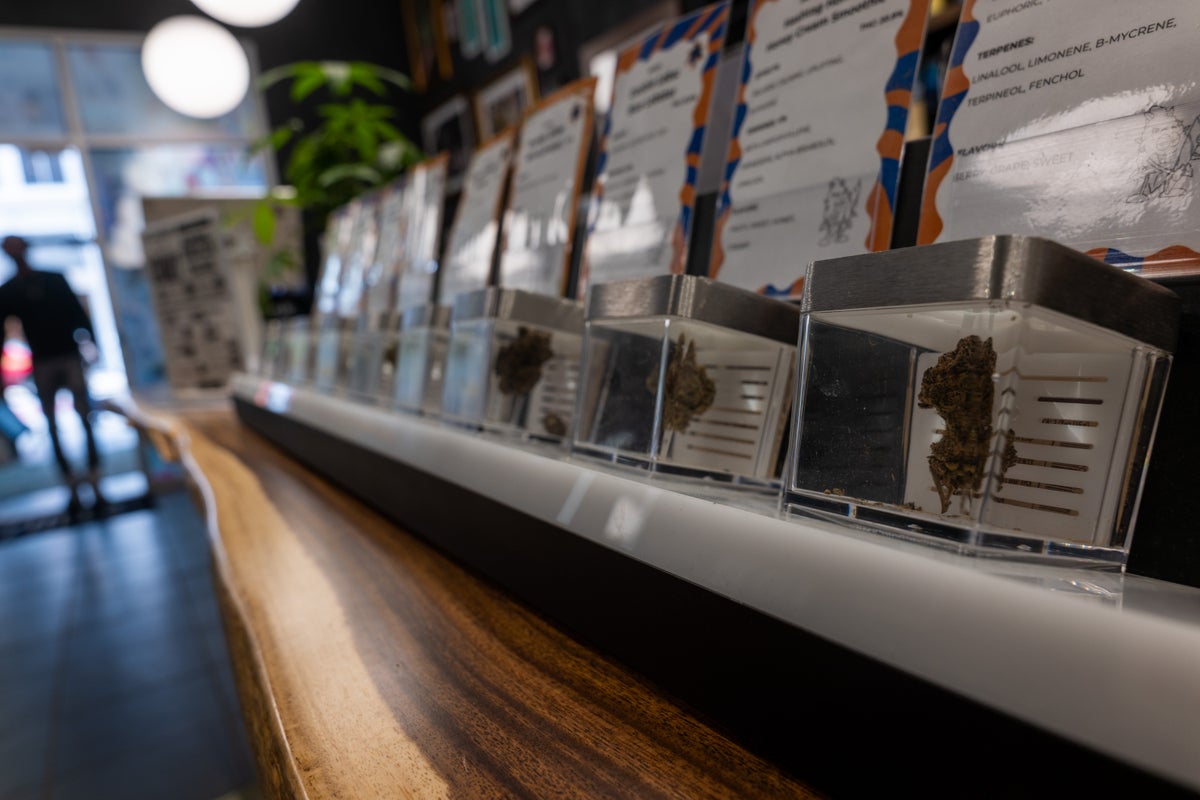
The neon green sign of a dispensary in downtown Boston buzzes with a quiet, predictable rhythm. Inside, a customer stands at a pristine glass counter, discussing the precise terpene profile of a lab-tested tincture with a budtender. It feels normal. It feels permanent.
But outside those glass doors, a sophisticated, heavily bankrolled political machinery is quietly assembling a reality that could snap this entire world out of existence.
For a decade, the narrative surrounding cannabis in America has been a one-way street pointing toward total normalization. States fell like dominoes. The federal government drifted toward rescheduling. Yet, beneath the surface of this apparent consensus, a counter-reformation has taken root.
This November, Massachusetts voters will confront a choice that could fracture the national narrative. A certified ballot initiative—backed by a national anti-cannabis organization and cleared by the state’s Supreme Judicial Court—aims to completely dismantle the state's $1.65 billion commercial adult-use cannabis market.
If approved, it will achieve something unprecedented. No state in modern American history has ever voter-legalized recreational marijuana and then voted to turn the lights off.
The Illusion of the Middle Ground
The push to reverse course is led by a group called the Coalition for a Healthy Massachusetts, heavily funded by national prohibitionist dark money. Their pitch to the public sounds remarkably moderate on paper. They are not asking to lock people up. Under the proposed statute, possessing up to an ounce of cannabis would remain entirely legal for adults over twenty-one. Medical marijuana programs would survive.
Instead, the initiative targets the infrastructure. It would outlaw commercial adult-use sales and criminalize the personal cultivation of even a single cannabis plant at home.
Consider a hypothetical consumer named Sarah. She is a thirty-four-year-old accountant in Worcester who uses low-dose cannabis edibles to manage chronic anxiety. Under the current system, Sarah walks into a local store, views a certified lab report proving her product is free of heavy metals and pesticides, pays her state excise tax, and goes home.
If the ballot initiative passes, Sarah’s routine shatters.
The state is not telling Sarah she cannot possess her edibles. It is simply telling her that the store she buys them from must close its doors forever. To maintain the exact same legal possession, Sarah is left with a maddening paradox: she has the right to hold the medicine, but no legal avenue to obtain it.
Where does Sarah go when the stores disappear?
The answer is as old as prohibition itself. She goes back to the unregulated market. She meets a stranger in a parking lot. She buys an unmetered, untested product wrapped in tinfoil, hoping it isn't laced with something lethal.
The advocates for the rollback argue that commercialization has corporate-sized risks, pointing to fears over public consumption and unregulated high-potency products. But by focusing entirely on the storefronts, the initiative creates a dangerous blind spot. It treats the erasure of a legal market as the erasure of the drug itself.
The Economic Ghost Towns
The sudden evaporation of a billion-dollar industry is not just a cultural shift. It is a financial implosion. Since the first retail dispensaries opened their doors in Massachusetts in late 2018, the industry has pumped more than $1.7 billion in new state and local tax revenue into public coffers.
Imagine a small municipality in western Massachusetts that struggled for decades after its textile mills dried up. Five years ago, a cannabis cultivation facility opened in an abandoned brick warehouse, bringing two hundred stable jobs and a influx of local tax dollars that funded a new school playground and repaired a crumbling main street.
If voters pull the plug this November, that warehouse goes dark again.
The economic fallout would ripple far beyond the business owners who invested their life savings into legal licensing. It hits the HVAC contractors who service the grow facilities. It hits the packaging manufacturers, the security firms, and the local diners where cultivation crews buy lunch every day.
The newly launched "Stop the Repeal" campaign, a coalition of cannabis business operators, healthcare professionals, and local officials, is trying to sound this exact alarm on the steps of the State House. They aren't just fighting for corporate profits; they are fighting to prevent a massive, self-inflicted wound to municipal budgets that are already strained to a breaking point.
Sifting Through the Smoke
Stepping back from the economic balance sheets reveals the deepest irony of the repeal effort: it threatens to undo the very public health protections its backers claim to champion.
Data compiled by the Marijuana Policy Project shows that since legalization took hold in Massachusetts, cannabis use among high school students has actually dropped by roughly 25 percent. When sales are pushed behind counters, ID checks are strictly enforced by businesses terrified of losing their multimillion-dollar licenses. Drug dealers in the underground economy do not check IDs. They do not care if a buyer is fifteen or fifty.
The battle lines for November are drawn across a strange, confusing psychological landscape. During the initial signature-gathering phases, opponents alleged that some petition circulators resorted to outright deception, telling voters they were signing a petition to fund public parks or affordable housing rather than an anti-cannabis measure.
It is easy to see why such tactics might be used. Reversing a major social policy requires convincing people to actively vote for a vacuum. It asks voters to replace a highly regulated, heavily taxed, transparent system with a void that will inevitably be filled by unregulated enterprises.
The subject is messy, fraught with generational anxieties and legitimate questions about how society handles intoxicating substances. Yet, the upcoming vote forces a brutal simplicity onto the problem.
When the voters of Massachusetts enter the polling booths, they will not be deciding whether cannabis exists in their state. Cannabis is here, and it isn't going anywhere. Instead, they will decide who commands the market: state regulators, lab technicians, and tax collectors—or the invisible networks of the underground.
The neon signs are still buzzing across the Commonwealth. But for the first time in a decade, the fingers are hovering over the switch.