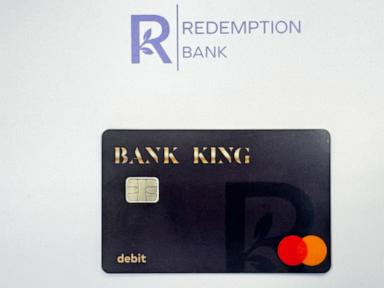
Governments are quietly replacing traditional cash assistance with restricted prepaid bank cards targeted at single mothers living in public housing. While officials pitch these automated card programs as modern tools for financial inclusion and fraud prevention, the reality on the ground is far more complicated. This shift away from hard currency fundamentally alters how low-income families survive, transferring public funds into the hands of private financial institutions while restricting the autonomy of the recipients. It is a quiet overhaul of the social safety net that trades human flexibility for corporate oversight.
The premise seems straightforward on paper. Instead of mailing paper checks or distributing cash, state agencies load welfare benefits onto branded debit cards. Proponents argue this reduces administrative overhead and prevents recipients from spending money on prohibited items. But this structural shift introduces a predatory layer of transaction fees, data tracking, and systemic vulnerabilities that hit vulnerable families the hardest.
The Lucrative Business of Managing Poverty
Private financial institutions do not administer these public benefit programs out of charity. They win massive, multi-year government contracts because managing public assistance is incredibly profitable. When a state agency outsources its cash assistance program to a commercial bank, the bank secures a captive customer base of thousands of individuals who have no choice but to use their network.
These programs generate revenue through a complex web of user fees. While the initial card issuance might be free, users quickly encounter charges that erode their monthly balance.
- ATM withdrawal fees after exceeding a strict monthly limit.
- Fees for merely checking a balance at an ATM.
- Charges for card replacement if a piece of plastic is lost or stolen.
- Inactivity fees if a mother tries to save money on the card for a future emergency.
For a family living well below the poverty line, a two-dollar fee to withdraw cash is not an inconvenience. It represents a gallon of milk or a bus token. When multiplied across an entire state population of public housing residents, these fractions of a dollar aggregate into millions in pure profit for the issuing financial institution. The state effectively subsidizes the banking sector by allowing them to skim skimpy margins off the top of survival funds.
Furthermore, these contracts often lack competitive pressure once implemented. A single financial services corporation frequently secures a monopoly over a state's entire public distribution network. If the bank's customer service helpline is non-functional or their smartphone app crashes, a single mother cannot switch to a competitor. She is stuck waiting on hold for hours while her rent is due or her grocery cart sits full at the register.
The Surveillance State in the Supermarket Aisle
Shifting cash payments to digital bank cards grants institutions and state actors unprecedented visibility into the daily habits of poor families. Cash is anonymous. A twenty-dollar bill does not leave a data trail showing whether it bought second-hand clothes, paid a neighbor for emergency childcare, or purchased medicine from a local corner store. A prepaid debit card changes this completely.
Every transaction creates a digital ledger. This ledger tracks the exact time, date, location, and merchant identity of every purchase made by a parent in public housing. Under the guise of ensuring compliance and preventing dependency, this data allows states to implement algorithmic policing of consumption habits.
Consider the informal economy that keeps public housing communities afloat. A single mother working an erratic shift at a retail store often relies on a teenage neighbor to watch her children after school. She cannot write a check, and she cannot use a restricted prepaid card to pay that neighbor. The informal networks of mutual aid, babysitting, and small-scale trading that low-income communities use to survive require cash. By forcing benefits onto structured digital platforms, the state effectively criminalizes or disables these vital survival strategies.
This digital tracking also creates data profiles that can be shared or targeted. While statutory protections exist on paper, the long-term trend points toward aggregation. The commercial entities managing these cards hold vast repositories of behavioral data on a highly specific demographic. In the broader financial ecosystem, data is merchandise, and public housing residents are systematically stripped of the privacy rights enjoyed by wealthier citizens who pay with cash or unmonitored private accounts.
The Friction of Automated Bureaucracy
When a digital system fails, the consequences for wealthy consumers are minor. They switch to another card or use a digital wallet. For a single mother relying on a government-issued card, a technical glitch is catastrophic.
System-wide outages among major benefit processors are common. When these networks crash, thousands of mothers find themselves stranded at grocery store registers, unable to purchase food for their children. The shame and public humiliation of a declined welfare card are amplified when the failure is systemic and out of the user's control.
The Problem of Rigid Coding
Prepaid benefit cards rely on Merchant Category Codes to restrict purchases. These automated codes categorize businesses based on their primary line of trade. If a mother tries to buy school supplies for her children at a store that the system flags as a convenience store or an unapproved vendor, the transaction blocks automatically.
The system lacks empathy and nuance. It cannot distinguish between a parent buying a warm winter coat for a toddler and someone purchasing luxury goods. The burden of proof always falls on the recipient, who must navigate a Byzantine maze of automated phone menus, missing paperwork, and indifferent caseworkers to rectify an automated error.
Security and Fraud Vulnerabilities
Wealthy banks protect their primary credit card customers with sophisticated fraud detection and immediate reimbursement policies. If a corporate lawyer’s card is skimmed, the bank replaces the funds instantly. The same protections rarely apply to government-benefit prepaid cards.
Welfare cards are notorious targets for electronic skimming devices at gas stations and neighborhood bodegas. Because many of these state-issued cards still lack advanced chip security, they are incredibly easy to clone. When a fraudster drains a single mother's account, the recovery process is grueling.
- She must file a police report manually.
- She must submit a physical dispute form to a distant corporate office.
- She must wait weeks, sometimes months, for an investigation to conclude.
During this investigation, the bank does not issue provisional credit. The family is simply left without money for food, utilities, or medicine. The systemic indifference built into the software assumes the recipient is guilty of fraud or negligence until proven innocent.
Paternalism in Public Policy
The push to eliminate cash payments is rooted in an old, stubborn political narrative that low-income individuals, particularly single mothers of color in government housing, cannot be trusted to manage money. By controlling the mechanism of exchange, policymakers attempt to engineer behavioral outcomes from a distance.
This paternalism ignores the actual mechanics of poverty. People living on tight budgets are often the most precise financial managers in the country. They know exactly how many cents a gallon of milk costs at three different stores. They understand how to stretch a dollar because their survival depends on it. Restricting them to a specific bank card does not teach financial literacy. It creates unnecessary obstacles.
By restricting cash access, states also prevent families from building micro-savings. If the card program automatically claws back unspent funds at the end of the month, or if inactivity fees eat away at a small surplus, a mother cannot save money to move out of public housing. The technology designed to deliver assistance becomes a digital fence that keeps her trapped in dependency.
The financial sector and state governments will continue to praise the efficiency of automated bank card programs. They will point to reduced paperwork and lower administrative budgets as proof of success. But those metrics ignore the human cost. The savings achieved by the state are extracted directly from the time, dignity, and autonomy of the mothers holding the plastic. True financial empowerment does not come from a restricted, tracked, and fee-heavy piece of plastic issued by a corporate monopoly. It comes from trusting parents with the resources they need to take care of their families on their own terms.