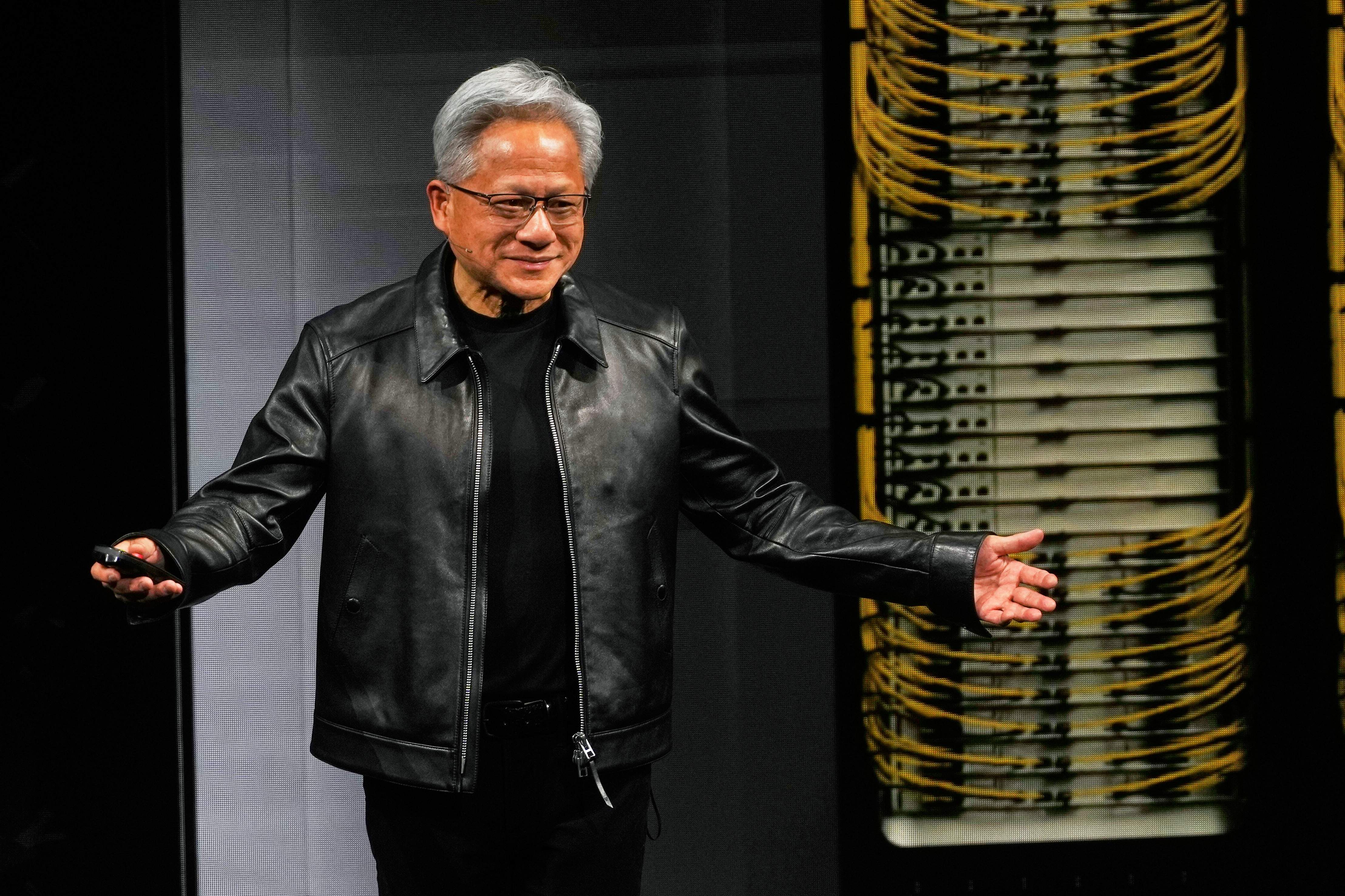
The rumor mill in Silicon Valley moves faster than a server rack overheating during a training run, yet the persistent online whispers claiming Nvidia CEO Jensen Huang admitted to an affair with an alleged Chinese spy are entirely fabricated. There is no verified record, intelligence briefing, or credible journalistic report substantiating such a scandal. Instead, the viral headline serves as a textbook example of coordinated disinformation targeting the most valuable hardware company on earth at the exact moment artificial intelligence chips have become the ultimate geopolitical currency.
To understand why a completely baseless tabloid fabrication gains traction across social media feeds, you have to look at the suffocating pressure currently sitting on the semiconductor industry. Silicon is no longer just a commercial sector. It is the primary battlefield of modern statecraft. When a single executive controls the supply chain for the graphics processing units powering global AI infrastructure, that individual becomes a walking target for both state-sponsored intelligence operations and algorithmic smear campaigns. Meanwhile, you can read similar events here: Ghosts of Human Ingenuity and the Terrifying Mystery of What We Leave Behind.
The Anatomy of a Modern Disinformation Campaign
False narratives rarely succeed in a vacuum. They require a plausible backdrop to stick in the public consciousness. In this case, the architects of the rumor weaponized two very real, well-documented anxieties dominating Washington and Wall Street. The first is the aggressive expansion of Chinese foreign intelligence operations aimed at acquiring Western semiconductor intellectual property. The second is the recurring vulnerability of high-profile Western executives and politicians to traditional human intelligence tactics, commonly known as honeytraps.
By fusing a real geopolitical threat with a fictional personal scandal, the story bypasses critical skepticism. Readers already know that Beijing desperately wants access to advanced chip architecture. They also know that powerful men occasionally make catastrophic personal errors. Combining those two truths into a single sensational headline creates an illusion of credibility, even when the underlying facts are entirely nonexistent. To see the bigger picture, we recommend the recent report by Engadget.
For a veteran observer of the tech sector, the telltale signs of a manufactured hit piece are obvious. Legitimate investigative journalism relies on primary documentation, court filings, official intelligence assessments, or on-the-record confirmations. Disinformation relies on circular sourcing, anonymous social media accounts amplifying each other, and emotional quotes engineered to provoke outrage. A fabricated confession like "I love our country" is specifically designed to sound like a cornered executive pleading for patriotism to shield himself from treason accusations. It is pure theater written for clicks and algorithmic engagement.
Why Nvidia sits in the Crosshairs
To grasp the strategic value of damaging Nvidia’s reputation, consider the company's position in the global economy. Nvidia designs the foundational hardware required to train and run large language models. Without access to these chips, sovereign nations and rival tech giants face a severe computational bottleneck.
The United States government has spent the past several years tightening export controls to prevent advanced AI processors from reaching Chinese data centers. These restrictions have forced Nvidia into a delicate balancing act. The company must comply strictly with Washington’s national security mandates while trying to salvage whatever legal commercial revenue remains in one of the world’s largest tech markets.
In this hyper-politicized environment, trust is Nvidia’s most fragile asset. The company’s survival and valuation depend on its standing as a reliable partner to the U.S. defense and intelligence establishments, as well as to American hyperscalers. Any credible suggestion that its top leadership has been compromised by a foreign adversary would trigger immediate congressional inquiries, freeze federal contracts, and send shockwaves through global equity markets.
Even a false rumor achieves a fraction of that goal. It injects poison into the well. It forces investors, lawmakers, and everyday consumers to associate the brand with national security compromises, however briefly. In information warfare, you do not always need to prove a lie to inflict damage; you simply need to repeat it loudly enough that people start asking questions.
The Real Threat of Semiconductor Espionage
Dismissing a fake tabloid story does not mean dismissing the underlying danger. Foreign intelligence services are actively targeting the semiconductor supply chain, and their methods are far more sophisticated than the caricatures found in clickbait headlines.
Targeting the Supply Chain and Talent Pool
Modern chip design is a miracle of human engineering, relying on decades of accumulated trade secrets, specialized lithography software, and proprietary manufacturing processes. Stealing this information does not happen through a single dramatic seduction. It happens methodically over years through shell companies, illicit talent recruitment programs, and cyber intrusions.
Intelligence agencies focus heavily on mid-level engineers, supply chain managers, and researchers who hold direct access to proprietary schematics and source code. A senior chief executive rarely possesses the granular technical files needed to replicate a microchip architecture. An unassuming lead engineer working on thermal management or interconnect fabrics, however, holds the exact blueprints a rival nation needs to leapfrog years of research and development.
The Mechanics of Human Intelligence in Tech
When human intelligence operations do target executives or senior researchers, the approach is rarely an overt, cinematic affair. Intelligence officers pose as venture capitalists, conference organizers, academic researchers, or executive recruiters. They flatter the target’s ego, offer lucrative consulting fees, or invite them to speak at prestigious international symposiums.
Over months or years, the relationship builds through shared professional interests and subtle financial incentives. By the time the target realizes they are dealing with an intelligence asset, they have already accepted money, shared non-public market insights, or signed consulting agreements that create legal leverage against them. The goal is long-term co-optation, not a fleeting scandal.
Cyber Espionage and Insider Threats
Alongside human recruitment, state-backed hacking groups continuously probe the networks of chip designers and fabrication plants. These groups look for zero-day vulnerabilities in enterprise software, compromise third-party vendors with weaker security protocols, and deploy custom malware designed to siphon off intellectual property quietly.
Counterintelligence officials frequently warn that the greatest vulnerability lies at the intersection of cyber and human operations. A disgruntled employee or a financially distressed contractor can be persuaded to plug an unauthorized drive into an air-gapped network, bypassing millions of dollars in digital perimeter defenses in seconds.
Navigating the Intersection of Geopolitics and Corporate Leadership
The scrutiny facing semiconductor executives today has no modern parallel. During the Cold War, defense contractors operated behind high security clearances, largely shielded from the daily volatility of consumer markets and social media. Today, tech leaders are global celebrities whose every public statement, travel itinerary, and business dinner is dissected in real time.
This visibility creates a unique set of operational hazards. An executive traveling to Asia to meet with foundry partners, component suppliers, and legitimate corporate customers is performing routine business duties. Yet in an era of heightened geopolitical tension, every handshake is viewed through the lens of national loyalty.
Boards of directors across Silicon Valley have been forced to overhaul their risk management playbooks. Executive protection is no longer just about physical security; it now encompasses rigorous counterintelligence briefings, secure communications protocols, and strict vetting of external relationships. Companies routinely employ former intelligence officials to audit their supply chains and monitor for influence operations aimed at their leadership.
Despite these precautions, no corporation can entirely insulate itself from the weaponization of online media. The barrier to creating and distributing convincing fake news has collapsed. Automated bot networks can amplify a fabricated story across multiple platforms within minutes, pushing it into the trending feeds of financial analysts and retail investors before a corporate communications team even drafts a denial.
How to Spot Geopolitical Clickbait
When reading breathless reports linking tech executives to foreign espionage, a healthy dose of skepticism is mandatory. Real counterintelligence investigations are conducted in the shadows by agencies like the FBI and the Department of Justice. They move slowly, rely on sealed indictments, and rarely leak their most sensitive operational details to obscure internet blogs.
Look closely at the provenance of the story. Credible news organizations with dedicated national security desks stake their reputations on multi-source verification. If a massive scandal involving the leader of a multi-trillion-dollar company is only appearing on aggregator sites, partisan forums, or anonymous social media accounts, it is almost certainly a fabrication.
Pay attention to the language used in the reporting. Real intelligence leaks are dry, bureaucratic, and heavily caveated. Fabricated stories lean on melodrama, sweeping generalizations, and convenient quotes that neatly confirm the reader's preexisting biases.
The battle for supremacy in artificial intelligence and advanced computing will only grow fiercer over the coming decade. As the financial and strategic stakes continue to climb, the information space surrounding these companies will become even more polluted with half-truths, smear campaigns, and state-sponsored distractions. Separating genuine national security threats from cheap digital noise is no longer just a job for intelligence analysts; it is a basic survival skill for anyone trying to understand the modern global economy.