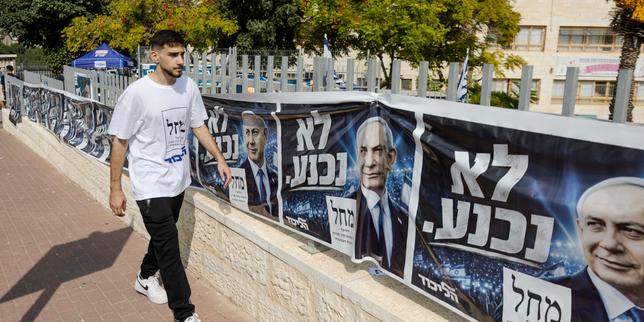
When Israel recorded a 66.7 percent early-evening voter turnout during its legislative elections—the highest figure since 1973—political commentators and news outlets framed the surge as a decisive turning point for the country's chronic political instability. According to conventional political coverage, high participation signals civic renewal and provides an incoming government with a clear, stable mandate.
That interpretation misses the structural reality of Israel's electoral mechanics. In a pure proportional representation system with a low electoral threshold, massive voter turnout does not break a political deadlock. Instead, it often amplifies existing polarization and entrenches the exact mathematical gridlock that triggered the election in the first place.
The Myth of the Turnout Cure
The assumption that high turnout automatically produces decisive governance stems from majoritarian electoral systems, such as those in the United States or the United Kingdom. In winner-take-all districts, a surge in voter participation can flip marginal seats and create sweeping legislative majorities.
Israel operates under a completely different framework. The entire country functions as a single nationwide electoral district electing 120 members to the Knesset. Seats are allocated strictly according to the percentage of votes each party list receives, provided they cross the 3.25 percent electoral threshold.
When turnout jumps from 60 percent to over 70 percent, the total number of valid votes increases, raising the raw vote count required to secure a single Knesset seat (known as the Bader-Ofer quota). However, if the newly mobilized voters distribute themselves across the ideological spectrum in roughly the same proportions as regular voters, the final seat allocation barely moves.
Political scientists studying Israeli elections, including researchers at the Israel Democracy Institute (IDI), have repeatedly noted that turnout surges in Israel are rarely driven by a sudden wave of undecided moderates. Rather, they are typically the result of intense, fear-driven mobilization by rival political blocs competing to prevent the opposing camp from forming a coalition.
Mobilization Through Polarization
To understand why a 1973-level turnout rate occurs in modern Israeli politics, one must examine the incentives of party strategists. In a fragmented multi-party system, campaigns do not win by persuading swing voters in the center; they win by maximizing turnout among their core demographic bases.
- The Base-First Strategy: Political parties invest heavily in hyper-targeted get-out-the-vote (GOTV) operations within specific sectoral communities—whether secular urbanites, national-religious settlers, ultra-Orthodox (Haredi) constituencies, or Arab citizens of Israel.
- The Threshold Trap: Because smaller satellite parties constantly risk falling below the 3.25 percent threshold, larger bloc leaders frequently campaign to boost turnout for their smaller allies, knowing that wasted votes below the threshold can cost an entire bloc its 61-seat majority.
- Fear as an Accelerant: High turnout is often a symptom of existential political anxiety rather than institutional trust. Voters rush to the polls not because they believe the system works, but because they fear the consequences of the opposing bloc controlling the state apparatus.
Imagine a scenario where turnout climbs by five percentage points across the board. If Tel Aviv and Bnei Brak both increase their participation rates simultaneously, the net gain in Knesset seats for either ideological camp cancels out. The raw numbers look historic on evening news broadcasts, yet the coalition arithmetic at 10:00 PM remains stuck at 60 versus 60.
Why 1973 Is the Wrong Historical Comparison
Comparing modern turnout figures to the 1973 legislative election—held shortly after the Yom Kippur War—ignores the profound structural shifts in Israeli society and party politics over the past five decades.
In 1973, Israeli politics was dominated by large, broad-tent political movements. The Alignment (Ma'arakh) and the newly formed Likud together captured the vast majority of Knesset seats. High turnout in that era reflected a electorate engaging with mass-membership parties capable of forming stable governing coalitions without relying on half a dozen small, single-issue faction partners.
Today, the electoral map is fractured into numerous mid-sized and small lists, each representing distinct identity groups, ideological purists, or personalist political vehicles. High turnout in a fragmented system simply scales up the competition among these smaller factions. Instead of consolidating power into two large governing parties, a high-turnout election often rewards niche parties that excel at disciplined, community-level mobilization.
What Observers Actually Need to Watch
If headline turnout percentages are a misleading indicator of political stability, what metrics actually determine the outcome of an Israeli election? Experienced election analysts look past the aggregate national number and focus on three specific variables:
- Differential Turnout Between Sectors: A high national average means nothing if it is evenly distributed. The decisive factor is whether one specific demographic—such as Arab voters or secular center-left voters—turns out at a significantly higher or lower rate than their historical baseline relative to rival blocs.
- Wasted Votes Below the Threshold: Because the 3.25 percent cutoff acts as a guillotine, a party winning 3.1 percent of the national vote receives zero seats, effectively transferring their electoral weight to the remaining parties that crossed the line. High turnout raises the raw number of votes needed to clear that bar, increasing the danger for borderline lists.
- Surplus Vote Agreements (Bader-Ofer): Under Israeli electoral law, two parties can sign a pre-election agreement to pool their leftover votes after initial seat allocations. In a tight race where a single seat decides whether a bloc reaches 61 mandates, these technical agreements often matter far more than a three-point bump in national turnout.
The Downside of High-Turnout Deadlock
There is a significant governance cost to celebrating high turnout when the underlying electoral rules remain unchanged. When millions of citizens turn out in record numbers only to produce another hung parliament or a fragile, narrow coalition dependent on ideological extremes, public disillusionment deepens.
Voters who were promised that "this time" their participation would break the stalemate quickly realize that the electoral mechanism itself rewards fragmentation. Over time, repeated high-stakes, high-turnout elections that fail to yield durable governance erode faith in democratic institutions far more severely than low-turnout apathy ever could.
Headline writers love a historic statistic, and a turnout rate unmatched since 1973 makes for dramatic election-night television. Yet until Israel addresses the structural incentives of its proportional representation system—such as the low electoral threshold and the absence of direct accountability mechanisms—record voter participation will continue to measure the intensity of the country's political divisions rather than its ability to resolve them.